Enteral Feeding: The Shift to Smart, Personalized Care
Executive Summary:
The enteral feeding formula market is undergoing a big change as patients and caregivers shift their preferences to plant-based, whole-food, and blenderized options. Simultaneously, AI-enabled personalization, smart feeding devices, and connected care platforms are reshaping delivery and monitoring of enteral nutrition. Enteral feeding is not restricted to being a medical necessity anymore, but a patient-centric ecosystem where device intelligence, formula composition, and quality-of-life requirements converge to pave the path for new competitive dynamics.
Clinical efficacy is no longer the sole driver of competitive differentiation in this market. Manufacturers looking to take a lead must balance consumer demands with nutritional science and ensure their offerings feature natural ingredients. Formulas that are both clinically validated and aligned with plant-based, whole-food preferences will define the next few years in this segment. At the same time, device companies should prioritize connectivity, portability, and AI-enabled intelligence to support the expanding home care segment. In this segment, remote monitoring and ease of use are becoming core drivers of competitive advantage. Lastly, healthcare providers and payers must prepare for a future where data-driven, personalized feeding protocols become the new basic. It also implies that better investments are needed in outcome measurement and digital infrastructure. Long-term competitive advantage will come to those who can integrate smart device technology, formula innovation, and AI-powered personalization into patient-centered solutions.
Redefining Enteral Nutrition: From Clinical Necessity to Patient-Centered Care
Enteral foods, or enteral nutrition, also known as tube-feeding formulas, are used to provide nutrition directly into the stomach or small intestine when patients are unable to meet their nutritional needs through normal oral intake. These products may be classified as Foods for Special Medical Purposes (FSMPs) or Non-FSMPs. Non-FSMP products may include general nutritional supplements, blenderized feeds, or whole-food-based options that do not make disease-specific medical claims. These nutritional formulas supply essential nutrients, proteins, carbohydrates, fats, vitamins, and minerals, and come in forms such as ready-to-use, powdered, concentrated, or blenderized options.
Nutritional tolerance, gastrointestinal symptoms, leakage and blockage of tubes, displacement of tubes while taking the feed, aspiration, infections, and metabolic complications are a few common complaints of patients taking enteral feed.
Companies are working to redefine the formula composition, method of feeding, and tube characteristics that would provide relief to the patients suffering from hurdles of taking enteral feed.
The presence of processed ingredients is also one of the major concerns of consumers and their family members. More than 70% of the enteral feed products available in the market today contain highly processed ingredients.
As the awareness of consumers is increasing towards a healthier and natural diet, they are looking for plant-based and whole-food-based formulas.
New start-ups inspired by real-time situations are emerging in the market. They are proving potential alternatives to conventional formulations, with promising benefits for gut health, microbiota, inflammation, and digestive tolerance. Advances in processing technologies aim to preserve the nutritional quality of whole-food and plant-derived ingredients.
Along with the composition, innovations are extending beyond enteral formulas to feeding technologies and devices created to improve the safety, reliability, and effectiveness of enteral nutrition delivery.
The moral support of family members and caregivers plays an important role in the life of patients currently on an enteral diet. Consumers don’t like them to be addressed as patients. They want to live their life like normal individuals. It is important for patients, healthcare professionals, and caregivers to be aware of these emerging options.
Nutritional care and health outcomes can be made accessible to the world by affordability through broader distribution and updates in insurance coverage.
This article focuses on innovations in enteral nutrition and feeding devices, highlighting emerging nutritional formulations, processing approaches, and device technologies designed to address challenges in enteral feeding and improve overall nutritional delivery.
Navigating Various Categories of Enteral Feeds: Matching Nutrition to Patient Needs
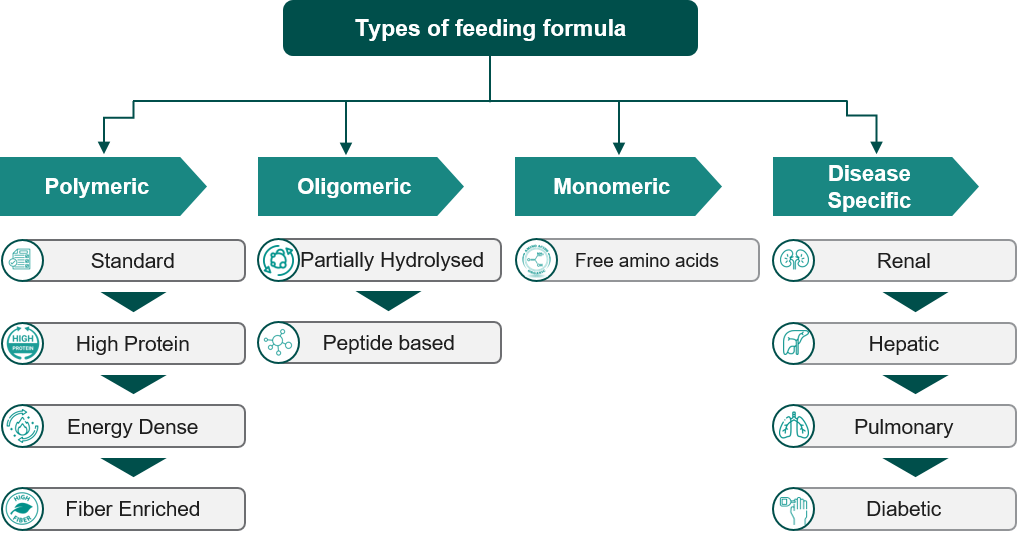
Polymeric formulas (whole nutrients); oligomeric formulas (partially digested nutrients); elemental formulas (fully broken-down nutrients); modular formulas (single nutrient components); and disease-specific formulas (tailored for conditions such as diabetes or kidney failure) are some of the types of feeding formulas.
Each type is created to suit different digestive abilities and medical requirements, ensuring the best nutritional support for patients.
Innovations and Trends Visible in the Market: Smart Devices, AI, and Whole-Food Formulations
Recent developments in enteral feeding show significant progress in technology, nutrition, and patient care. These changes are largely influenced by an aging population, more chronic illnesses, and a greater need for personalized and home-based options. Some of the recent developments and innovations are included here:
1. Formula Innovations
Extensive R&D is being done by companies to address enteral formula challenges. Companies are working to produce enteral feeds with better tolerance and improved nutritional quality to address the diverse needs of tube-fed patients.
Currently, plant-based, protein-modified, probiotic-enriched, whole-food, and semi-solid formulations are available in the market that are designed to improve feeding outcomes and patient experience.
- Whey Formula Enhances Feeding Tolerance: A retrospective study of more than 3,000 children with GI dysfunction found that a 100% whey-based peptide enteral formula was associated with improved feeding tolerance, with reductions in nausea, vomiting, and other GI symptoms, as well as fewer emergency, inpatient, and urgent-care visits. Healthcare costs also decreased for up to six months, suggesting that whey-based peptide formulas may help address enteral feeding intolerance, although prospective studies are needed to confirm these findings.
- Probiotic-enhanced Enteral Nutrition Improves Recovery: A study conducted on 264 laryngeal cancer patients who were fed probiotic-enriched enteral nutrition combined with an ERAS (Enhanced Recovery After Surgery) protocol showed improved energy, overall protein intake, and accelerated gastrointestinal recovery.
- The presence of probiotics in the formula also helped to reduce inflammation, postoperative complications, antibiotic use, and healthcare costs.
- Enzyme Cartridge: RELiZORB is a digestive enzyme cartridge designed to break down fats in enteral nutrition formulas. It contains small white beads, known as iLipase®, that have lipase attached to their surface. Lipase works in the body by helping to break down triglycerides into absorbable forms such as fatty acids and monoglycerides. In RELiZORB, the iLipase beads are visible through the cartridge casing and are securely held in place by two filters as the formula passes through. These beads remain inside the cartridge at all times and are not ingested by the user.
- ENOSOLID® Semi-solid Enteral Feeding: Otsuka Pharmaceutical Factory launched ENOSOLID® semi-solid for enteral use, a semi-solid enteral formula designed for patients requiring lower maintenance energy, particularly those unable to eat or drink orally for extended periods. The formulation provides major nutrients, vitamins, trace elements, L-carnitine, and inulin, while its semi-solid format is intended to support gastric administration and reduce reflux compared with liquid feeding.
2. Growth in Plant-based Enteral Nutrition
As part of the global shift toward plant-based diets, new plant-dominant protein blends are being explored for enteral nutrition. These developments support the growing interest in sustainable protein sources while maintaining nutritional efficacy in clinical settings.
- A new formula made up of 46% soy, 32% pea, 16% casein, and 6% whey has demonstrated that it doesn’t clump during lab tests simulating stomach digestion, much like dairy-based blends. This behavior seems to be unaffected by factors like calorie content, protein levels, or fiber amount, indicating it may be easier on the upper digestive system.
- Kate Farms offers a broad range of USDA Organic, plant-based nutrition products for everyday, medical, pediatric, and specialized nutrition needs. The portfolio uses organic yellow pea protein; standard formulas and Nutrition Shakes contain pea protein isolates, while peptide formulas use hydrolyzed pea protein. Products are available for drinking and tube feeding, including Standard, Peptide, Kids Nutrition, Pediatric, Glucose Support, and Renal Support formulas.
- Fresenius Kabi has developed Fresubin® plant-based tube feed, a vegan, high-protein, and energy-dense tube feeding formula that provides complete nutrition while replacing conventional milk-based protein with soya protein.
3. Rise in Real Food and Blenderized Tube Feeding (BTF)
The use of real food and blenderized tube feeding (BTF) is gaining traction, particularly among caregivers and patients seeking more natural and holistic nutrition options.
- Real Food Blends offers formulas made from whole, natural foods that are pureed into a smooth consistency, ideal for patients who cannot eat orally or who experience intolerance to standard formulas.
- Hiquid Food offers raw-material-based enteral nutrition in the form of freeze-dried, powdered blended soups for children over 3 years and adults requiring gastrostomy feeding or nutritional drinks. The products use whole-food ingredients such as organic vegetables, legumes, fruits, fish, or turkey, which are freeze-dried and ground into a powder, then reconstituted with water and a fat source before administration via a PEG syringe.
- Whole Story Meals has developed cold-processed, freeze-dried powdered meals made from real fruits, vegetables, seeds, and whole grains. This powder mixes easily with any room-temperature liquid without heat treatment, preserving up to 96% of the original nutrients, and is dispensed using feeding pumps or standard syringe feeds. Their Restore and Restore Fusion real-food meals are specifically formulated with functional foods to support renal function.
BTF has been associated with improved tolerance (e.g., reduced vomiting and constipation), greater dietary diversity, and better weight management. However, it requires strict attention to food safety and hygiene in preparation.
4. Technological Advancements in Devices
The addition of cutting-edge technologies such as smart & connected feeding pumps is transforming enteral nutrition by enabling personalized nutrition plans and improved patient mobility.
- Gravitas Medical, Inc. received Neonatal 510(k) clearance from the U.S. Food and Drug Administration (FDA) for its Entarik™ technology. This approval allows the company to market its innovative enteral feeding solution specifically for the U.S. neonatal population, to enhance safety and accuracy in this vulnerable group.
- Luminoah has received FDA clearance for Luminoah Flow™, a compact, lightweight enteral feeding system that delivers liquid nutrition from a pouch through a feeding tube at a controlled rate. The system features a touchscreen interface, real-time nutrition tracking, and USB-C rechargeable power, enabling portable and convenient feeding while helping users manage and monitor nutrition delivery.
- ENvue Medical has developed ENvue Drive™, an investigational robotic-assisted feeding tube system that combines AI, real-time electromagnetic navigation, and robotic tube advancement to support bedside enteral tube placement. Integrated Ask Oscar™ AI can identify anatomical pathways, detect trajectory deviations, provide corrective guidance, and assist tube advancement toward the small intestine under clinician supervision.
- Mechanical feeding pump: Rockfield Medical’s Mobility + is an FDA-approved enteral feeding system that delivers nutrition without the need for gravity or electronic devices. It is designed to enhance mobility and independence; Mobility+ allows tube-fed individuals to feed more freely and conveniently while out or on the move.
- Cardinal Health’s Kangaroo OMNI™ Enteral Feeding Pump is FDA 510(k)-cleared and designed to deliver enteral nutrition, hydration, and thick formulas. Its thick-formula feeding sets support smooth consistencies and are classified by IDDSI at levels 2–4. This enables greater flexibility for patients using thickened or whole-food-based feeds.
5. AI and Personalized Enteral Nutrition
Artificial intelligence and machine learning are transforming ICU and enteral nutrition into real-time, data-driven precision therapy. They accurately predict complications and optimize expert dosing.
While large language models enhance clinical decision support by rapidly synthesizing medical data, rigorous validation techniques remain necessary to manage hallucination risks.
- DeepEN Enables Personalized Enteral Nutrition: DeepEN, a deep reinforcement learning framework, was developed to personalize enteral nutrition in ICU patients by dynamically adjusting calorie, micronutrients, especially protein, and fluid targets based on clinical and metabolic data.
- The approach highlights the potential of AI-driven personalized enteral nutrition to complement conventional guideline-based feeding.
- NutriSighT Predicts Underfeeding Risk in ICU Patients: NutriSighT is an interpretable AI model that predicts which mechanically ventilated ICU patients are likely to receive less than 70% of their daily calorie needs during enteral feeding. Validated using data from more than 9,700 patients, it outperformed XGBoost and could help clinicians identify patients at risk of underfeeding early and adjust nutritional support more effectively.
6. Increase in Home Enteral Nutrition (HEN)
The increasing number of elderly people and the rise in chronic illnesses like cancer, neurological disorders, and digestive diseases are the major factors for the increase in home enteral nutrition. This change also aligns with a wider move in healthcare toward providing patient-focused care at home.
- A multicenter prospective study conducted for 13 months demonstrated that a plant-based, high-energy, high-protein enteral formula was well tolerated and safe in home enteral tube-fed patients. Long-term use was associated with improved protein intake, maintained body weight and muscle strength, and potential improvements in physical function, while reducing daily feeding volume and estimated pump-feeding time. These findings support the use of plant-based enteral formulas as a viable option for long-term home enteral nutrition.
- The growing complexity of managing enteral feeding at home is also creating opportunities for digital and AI-enabled solutions. AI could support remote monitoring, symptom assessment, adherence, patient and caregiver education, and earlier identification of feeding or tube-related complications. However, evidence specific to HEN remains limited, underscoring the need for clinical validation and clinician-supervised implementation of these technologies.
- NCare® Supports Home Enteral Nutrition Management: Nestlé Health Science’s NCare® is a home enteral nutrition service that enables healthcare professionals to create and manage patient nutrition profiles and regimens through a secure platform. It also supports home delivery of enteral formulas and other nutritional products, helping coordinate ongoing nutritional care for patients in home and community settings.
7. Packaging Innovation
Packaging innovations are addressing the issues currently faced by consumers. Companies are innovating in the packaging to make enteral nutrition easier, safer, and more convenient for patients and caregivers.
New designs focus on hygienic storage, ease of handling, portability, and compatibility with feeding systems, supporting greater flexibility in home and on-the-go feeding.
- DreamCap™: Ajinomoto Cambrooke introduced DreamCap™, an ergonomic, re-sealable packaging system designed to make medical nutrition easier and more convenient for patients and caregivers. The portable, hygienic packaging is also compatible with the BoLink™ system, enabling easier gravity-tube feeding and greater flexibility in nutrition management at home, at school, or on the go.
- Squeasy Gear has developed a patented portable feeding pouch. A one-way valve helps prevent air from entering the feeding tube.
Market Momentum: Growth Drivers and Emerging Opportunities
In 2025, the global enteral feeding formula market was valued at $8.31 billion and is projected to reach $13.79 billion by 2034, growing at a 5.85% CAGR from 2026 to 2034. North America accounted for $2.87 billion in 2025, supported by the growing use of polymeric formulas, favorable reimbursement, and increasing demand across hospital, long-term care, and home care settings. Rising chronic diseases, including cancer, neurological, and gastrointestinal conditions, continue to drive the need for enteral nutrition.
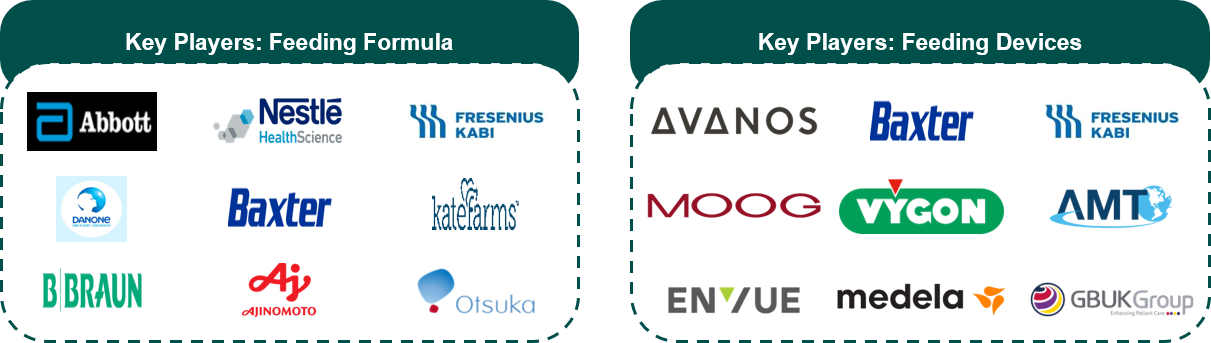
Along with feeding formula, the feeding device also plays a major role in solving the struggles of consumers taking enteral feed. The feeding device market was valued at $4.65 billion in 2025 and is expected to reach $8.98 billion by 2035, growing at a 6.8% CAGR from 2026 to 2035. North America led the market with $1.10 billion in 2025 and is expected to reach $1.88 billion by 2035, driven in part by an aging population and rising demand for long-term care.
What are the Future Aspects of Enteral Nutrition?
As acceptance of home enteral nutrition increases, the need for easy-to-carry, user-friendly products is likely to grow. Integration of AI and connected devices into feeding devices can help not only detect feeding problems but also support individualized, customized nutritional management. Also, formula development may become more patient-specific, depending on each patient’s nutritional requirements and tolerance. Still, the large-scale implementation of these technologies will be contingent upon many factors, including clinical validation, regulatory process, insurance coverage, system integration, safety, and practicality.
Conclusion
Enteral nutrition is shifting towards the use of more personalized, convenient, and technology-based solutions. To overcome the existing barriers in nutrition delivery, feeding devices, monitoring, and patient management on a daily basis, new technologies are being developed and tested. The clinical and real-world validation will provide necessary support for turning these innovations into improvements in patient outcome quality, feeding satisfaction, and reduced caregiver effort.
How is Stellarix Helping as Nutrition Strategy Partner?
Stellarix is helping leadership teams navigate the evolving landscape of enteral feeding. Our consulting expertise spans technology scouting, market intelligence, competitive benchmarking, and commercial due diligence across feeding devices and the medical nutrition ecosystem. From identifying emerging formulation technologies to evaluating M&A opportunities, we are equipping executives with actionable insights needed to build resilient portfolios, speed up innovation, and capture sustainable growth in this patient-centric market.
Let's Take the Conversation Forward
Reach out to Stellarix experts for tailored solutions to streamline your operations and achieve
measurable business excellence.