
Industrial Electrification and Energy Transition
The heavy industry is confronting some of the most complex decisions in its energy transition. Carbon costs are becoming increasingly tangible as border adjustment mechanisms and emissions regulations redefine the economics of globally traded industrial products. With the US IRA (Inflation Reduction Act) redefining incentives math and Europe’s CBAM tightening its grip, the green premium is turning into a distinctive line separating producers pursuing decarbonization from those paying for not following that path.
Traditional facilities need to choose between committing to heavier capex towards new electrified builds, retrofitting existing assets, or swapping core components with alternate-fuel or electrified equipment.
Electrification decisions must counter policy design, power price trajectories, and technological uncertainties. Organizations should align asset replacement cycles with electrification strategies. Every asset reaching end-of-lifecycle must be assessed for electrification first, because retrofitting mid-life assets destroys value that timing may capture for free.
In our 20+ electrification engagements, we have helped clients with power procurement strategies, asset-replacement roadmapping, carbon-cost modeling, and process-heat technology scouting. Companies using our strategic intelligence identified electrification opportunities covering 35-40% of site fuel demand at zero timing penalty.
Our Experience:
- Quantified CBAM exposure at the product level for a metals exporter ahead of the January 2026 definitive regime, reshaping sourcing contracts and pricing plans across its EU-bound portfolio.
- Conducted technology scouting on high-temperature electrification, electric calcination, plasma heating, and thermal storage for a cement manufacturer, defining horizon 1 and horizon 2 programs. We also helped them set up programs for shortlisted horizon 1 technologies with selected technology developers.
- Guided a mining operator on evaluating battery-electric and trolley-assist options against grid constraints and haul profiles. It helped them reduce their projected fuel demand by 18% over the asset cycle.
Case Studies
Explore how we turn complexity into clarity.

The company is in the domain of the charging infrastructure space. The engagement aims to…

The client, a key player in renewable energy, sought partners for battery and power management…
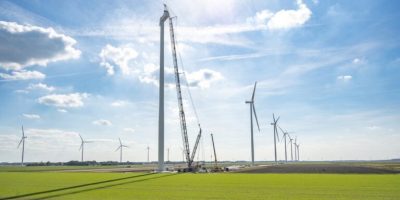
The growing need for cranes in a number of industries, including as manufacturing, shipping, energy,…
Sharper Insights, Stronger Decisions.

The exponential rise in AI-driven workloads and the clean energy transition have turned grid modernization…

The transition to electric mobility depends on charging infrastructure that is accessible, efficient, and sustainable.…