
Client Background:
A MedTech company developing implantable medical devices aimed to expand device capabilities through interoperability-focused features and integration with complementary technologies.
Challenges:
- Limited visibility into technology providers capable of enabling the proposed interoperability features.
- Difficulty identifying partners with relevant technical capabilities and experience in implantable or connected medical devices.
- Need to assess compatibility with existing device architectures, connectivity requirements, and healthcare technology ecosystems.
- Lack of a structured approach to compare potential partners on technical fit, integration feasibility, and collaboration potential.
Engagement Objective:
Identify, evaluate, and prioritize potential technology partners that can enable new interoperability features across the client’s implantable medical device portfolio.
Approach:
- Feature Decomposition: Translated proposed device features into specific technology, connectivity, integration, and interoperability requirements.
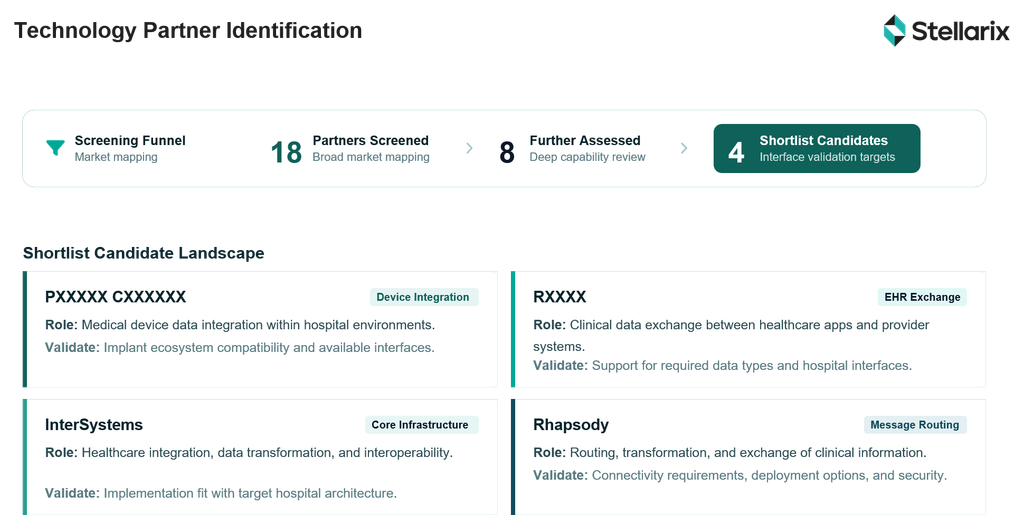
- Ecosystem Mapping: Identified relevant technology providers across device connectivity, data exchange, software integration, and complementary medical device capabilities.
- Partner Screening: Assessed potential partners based on technical capabilities, relevant experience, product maturity, and alignment with the required features.
- Capability Benchmarking: Compared shortlisted companies on feature relevance, integration potential, and suitability for medical device applications.
- Partner Prioritization: Developed a shortlist of potential collaborators aligned with the client’s technical requirements.
Solutions Offered:
Interoperability Feature Mapping
Linked proposed device features with the required connectivity, data exchange, software integration, and complementary technology capabilities.
Technology Capability Assessment
Identified relevant technologies and interoperability approaches required to support feature enablement across implantable medical devices.
Technology Partner Landscape
Developed a longlist and shortlist of potential partners, documenting their capabilities, relevant medical device experience, and alignment with required features.
Partner Evaluation Framework
Established criteria to assess technical compatibility, integration feasibility, product maturity, and suitability for implantable device applications.
Recommended Partner Engagement Roadmap
Prioritized potential collaborators and outlined next steps for capability validation, technical discussions, and collaboration assessment.
Client Impact:
- Improved Technology Visibility: Established a clearer view of external capabilities available to support interoperability-focused enhancements across the implantable device portfolio.
- Strengthened Partner Selection: Enabled systematic comparison of potential collaborators against feature-specific technical requirements and integration constraints.
- Reduced Partner Evaluation Effort: Streamlined the initial screening process by mapping proposed features to relevant provider capabilities and experience.
- Supported Development Planning: Provided a prioritized set of potential collaborators to inform external engagement and interoperability feature-development decisions.
Outcome Snapshot: