Upcoming Live Webinar | Large-Molecule Drugs Are Reshaping Drug Delivery | Register Now

Back to Areas of Expertise

Waste Infrastructure Ecosystem

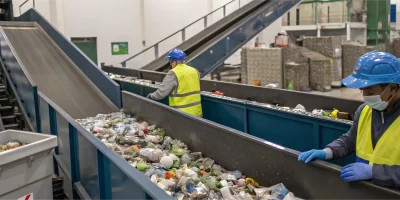
The waste management industry is shifting away from disposal-centric models towards resource recovery ecosystems. The competitive edge is now defined by the efficiency of materials’ movement through the network. 

With the EU targeting a 90% reduction in municipal waste by 2035, organizations need to redesign their end-to-end processes and material recovery facilities (MRFs) to achieve maximum circularity and deliver high-quality, consistent feedstock for downstream recycling. Major barriers that need to be addressed here are

  • Outdated Asset-centric Approach: The asset-by-asset investment approach is no longer working. Network dynamics are now determining the economics of waste infrastructure. 
  • Risk of Stranded MRFs: The size of existing MRFs is proportional to present contamination rates, but as collection systems evolve, they face risk of being underutilized and eventually stranded.  
  • Diversion-target Gaps: Tightening diversion and landfill mandates are setting new targets, but most operators lack a phased approach to them. Most capacity, collection, and capital decisions are disconnected from the targets they are meant to serve. 
  • Material Flows Inefficiencies: Limited transparency of regional waste movements is resulting in underutilized assets, capacity mismatches, and increasing operational costs. 

Strategic focus now needs to shift to genuine capacity shortages, sizing of MRF investments as per future demands, strategic relevance of landfill and incineration assets, and value-based redesigning of supply chains and transfer stations. 

We are helping investors, waste operators, and other stakeholders improve their recovery economics, reduce stranded capital risks, and strengthen their overall network performance through catchment analysis and capacity optimization roadmaps and diversion pathway designs.  

Our Experience: 

  • Screened 20+ acquisition targets by catchment overlap for a waste management company to help them consolidate regionally, evaluate catchment overlaps, and assess diversion-mandate exposure. 
  • Delivered a five-year decarbonization-and-diversion roadmap for a waste operator. We sequenced the plan by cost per tonne diverted and per tonne of CO2 avoided. It provided the client a base for preparing a sustainability-linked financing package.

Case Studies

Explore how we turn complexity into clarity.


Sharper Insights, Stronger Decisions.

Our Areas of Expertise

Advanced Sorting and Recycling Technologies

Energy-Efficient Waste Processing

Design for Recycling

Regulatory, EPR, and ESG Landscape Assessment

Connect with Experts in Recycling Industry