The Diagnostics-to-Product Pipeline: How AI Skin Analysis Apps are Fueling Hyper-Personalized Skincare
Key Takeaways:
- AI skin analysis apps are quietly becoming the diagnostic foundation of hyper-personalized skincare, shifting product development from intuition-led to data-driven approaches across formulation and manufacturing.
- With the AI beauty personalization market expected to reach USD 16.4 billion by 2036, early entrants developing proprietary diagnostic ecosystems will establish the standard for competition.
- Biometric data governance and algorithmic bias against underrepresented skin tones have become central issues. These factors now represent significant commercial risks and barriers to market access at scale.
- In the beauty and personal care industry, competitive advantage now depends on quality, speed, and data processing accuracy.
The skincare segment is witnessing a rapid shift towards data-driven diagnostics from mere subjective self-evaluation. The product pipelines are changing in the AI era, as now developing products on the basis of customers’ concerns has become obsolete. AI-equipped applications are serving as a diagnostic front-end tool that powers a seamless pipeline from skin analysis to bespoke product creation.
The AI beauty personalization platforms market is projected to grow from USD 2.3B in 2026 to USD 16.4B by 2036, reflecting a 21.7% CAGR. This growth is fueled by beauty brands’ use of facial mapping, AI diagnostics, and AR. The evolution of digital beauty retail is enabling highly customized product recommendations, which is also reflected in customer preferences. Around 62% of US beauty and personal care buyers are inclined towards hyper-personalized products, and around 28% of customers are willing to pay extra for such products.
An automated AI diagnostic ecosystem is replacing traditional trial-based buying models, as well as beauty consultations. It evaluates skin conditions, produces product matches that are ingredient-specific, and imitates cosmetic applications. CPG companies that integrate the skin analyzer app and use it for direct diagnosis can acquire the biological information needed to foster hyper-customized manufacturing pipelines.
How AI-Powered Skin Analysis Drives Hyper-Personalization
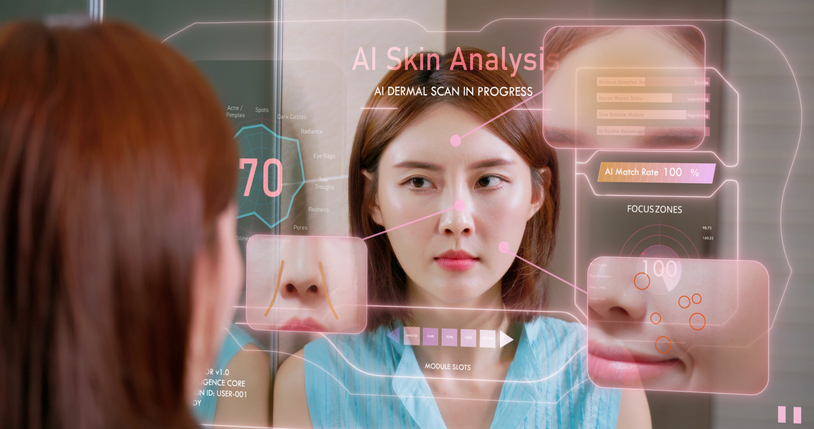
The fundamental concept is to utilize advanced AI-driven skin analysis apps on a scale. Such apps or platforms employ ML, computer vision, and augmented reality to assess users’ skin through their device cameras, subsequently analyzing the results and providing personalized skincare product recommendations and online shopping alternatives.
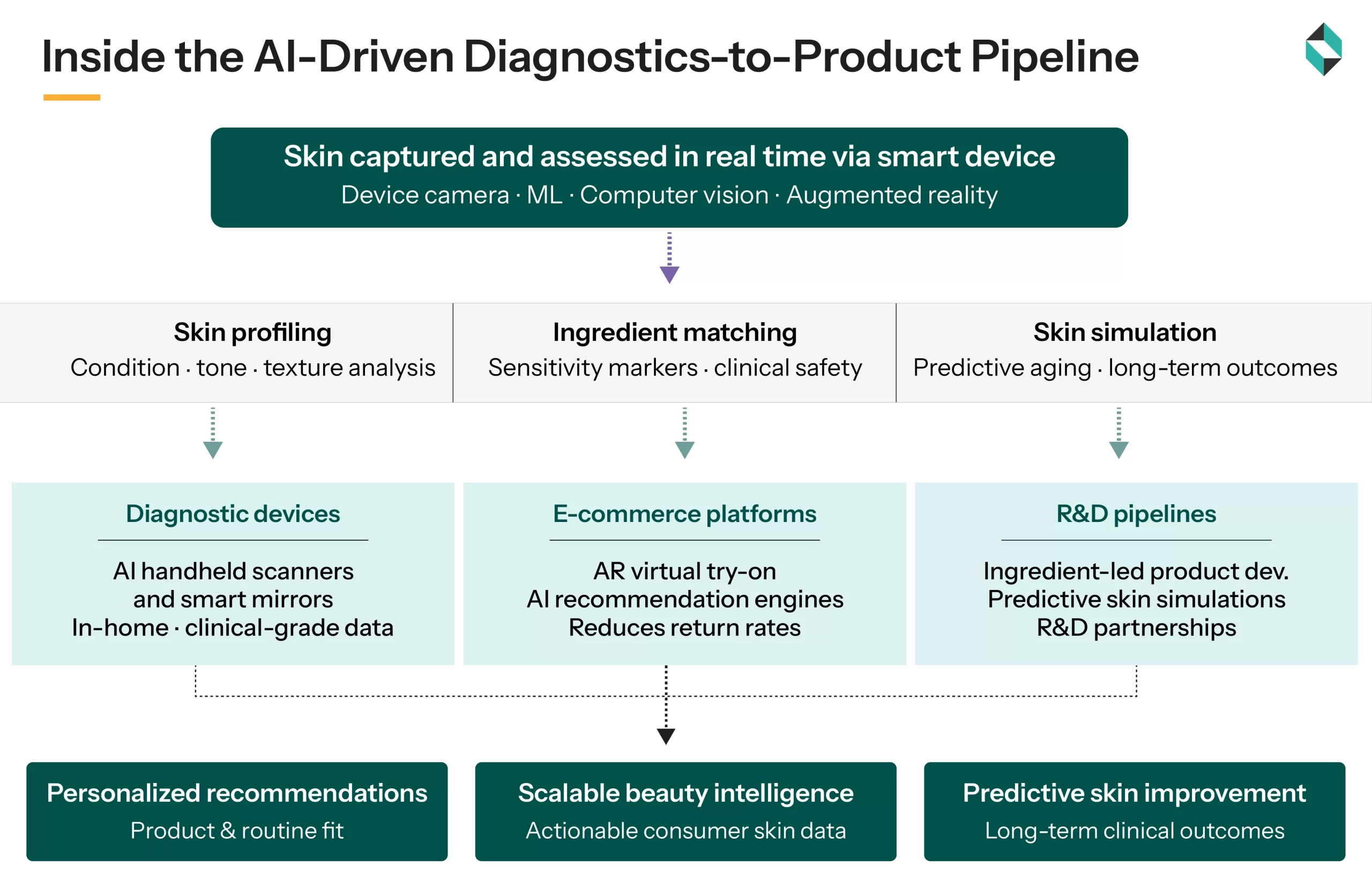
Haut.AI developed a whole AI ecosystem on Microsoft Cloud, utilizing Azure AI and ML studio for scalable skincare solutions. Its SkinGPT platform, launched in Jan. 2025, facilitates hyper-realistic skin simulations for visualizing evolution or changes in skin in response to aging. The platform has already attracted global beauty brands and facilitated new R&D collaborations. AI also examines detailed chemical lists to match ingredients such as retinoid or benzoyl peroxide with a user’s specific sensitivity markers, guaranteeing clinical relevance and safety.
Other than simulation, AI-equipped diagnostics are incorporated across three channels:
- Diagnostic Devices: AI-enabled handheld scanners and smart mirrors allow in-depth assessment of skin at home, with data going directly to the product recommendation pipeline.
- E-Commerce Platforms: AI recommendation engines evaluate skin conditions and recommend tailored products, including virtual try-on features and AI chatbots. AR Virtual Try-On (VTO) engines currently lead the technology landscape with ~42.0% share. They facilitate consumers to digitally test beauty products, which decreases purchase uncertainty and reduces return rates.
- R&D Pipelines: Skincare personalization is the largest application segment, accounting for ~45.0%. Through smartphone imagery, the app assesses dark spots, pore visibility, deep wrinkles, hydration levels, and much more. Companies use the gathered data to build ingredient-specific products and generate predictive simulations that visualize potential long-term improvements in skin health.
L’Oréal has made a significant investment in AI and partnered with NVIDIA to harness the benefits of Gen AI across beauty facets. Additionally, L’Oréal-backed Noli collaborated with Accenture to optimize products and lead the AI-driven consumer experience in skincare. Further, devices such as Perso by L’Oréal take the diagnostic data from the app and use it to form custom lipsticks and other skincare products with utmost precision.
Similarly, the virtual Artist app of Sephora enables users to digitally sample makeup shades, decreasing the guesswork and fostering customer satisfaction through better decision-making. Further, a British brand, LYMA, launched its AI-enabled skin analysis app to help users manage and track the progress of their anti-aging treatments at home, using face-scanning technology trained on more than 3 million skin images.
Overall, AI accelerates skincare development by cutting down the number of formulation trial rounds from six to one or two. Additionally, the time from concept to R&D brief shrinks from months to just days. Cumulative data from ample scans enable companies to assess the quality of micro-trends and devise formulation priorities in real time. Further, cosmetic companies that use proprietary digital advisors to collect zero-party biometric data benefit from direct consumer engagement while avoiding restrictions imposed by third-party advertising networks.
Key Constraints in Using Skin Analysis Apps for Hyper-Personalized Innovation
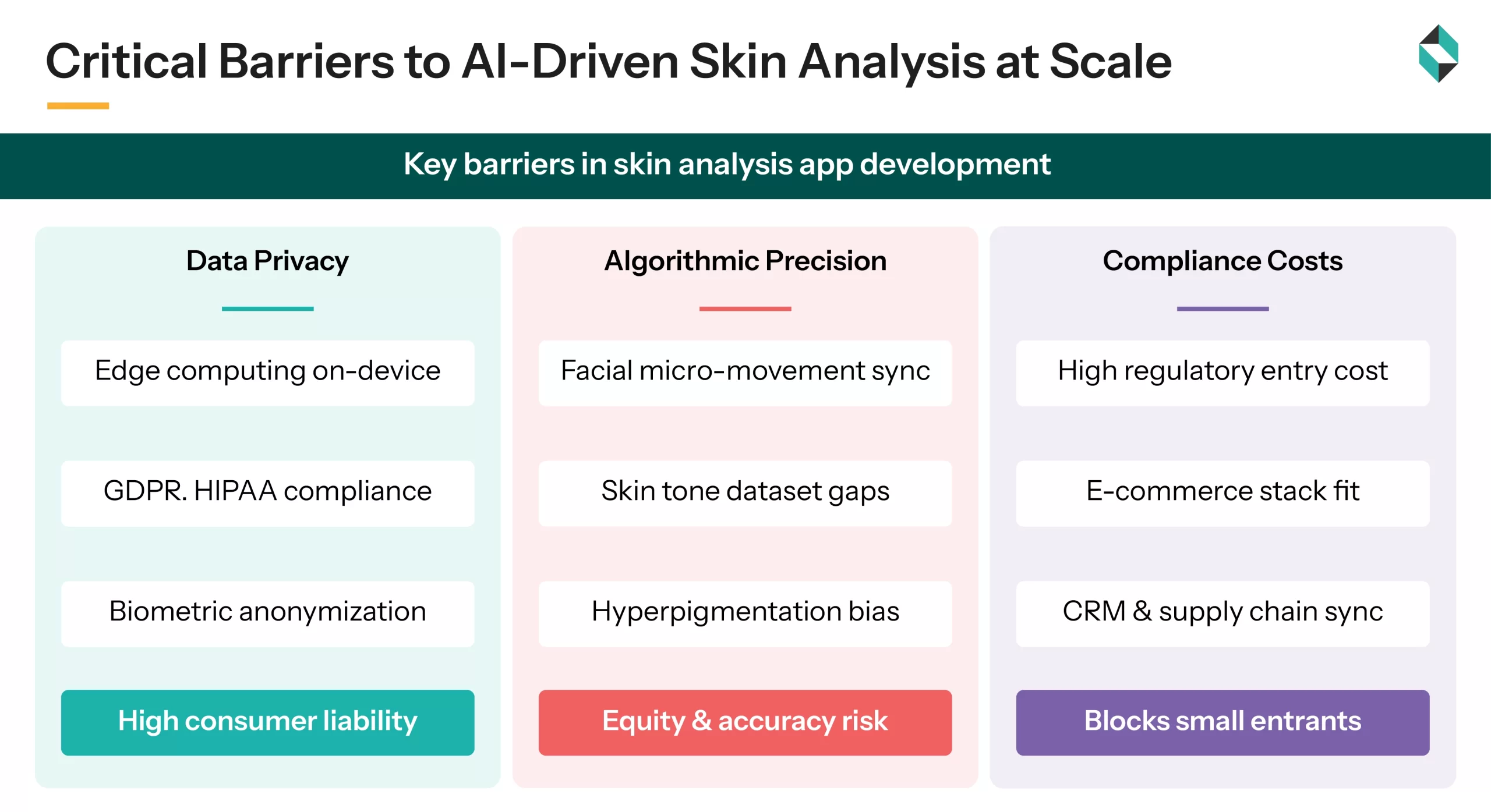
- Data Privacy Concerns and Regulatory Adherence: Heightened regulatory scrutiny around biometric data privacy is influencing platform architecture. Developers are moving toward edge-computing models, enabling facial scans to be examined on consumer devices without transmitting sensitive biometric information to centralized servers. Overall, GDPR and HIPAA compliance are vital for sustaining user trust with these platforms moving into cloud storage. Haut.AI built a patented facial image anonymization technology by using Gen AI for eradicating generative artifacts while ensuring high accuracy. Consumer-facing applications have high liability without this infrastructure.
- Algorithmic Precision: Advanced tracking algorithms must sync digital overlays with facial micro-movements to ensure realistic results. However, hurdles remain in ensuring correct facial mapping and maintaining algorithmic inclusivity. Also, when training datasets lack diversity, the diagnostic pipeline fails to provide accurate recommendations to users with dark skin tones, leading to suboptimal suggestions for conditions such as hyperpigmentation.
- Compliance and Integration Costs: Robust biometric data privacy rules and the high regulatory costs pose major entry barriers to beauty and personal care companies in using skin analysis apps. AI analytical tools should be compatible with existing e-commerce platforms, supply chain software, and CRM systems.
CPG businesses investing in third-party validation and securing edge-computing architectures before scaling consumer-facing applications do not face integration challenges.
Strategic Implications for Beauty and Personal Care Industry Players
- Developing proprietary AI diagnostics needs huge R&D investment, access to labeled dermatological datasets, and ongoing compliance. Microsoft’s partnership with Haut.AI demonstrates a viable alternative: leveraging cloud-based AI infrastructure to scale without operational limitations. CPG leaders need to assess whether to build internal capabilities or partner with specialized providers.
- The Asian Pacific market is a high-growth market, with India, China, and South Korea experiencing CAGRs of 25.1%, 23.8%, and 24.4%, respectively. Market growth is primarily driven by customer behavior and a robust e-commerce infrastructure. Overall, regional strategy demands localized deployment.
- Companies in North America continue to incorporate advanced AI tools and comply with data privacy legislation to develop skincare products, thereby fueling their steady expansion. Europe experiences stable growth, supported by regulatory frameworks that prioritize data privacy and algorithmic transparency. This environment fosters the adoption of secure edge-computing architectures for facial analysis.
- A heavy boom is seen in AI beauty personalization apps or platforms. Consumers now expect highly accurate product suggestions tailored to their skin preferences or skin conditions. Thus, retailers need to implement advanced facial analysis technologies. Overall, the competitive edge is shifting to quality, speed, and accuracy of data processing.
- Perfect Corp.,Haut.AI, L’Oréal S.A., Revieve Oy, Shiseido Company Limited, The Estée Lauder Companies Inc., and Sephora USA Inc. are key players in the personalized care and beauty segment. These firms compete via algorithmic accuracy and scalable enterprise software platforms. Also, precise facial rendering plays an important role. Therefore, existing players must prioritize early market entry.
Final Words
The diagnostic-to-product pipeline is the operating framework for beauty and personal care companies in 2026 and beyond.
The growth of digital beauty retail is driven by the increased use of AI diagnostics, AR tools, and facial-mapping algorithms that offer highly personalized product recommendations. This shift towards accurate and quick solutions enhances customer satisfaction through real-time skin adjustments, leading to better skin health. Nonetheless, issues like data privacy, algorithmic bias, and technical constraints must be tackled to ensure AI skin analysis apps are used fairly. Moreover, prioritizing data security in AI systems is pivotal for making personalized skincare effective and easily accessible.
Stellarix’s CPG consulting team helps companies identify suitable partners and build innovation pipelines for new product development, while also minimizing risks associated with skin analysis apps through R&D and partner scouting services. We enable companies to stay competitive by shifting from batch manufacturing to streamlined, data-driven, personalized formulations.
Let's Take the Conversation Forward
Reach out to Stellarix experts for tailored solutions to streamline your operations and achieve
measurable business excellence.