Unlock Better Cellular Health: The Next Frontier in Precision Wellness
Executive Summary:
The cellular health market is emerging as a foundational pillar of precision wellness and is projected to reach $7.98 billion by 2035. As scientific research is increasingly linking mitochondrial dysfunction to chronic disease and aging, cellular-level monitoring and intervention are shifting from niche biohacking into mainstream preventive medicine.
Breakthroughs in AI-driven diagnostics, liquid biopsy, wearable biosensors, and mitochondrial-targeted therapies are converging to develop a new paradigm – healthcare that detects, monitors, and rectifies cellular dysfunction before clinical symptoms surface. The competitive landscape in this segment is also moving from generalized wellness production to scientifically validated, AI-powered, personalized cellular health solutions.
Companies that succeed in this segment will be those that integrate AI-powered personalization, consumer accessibility, and scientific credibility. While diagnostics companies must integrate multi-omics data with wearable monitoring to deliver real-time, actionable insights, consumer brands must differentiate with clinically validated ingredients, transparent biomarker evidence, and personalized solutions. Long-term competitive edge will come to those who turn cellular health from a fragmented collection of supplements and tests into a data-driven, cohesive platform.
Cellular health is broadly defined as the science of evaluating and optimizing how your body’s cells function, adapt, and respond to stress. It is one of the most transformative of emerging categories. At the core of this discipline is the mitochondria: the organelle responsible for generating most of the cell’s energy as ATP, while also regulating metabolism, calcium-mediated signaling, and programmed cell death (apoptosis). Mitochondrial dysfunction is now recognized as a hallmark of aging and chronic disease, making cellular-level precision wellness not a luxury but a medical imperative. The cellular health screening market was valued at $3.73 billion in 2025 and is expected to expand at a CAGR of 7.90%. The projected value by 2035 is $7.98 billion.
Why is Monitoring Cellular Health Critical?
Most diseases, from cancer and neurodegeneration to metabolic syndrome, originate at the cellular level, often years before any clinical symptoms appear.
Monitoring and protecting cellular health is, therefore, not simply a wellness trend; it is a keystone of current preventive medicine and biotechnology.
Key Drivers for Monitoring Cellular Health:
- Early Disease Detection: Cellular biomarkers, including oxidative stress indicators, inflammation markers, and mitochondrial output, can identify dysfunction prior to clinical detection, thereby facilitating timely intervention.
- Personalized Medicine: Single-cell diagnostics and artificial intelligence-driven analysis are enabling the development of treatments tailored to an individual’s specific cellular profile, advancing beyond generalized therapeutic approaches.
- Longevity Optimization: Biological age can be used for modifications and managing proactive lifestyle modifications and therapeutic choices. This would positively influence the health span.
- Preventive Cost Reduction: Correction of cellular dysfunction and early detection can substantially decrease subsequent healthcare costs related to chronic disease management.
A study published in the journal Nature Medicine analyzed blood proteins from nearly 45,000 people to estimate the biological age of 11 organs. The study concluded that a youthful brain and immune system are among the strongest predictors of longevity, validating the cellular health paradigm as scientifically rigorous and clinically meaningful.
What Hidden Factors are Quietly Accelerating Your Cellular Decline?
Multiple factors, both inside and outside the cell, can affect how cells work. Understanding these factors is the first step in designing effective prevention measures.
| 🔥 Chronic Inflammation: Inflammation causes disruption in normal cellular signaling, which leads to damage in organelles. | ⚡ Oxidative Stress: Free radical accumulation leads to an increase in oxidative stress. Damages cellular membranes, proteins, and DNA, impairing energy production and repair. |
| 💊 Nutritional Deficiencies: Insufficient intake of macro and micronutrients, including vitamins, minerals, and amino acids, limits how effectively cells repair, replicate, and produce energy. | 😴 Sleep Deprivation: Not getting adequate 7 to 9 hours of sleep leads to reduced cellular recovery speed. New research (2025) links sleep pressure directly to mitochondrial waste accumulation in brain cells. |
| 🏭 Environmental Toxins: Pollution, heavy metals, and smoke impose an oxidative burden that accelerates cellular aging and genomic instability. | 🚶 Physical Inactivity: Inadequate or lack of physical activity affects mitochondrial biogenesis and metabolic efficiency, impairing tissue repair and energy metabolism. |
What Breakthrough Innovations are Redefining Cellular Health?
Experts from biotechnology, AI, and precision medicine are working together to give rise to a new generation of tools. Their unmatched accuracy would help to detect, monitor, and correct cellular dysfunction.
| Innovation | How It Transforms Cellular Health Monitoring |
| Liquid Biopsy | Blood tests help to detect circulating tumor DNA, exosomes, and cell-free RNA. This helps doctors detect cancer at an early stage. It is cost-effective and less time-consuming, without tissue sampling. |
| AI-Driven Diagnostics | Machine learning models analyze millions of biomarkers to predict disease risk, identify aging signatures, and help to personalize longevity interventions at the single-cell level. |
| Next-Generation Sequencing (NGS) | Whole-genome and single-cell sequencing reveal genetic mutations, epigenetic changes, and transcriptomic profiles that underlie cellular dysfunction and disease predisposition. |
| Wearable Biosensors | Continuous monitoring of metabolic markers (glucose, lactate, cortisol) provides real-time insights into cellular health. The integration with AI health platforms provides advantages in interpretation. |
| Lab-on-a-Chip Microfluidics | A miniaturized diagnostic chip performs complex cellular analyses from a finger-prick blood sample. Thus, enabling point-of-care screening at home or in the clinic. |
The Hidden Science Behind Cellular Health: Discoveries that can Change How You Age
Leading research institutions worldwide are uncovering the molecular mechanisms that connect diet, lifestyle, and mitochondrial health, revealing new therapeutic targets.
| 1 | Leucine & Mitochondrial Efficiency Scientists discovered that the amino acid leucine enhances mitochondrial efficiency by preserving critical energy-producing proteins. By downregulating the protein SEL1L, leucine prevents unnecessary protein degradation, strengthening the cell’s power output. These findings directly link dietary intake to mitochondrial function and suggest therapeutic applications for metabolic and energy-related diseases. |
| 2 | Mitochondria as the Sleep Clock A 2025 study found that mitochondrial waste accumulation in brain cells signals the need for sleep. When mitochondria were made to work harder, sleep pressure increased; when their energy coupling was disrupted, sleep pressure fell. This finding positions mitochondrial health as central not only to energy metabolism but to circadian rhythm and cognitive restoration. |
| 3 | Nanoflower-Enhanced Stem Cells Biomedical researchers demonstrated that coating stem cells with microscopic molybdenum disulfide nanoflowers dramatically boosts mitochondrial production. These enhanced stem cells can transfer surplus mitochondria to aging or damaged cells, restoring their function and resilience. This technique holds promise for treating age-related decline and degenerative diseases through cellular energy restoration. |
| 4 | Mitochondrial Supercomplex Architecture Assembly factor COX7RP reinforces mitochondrial respiratory supercomplexes, improving ATP production efficiency. A study done on mice inferred that mice with enhanced COX7RP expression lived significantly longer and showed better metabolic health. This points to supercomplex stabilization as a viable anti-aging strategy. |
| 5 | Multi-Hallmark Longevity Strategy A major review synthesizing longevity research concluded that targeting multiple cellular hallmarks simultaneously (senescence, inflammation, mitochondrial function, nutrient signaling) produces superior outcomes to single-pathway approaches, mirroring the combination therapy model already proven in oncology and cardiology. |
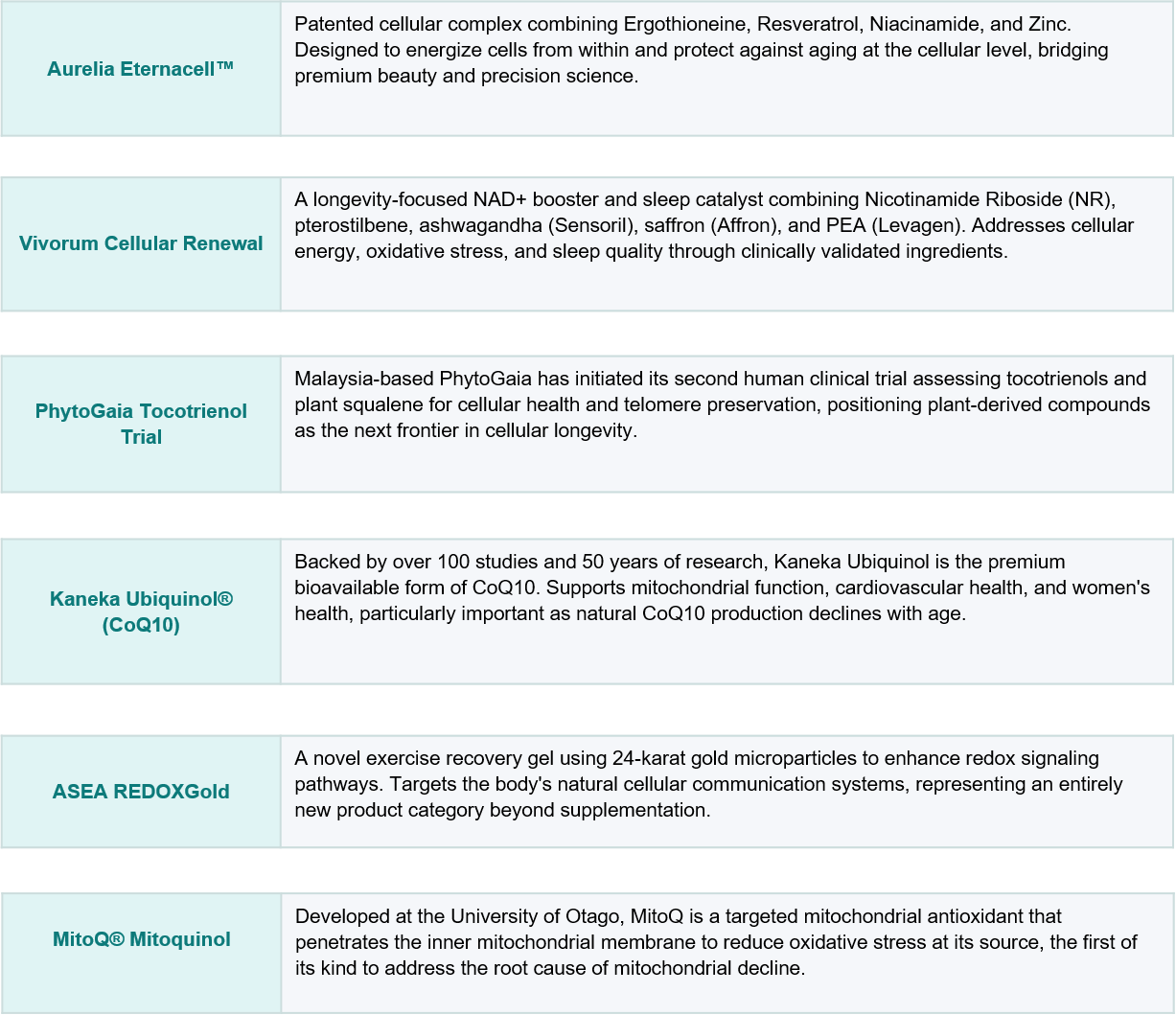
What is the current scenario of marketed products related to this domain? Are there any players who have already stepped into this segment to meet consumer demand?
The science is rapidly translating into consumer-facing products and clinical solutions across beauty, supplementation, diagnostics, and regenerative medicine.
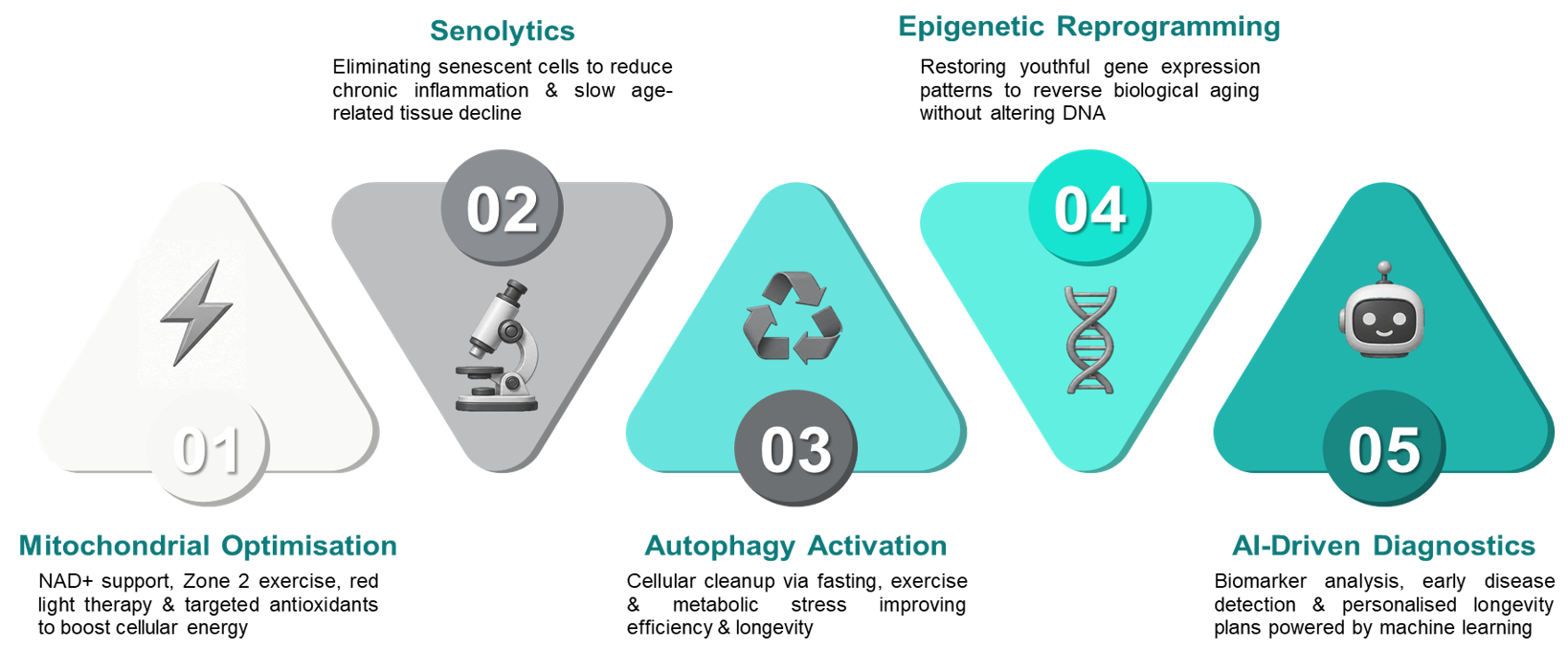
Which New Trends are Shaping the Future of the Cellular Health Landscape?
Urolithin A (UA) has emerged as a promising mitochondrial quality-control agent. Significant clinical data are available that provide evidence for its role in reducing age-related cardiovascular risk by preserving mitophagy.
SGLT2 inhibitors, initially developed for diabetes, are now being explored as senotherapeutic agents for targeting the biology of cellular aging. This shift exemplifies the growing adoption of multi-hallmark, combination-therapy approaches in longevity medicine.
What Does the Future Hold for Cellular Health?
The future of cellular health will be defined by a shift from disease management to biological age reversal. Several converging technologies will make this a reality within the next decade:
- Epigenetic Age Reversal: Partial cellular reprogramming (inspired by Shinya Yamanaka’s Nobel Prize-winning work) has already reversed age-related gene expression changes in mice. Human early-stage trials are currently being conducted.
- Precision Senolytics: Next-generation senolytic drugs would selectively eliminate senescent cells with high tissue specificity. This would minimize side effects on the other cells and also maximize rejuvenation of affected organs.
- Real-Time Cellular Monitoring: Wearable and implantable biosensors will provide continuous, AI-interpreted cellular health data. This would be a crucial step for proactive, personalized interventions.
- Microbiome-Cellular Axis: Extensive research has confirmed the role of the gut microbiome in regulating cellular inflammation and mitochondrial function. Therefore, microbiome optimization becomes a core pillar of cellular wellness strategies.
- Organ-Specific Biological Age: Clinical tools will emerge to map biological age organ-by-organ, enabling targeted longevity interventions for specific high-risk systems.
- Mitochondrial Transfer Therapy: Building on the research, clinical-grade mitochondrial transfer from healthy donor cells to aged or damaged cells may emerge as a regenerative treatment for sarcopenia, neurodegeneration, and metabolic disease.
Key Outlook: Preventive, data-driven interventions will shift healthcare from disease treatment to cellular resilience. The winners in this space will be organizations that combine scientific credibility, AI-powered personalization, and consumer accessibility, turning cellular health from a niche discipline into mainstream medicine.
Stellarix as Your Cellular Health Strategy Partner
Stellarix’s Consulting team brings deep domain expertise to help clients navigate the cellular health opportunity from horizon scanning to commercialization strategy.
| 🔬 Technology & Therapeutic Innovation Mapping: Identifying breakthroughs in mitochondrial optimization, senolytics, autophagy, NAD+ enhancement, and regenerative ingredients with investment and partnership readiness assessments. | 🤝 Collaborator & Ecosystem Mapping: Mapping biotech entities, longevity startups, AI diagnostics firms, and research institutions pioneering cellular reprogramming, biomarker aging clocks, and regenerative therapies. |
| 📊 Competitor Intelligence: Analyzing pipelines, patent landscapes, investment flows, strategic collaborations, and expansion into preventive and personalized cellular health solutions. | 👥 Consumer & Patient Insight Analysis: Uncovering demand trends in biohacking, preventive wellness, personalized supplementation, and biological age testing, translating insights into differentiated market positioning. |
Let's Take the Conversation Forward
Reach out to Stellarix experts for tailored solutions to streamline your operations and achieve
measurable business excellence.