2026 Agrochemicals Industry Outlook

Agrochemicals are going through a structural evolution. The shift is not something that reflects in a few product launches or initial revenues, but much slower, hard-to-reverse changes that are rewiring the entire industry.
The manufacturers are finally moving ahead of the conventional sell more volume, expand acreage coverage, and defend market share approach. As the UN FAO is consistently hinting at the paradox of how this industry is no longer sitting on the sidelines, it is becoming a core player in raising global food production by ~50% by 2050. This is certainly contradicted by the depleting soil microbiome, depleting the very productivity baseline that synthetic chemistry is trying to protect.
Regulatory pressures are no longer distant variables, but an active contributor to the rising pressures on manufacturers. With the EU’s Farm to Fork strategy and the U.S. EPA reassessing neonicotinoids and other active ingredients, it’s time to adopt new strategic approaches to navigate these changes.
Parameters are being set by leading players like Syngeta and Bayer that are not just refreshing their product lines, but betting hard on synthetic, digital, and biological inputs to show some substantial gains in their balance sheets.
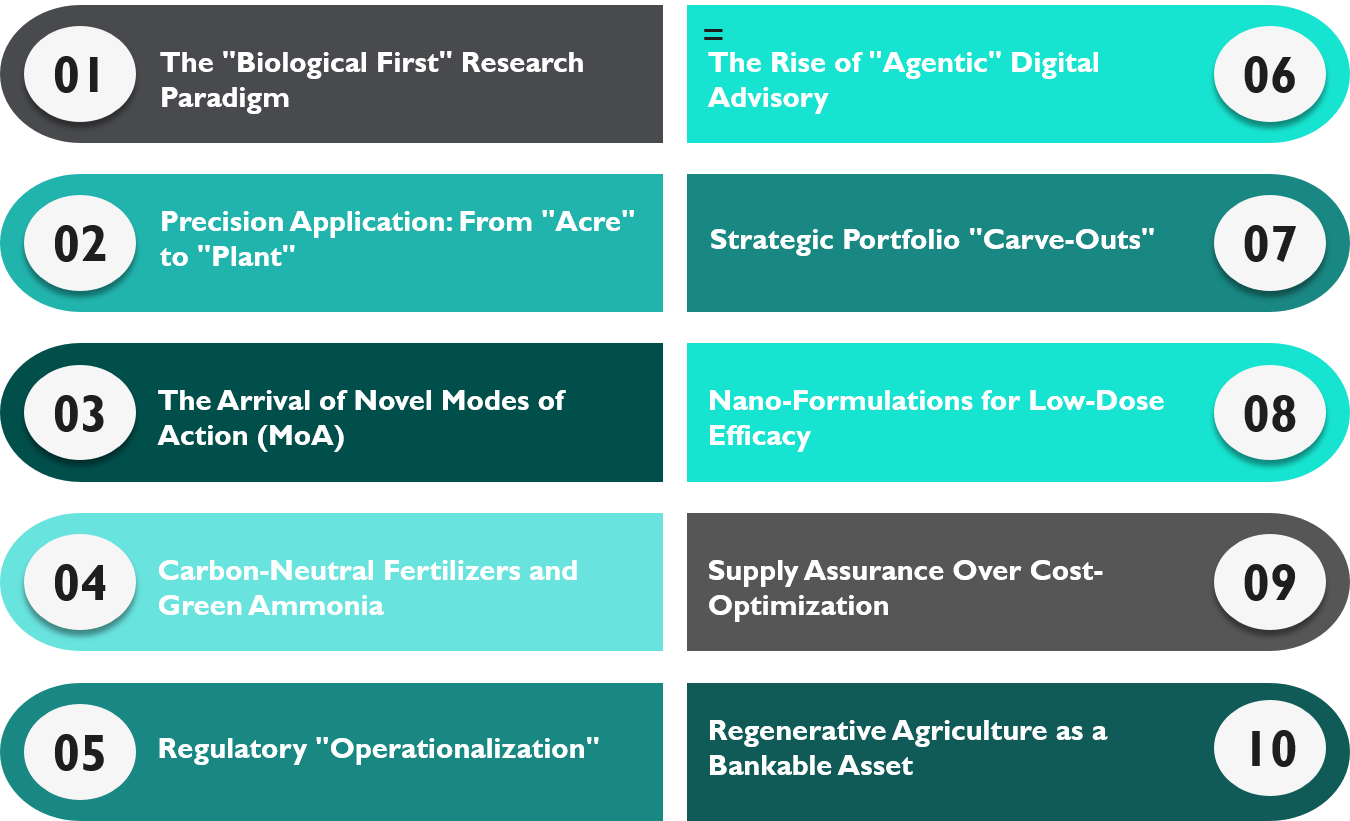
Understanding these shifts requires more than surface-level observation. The full report explores:
- How are they shaping mergers and acquisitions trends in this industry?
- Investments are flowing into which areas?
- What kind of regulatory drivers are shaping agrochemical strategies?
- What kind of tactical and long-term vision is required to navigate these shifts?
Download the complete PDF – Get the strategic intelligence your competitors are already using.
Let's Take the Conversation Forward
Reach out to Stellarix experts for tailored solutions to streamline your operations and achieve
measurable business excellence.