How Healthcare Sustainability Leaders are Driving a Net-Zero Supply Chain?

Key Takeaways:
- In 2026, sustainability in healthcare surpassed being a competitive edge
- The healthcare ecosystem accounts for ~5% of the carbon footprint, with 70% of its emissions rooted in its supply chain operations
- Circular procurement, renewable infrastructure, green logistics, and digital traceability are key innovations driving the healthcare supply chain towards sustainability
- Hospitals implementing smart energy systems and renewable energy practices achieve double-digit reductions in OpEx and generate additional revenue from waste-to-energy
Redefining Healthcare Supply Chains for a Net-Zero Future
The healthcare sector faces an urgent challenge of minimizing and optimizing the environmental implications of its clinical activities. Pharmaceutical companies, medical device manufacturers, and hospitals all collectively account for ~5% of the carbon footprint, with approximately 70% of emissions originating from their supply chain operations.
Strict sustainability norms and supply chain bottlenecks create more roadblocks for healthcare service providers in fulfilling ESG expectations. Apart from this, inefficiencies related to single-use waste and excessive packaging adversely affect sustainability budgets.
Market players also struggle with redundant inventory that eventually strains their sustainability goals and budgets, highlighting the need for a resilient healthcare supply chain.
In 2026, sustainability has shifted from being a competitive edge to a fundamental necessity for healthcare companies, especially as it links operational efficiency with long-term competitiveness. Additionally, implementing carbon-neutral practices within the supply chain is capital-intensive due to already established processes.
The blog explores key innovative practices that are redefining and strengthening sustainable supply chains in healthcare. It also covers prominent roadblocks and the strategic implications of decarbonizing supply chain activities
Emerging Innovations Accelerating Transition to Sustainable Supply Chains in Healthcare
- Circular Procurement & Product Lifecycle Reuse
Increasing remanufacturing and reuse programs in healthcare facilities for medical supplies helps reduce the carbon footprint of procurement and the overall supply chain. Advanced sterilization ensures that reuse is both economically feasible and secure. It rejects outdated practices relating to disposable medical materials.
- Renewable Infrastructure & Green Logistics
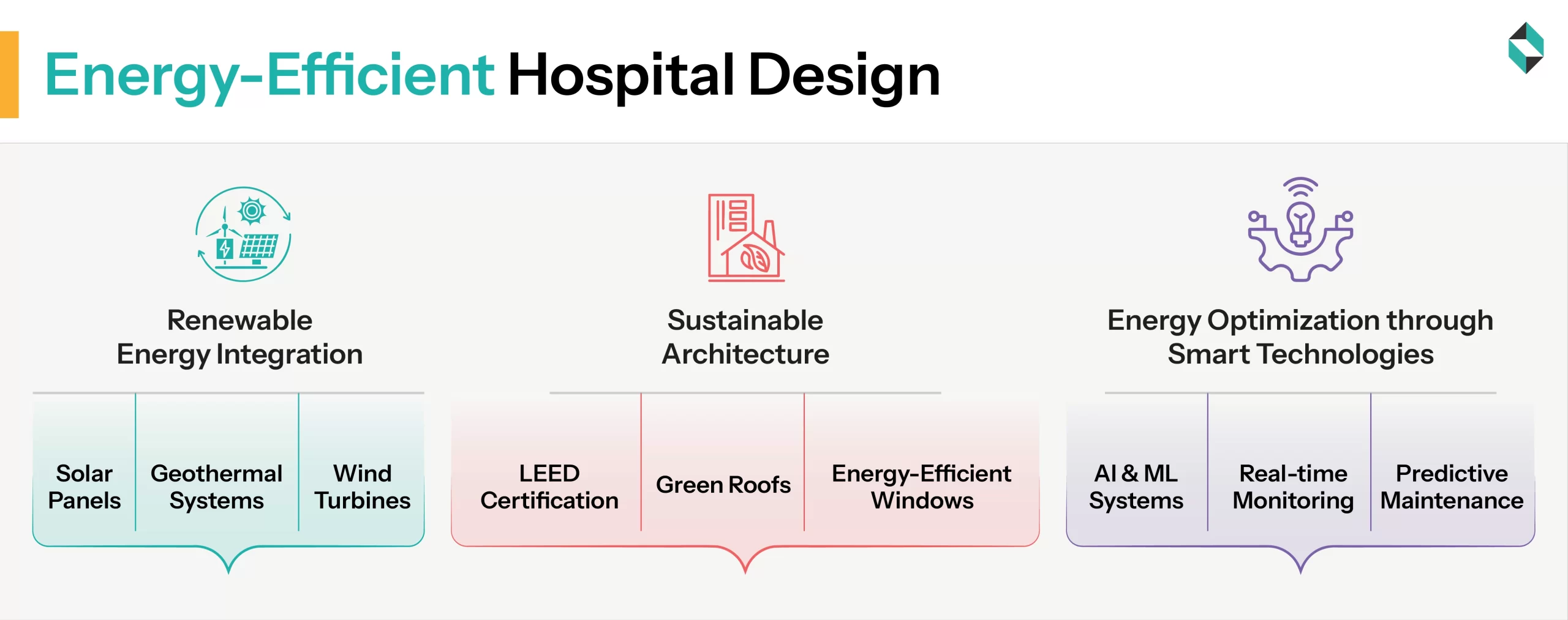
Medical facilities use renewable energy sources like geothermal, wind, and solar to decrease the environmental footprint of the healthcare supply chain. LEED-certified hospitals, optimized HVAC systems, and green roofing are key elements in building energy-efficient infrastructure. All these elements contribute towards building eco-friendly healthcare facilities.
- Digital Traceability
IoT and analytics, along with AI technologies, render real-time insight into cost drivers and resource use across various supplier networks. Predictive tools forecast disruptions in advance, helping to measure sustainability performance and optimize logistics in healthcare supply chain activities.
Also read one of our perspective insights on Net-Zero Hospitals – Role of DigiTech in Sustainable Healthcare
- GenAI
Gen AI and predictive analytics enable the proactive identification of energy inefficiencies and optimized resource utilization. Integration of Gen AI has a direct impact on waste management as well. Healthcare industry players are increasingly embracing AI for balancing data-driven sustainability efforts with energy-demand effects.
- Smart Supplier Networks
Sustainability-linked contracts and blockchain-based traceability enable accountability among supply chain network players. Accomplishment of ESG targets and low-emission sourcing are major benefits of smart supplier networks.
“Healthcare leaders are actively integrating AI-powered technologies and focusing on data visibility for achieving resilient and decarbonized healthcare supply chains. Strategic decision-making and predictive insights are at the core of this change, where next-gen leaders must focus on green procurement and actively embrace circularity principles in healthcare operations.” – Stellarix Expert
What is Blocking Healthcare Leaders from Turning Sustainability Goals into Measurable Results?
- Fragile Supply Chain: Overreliance on a single supplier and insufficient visibility across the multi-tier network lead to significant inventory waste and service disruptions. Thus, supply chain vulnerabilities need to be proactively managed to evade barriers to attaining NZE goals.
- Regulatory Complexity: The absence of unified ESG frameworks and reporting standards creates complexities in attaining low-carbon emission goals. Also, it is critical to navigate the NHS Net Zero Supplier framework. Moreover, the lack of coherent sustainability metrics that combine financial and environmental performance worsens challenges for organizations.
- Rising Operating Expenses: Energy, materials, and logistics costs continue to increase. High expenses eventually narrow margins for healthcare providers, thereby reducing capital availability for carbon-neutral strategies.
- Cybersecurity Threats: With digital transformation at the forefront, the risk of cyberattacks in the healthcare supply chain increases, underscoring the need to ensure data integrity.
Strategic and Commercial Implications of Decarbonized Healthcare Supply Chain
Some prominent commercial benefits and strategic impacts of advancing sustainable supply chain practices in healthcare facilities are:
| Sustainable Supply Chain Strategies | Benefits/Implications |
| Green Building Certification (LEED) | Enhance energy efficiency: 30–50 % reduction in total building energy use |
| Renewable Energy Integration | Reduces dependency on fossil fuels: 20–40 % of total energy supply from renewable sources |
| High-Efficiency HVAC Systems | Lowers energy consumption: 30–40 % decline in HVAC energy use |
| Medical Waste Segregation | Reduces toxic emissions: 10–20 % reduction in carbon emissions |
| Non-Hazardous Waste Recycling | Decreases landfill use: 15–25 % reduction in carbon emissions |
| Reusable Medical Supplies | Reduces single-use items: 20–30 % reduction in carbon footprint |
| Green Procurement Practices | Promotes sustainable sourcing: 10–20 % decline in carbon emissions |
- Operational Efficiency: Organizations that opt for sustainable supply chain strategies proactively achieve high operational efficiency due to streamlined workflows and better energy optimization.
- Risk Resilience: Diversified sourcing and real-time visibility mitigate risk factors while reducing operational disruptions.
- Better Financial Outcomes: Optimized transport and energy-efficient warehousing allow healthcare firms to gain financial benefits through waste reduction and optimal use of resources.
- ESG Differentiation: Healthcare organizations with robust sustainability credentials attract investors and have access to suitable funding sources.
Hospitals implementing smart energy systems and renewable energy practices often see double-digit reductions in OpEx and generate additional revenue from waste-to-energy practices.
Bottomline
The healthcare industry is actively moving toward net-zero supply chain goals amid increasing financial and regulatory pressure to adopt carbon-neutral practices. Leaders are gradually getting closer to achieving NZE goals through circular procurement, renewable infrastructure, and cross-sector partnerships in addition to supplier engagement.
However, achieving measurable impact and commercial value depends on overcoming key barriers and tactfully aligning environmental, business, and clinical outcomes. Healthcare consulting experts at Stellarix help market players address challenges in achieving net-zero goals, from cybersecurity risks to regulatory and supply chain vulnerabilities. Through our sustainability services, we assist healthcare firms in managing their energy resources and developing effective green architectural designs, optimizing their supply chains, and ensuring business resilience in the net-zero era.
Let's Take the Conversation Forward
Reach out to Stellarix experts for tailored solutions to streamline your operations and achieve
measurable business excellence.