Vapor Lock: The Global Sulfur Supply Crisis 2026
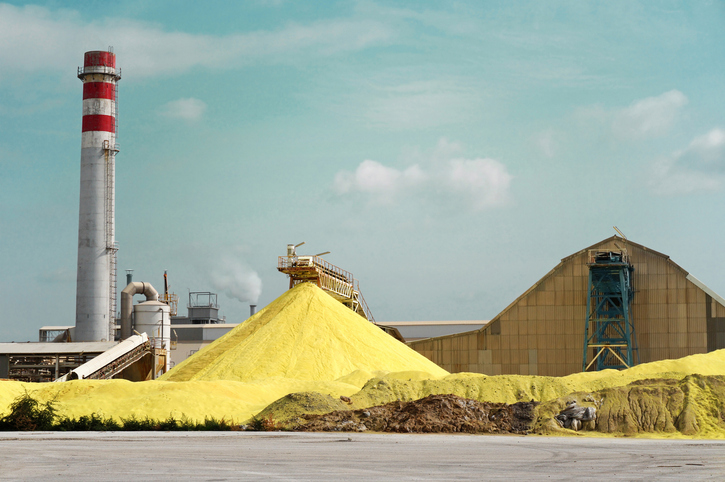
The sulfur market was already witnessing the dual effect of several supply-side contractions and a rapid release of demand from the new energy sector. Now, in 2026, amid geopolitical conflicts, the global sulfur and sulfuric acid market is entering an era of uncertainty and long-term supply crunch. Export bans imposed by China, Turkey, and Russia, which are accompanied by the crisis in the Strait of Hormuz, are constituting a “triple supply shock”, whose ripples extend to several industries worldwide.
China is hinting at an approx. 2.8 million-ton decline in sulfuric acid exports. However, that’s not the end of the story, as Russia and Turkey have also joined in. While Russia has extended its sulfur ban up to June 2026, Turkey plans to restrict sulfur exports in the second and third quarters of 2026. All these factors are aggravating supply chain complexities. These developments are redefining pricing dynamics and affecting international trade flows across different sectors.
Decoding the Triple Supply Shock: The Problem
A brief snapshot of the triple supply shock is as follows:
| CHINA (Acid Ban) | RUSSIA (Sulfur Ban) | TURKEY (Sulfur Ban) |
| Effective: May 2026 (through year-end) | Effective: Nov 2025 → Extended to June 30, 2026 | Effective: April 7, 2026 (Q2–Q3) |
| 2025 Exports: 4.6M tons acid | Why: To stabilize the domestic fertilizer supply” after drone strikes on the Astrakhan plant | Why: Middle East conflict drove sulfur prices up 35–40%; domestic shortage |
| 2026 Projected Exports: ~1.2M tons | Exemptions: EAEU members, Kazakhstan transit, humanitarian aid | 2025 Exports: ~226.5K tons sulfur (mostly to Egypt, Tanzania, Greece) |
| Major seaborne supply void created | ~60% of Russia’s sulfur from a single facility (Astrakhan) will be impacted by strikes | Impact: Tightens the Mediterranean sulfur market |
1. China: Acid Export Halt
China, with 4.6 million tons of sulfuric acid exports in 2025, is projected to cut exports to ~1.2 million tons in 2026. This sharp decline is mainly due to domestic priorities, specifically the need to stabilize fertilizer supply amid rising demand. Such regional priorities are posing challenges for industries dependent on China for sulfur imports.
2. Russia: Elongated Sulfur Ban
Russia’s sulfur export ban was first imposed in Nov. 2025. This ban is now extended till June 2026. The extension is primarily the outcome of supply upheaval caused by drone strikes targeting the Astrakhan facility, which produces nearly 60% of Russia’s sulfur. This extended ban is intensifying logistics and supply complexities for fertilizer industry players and mining industry organizations.
3. Turkey: Regional Supply Constraint
Turkey’s sulfur export ban, which is effective from April 2026, is a response to growing domestic scarcity. Sulfur prices increased by ~35-40% owing to Middle East tensions. Although exports of Turkey were ~ 226.5K tons in 2025, which is less in comparison to Egypt, Tanzania, and Greece, its role in the Mediterranean supply chain is crucial. This sulfur halt has serious implications for industrial supplies across the globe.
How is the Global Sulfur Supply Crisis Affecting Some Prominent Industries?
1. Fertilizer Industry
The fertilizer industry is impacted by limited sulfur supply, logistical disruptions through the Strait of Hormuz, which accounts for about 45% of seaborne sulfur trade, and rising input costs.
The Impact: These issues threaten food security, increase costs for DAP and MAP fertilizers, and contribute to rising food prices, all as direct results of the global crisis. Fertilizer costs are set to rise by 15–20% in the initial two quarters of 2026. India faces an increased risk as sulfur stockpiles fall below 2 weeks.
This, in turn, has a negative impact on the production of phosphate. Additionally, there is a risk of decreased agricultural output.
2. Copper Industry
Chile, a top copper producer, relies heavily on importing Chinese sulfuric acid. Due to the current supply chain volatility, ~30% of its imports are at risk.
Major producers like Codelco have locked in long-term contracts at earlier prices; others are dealing with spot market fluctuations, with prices climbing to $280–310 per ton CFR.
The Impact: In areas like the DRC and Zambia, where acid imports account for 85–90% of supply, landed costs have surpassed $1,000 per ton, squeezing margins and threatening production sustainability.
Besides, Copper production is heavily reliant on sulfur, which is essential for all things related to electricity. Copper is crucial for expanding AI capabilities through transformers, grid improvements, and cables. A lack of copper production has an indirect, interrelated effect on the AI sector.
3. Nickel Industry (HPAL)
Shifting cost structures and margin compression are key areas of the Nickel industry affected by the current sulfur crisis.
Indonesia’s HPAL (High-Pressure Acid Leach) nickel operations are among the most vulnerable worldwide. The country depends on the Middle East for 75–80% of its sulfur supply and on China for approximately 60% of its acid imports.
The Impact: Sulfur prices have risen by over 70% this year, from approximately $525 to around $910 per ton, causing acid costs to make up 65–70% of MHP (Mixed Hydroxide Precipitate) cash costs.
This sharp rise is threatening about 450,000 tons of MHP capacity, 10–15% of the global supply, and some plants have already cut output by roughly 10%.
Recommended Responses to Tackle the Global Sulfur Supply Crisis
Finding Viable Sulfur and Sulfuric Acid Alternatives
The industry must shift towards alternatives for addressing the issue of sulfur shortage and decreasing dependence on conventional sulfuric acid. Methanesulfonic acid (MSA) and organic acids like citric acid show significant potential for further use.
Diversification of Supplier Base
Organizations need to actively move procurement towards alternative regions like South Korea, Japan, and Europe. However, these regions together can provide only about 500,000 tons per year, indicating the need for further diversification.
Securing Long-Term Contracts
Long-term contracts offer stability while helping to minimize costs by 30–40% in comparison to spot-market purchases in the contemporary, volatile global realm. Therefore, companies with pre-secured agreements are better equipped to handle price fluctuations.
Localizing Supply Chains
Importing solid sulfur from Canada, Kazakhstan, or Qatar and then transforming it locally is a practical tactic to decrease dependency on global acid markets.
Moreover, there is a need for sufficient capital to execute this strategy, but proper localization is a robust way to ensure supply security in the long run.
Focusing on Process Innovation
The SART process (Sulfidization-Acidification-Recycle-Thickening) allows the recycling of acid in mining operations, decreasing the need for fresh acid by 10–15%. Additionally, Glycine Leaching is a commercially available alternative for processing copper oxide, replacing sulfuric acid with glycine. For nickel production, the Pyrometallurgical Shift (RKEF) method completely eliminates acid use, although it requires higher energy consumption.
Overall, the SART process, the RKEF method, and Glycine Leaching are innovative ways to minimize the consequences of the sulfur supply crisis of 2026 for procurement and supply chain leaders, along with manufacturers.
Bottomline
The sulfur supply crisis reflects structural shifts driven by geopolitical tensions, supply chain concentration, and rising domestic priorities in countries such as China, Russia, and Turkey. Organizations that proactively diversify their supply sources, secure long-term agreements, and invest in innovation will be better prepared to handle this volatility.
Delaying risk management or lacking a coherent risk management approach increases the challenges surrounding escalating costs, supply shortages, and operational disruptions. At Stellarix, our chemical and materials consultants help organizations navigate complex supply chain disruptions with our strategic foresight services. We are assisting clients with:
- Market intelligence and supply risk assessment
- Cost optimization and contract benchmarking
- Technology scouting and innovation advisory
- Supplier diversification and sourcing strategy
As a strategy and innovation partner, Stellarix is helping industry leaders to future-proof their supply chain and enhance business resilience.
Let's Take the Conversation Forward
Reach out to Stellarix experts for tailored solutions to streamline your operations and achieve
measurable business excellence.