What is Holding Back Chemical Industry Leaders from Addressing Scope 3 Emissions?

A Strategic Priority: Scope 3 Emissions Reduction in Chemicals
There is a sharp increase in concerns about Scope 3 emissions in the chemical sector as industrial pressure for carbon neutrality and regulatory oversight intensifies. For years, chemical companies mainly focused on reducing or managing Scope 1 and Scope 2 emissions. However, in many of these companies, roughly 75% of their carbon footprint comes from Scope 3 emissions, which are deeply embedded in the value chain.
Chemical companies leading in Scope 3 carbon emission reporting can create business value in the long run by determining value chain emission sources with the intent to lower them.” – Pinkesh Shah, Energy, Chemical and Materials Business Leader, Stellarix
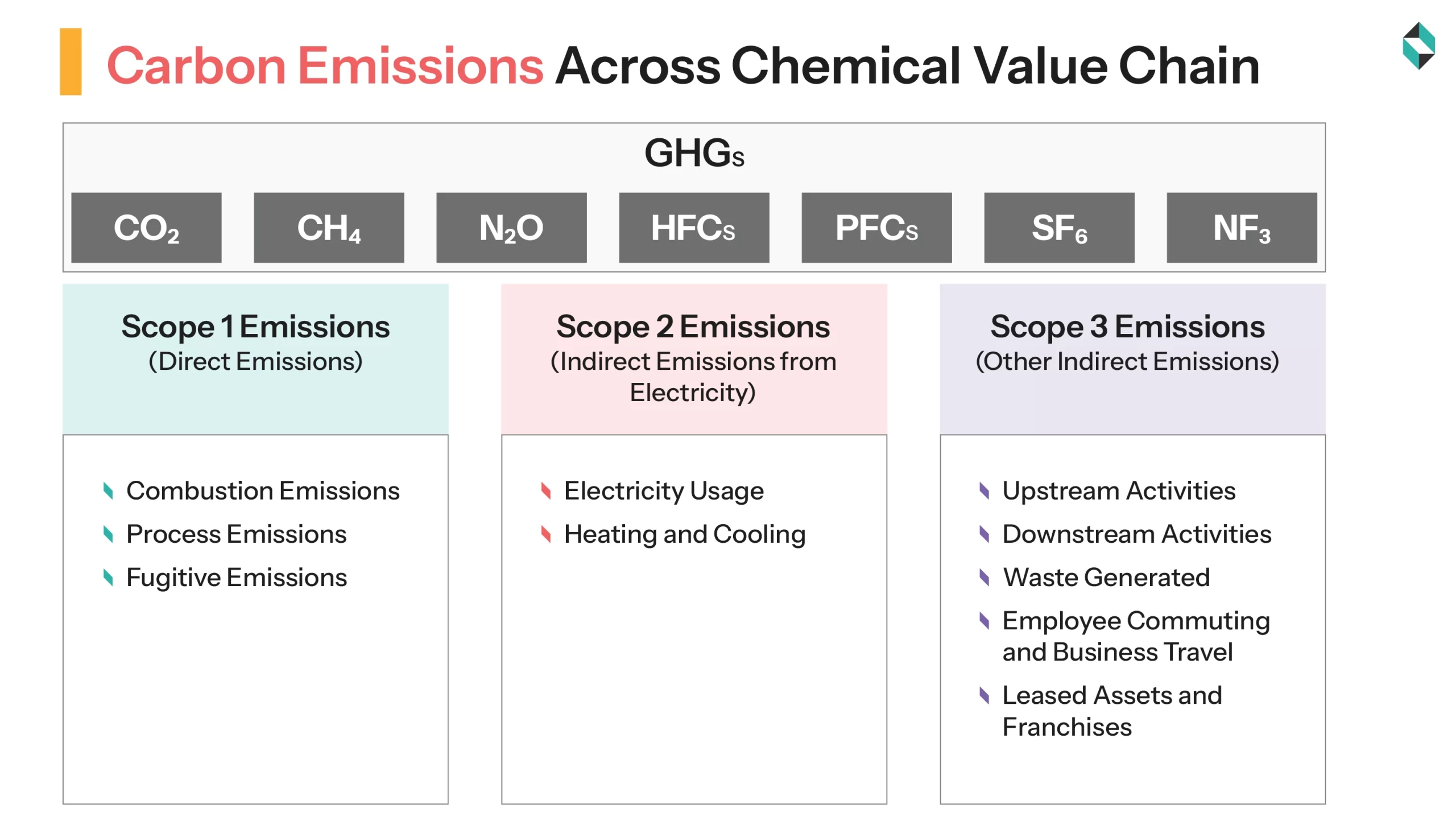
Scope 1 and Scope 2 emissions are direct emissions from owned operations and indirect emissions from purchased heat, electricity, or steam, respectively. In contrast, Scope 3 emissions are indirect and come from upstream and downstream activities across the entire value chain.
New regulatory standards, such as the CSRD (Corporate Sustainability Reporting Directive) in the EU, strict disclosure requirements in Turkey, and the California Corporate Data Accountability Act in the U.S., demand greater transparency across business sectors. Further, investors are seeking data on supplier emissions and considering product carbon footprints (PCF) before awarding contracts. Chemical companies that focus on supplier-level emissions and PCF tracking are at a strategic advantage rather than merely seen as compliant.
Gaps in Existing Practices and Emerging Technologies in Dealing with Scope 3 Decarbonization
Chemical companies struggle with inaccuracy and uncertainty due to relying on generic modeling and average emission factors over actual supplier data. Some still use mass balance attribution in feedstock chains, but these are not connected to real-time operations.
Circular feedstock shifts, which are promoted as promising, are not yet sufficiently mature in many chemical supply chains. Moreover, there is a gap in process decarbonization strategies, as they are rarely coordinated to address the impact of scope 3 emissions.
Novel digital technologies and innovation breakthroughs are making value chain decarbonization and carbon traceability in the chemical industry more actionable and measurable. Some emerging tech includes:
- Carbon Atom Tracing (CarAT): This method deploys chemistry language frameworks for determining carbon origin across value chains in real time. It incorporates atom mapping, ERP data, and linear programming to compute auditable, dynamic tracking of carbon flows. Overall, it facilitates quick attribution of reactions or specific feedback, which is pivotal for Scope 3 reporting.
- Next-Gen Sustainable Feedstocks: The green feedstock market is rapidly growing, with a projected 16% CAGR through 2035. Next-gen feedstock production, such as bio-based, waste-derived, and CO₂-derived materials, will help reduce upstream emissions from raw materials. Joint ventures or partnerships are practical ways to ensure access to sustainable feedback.
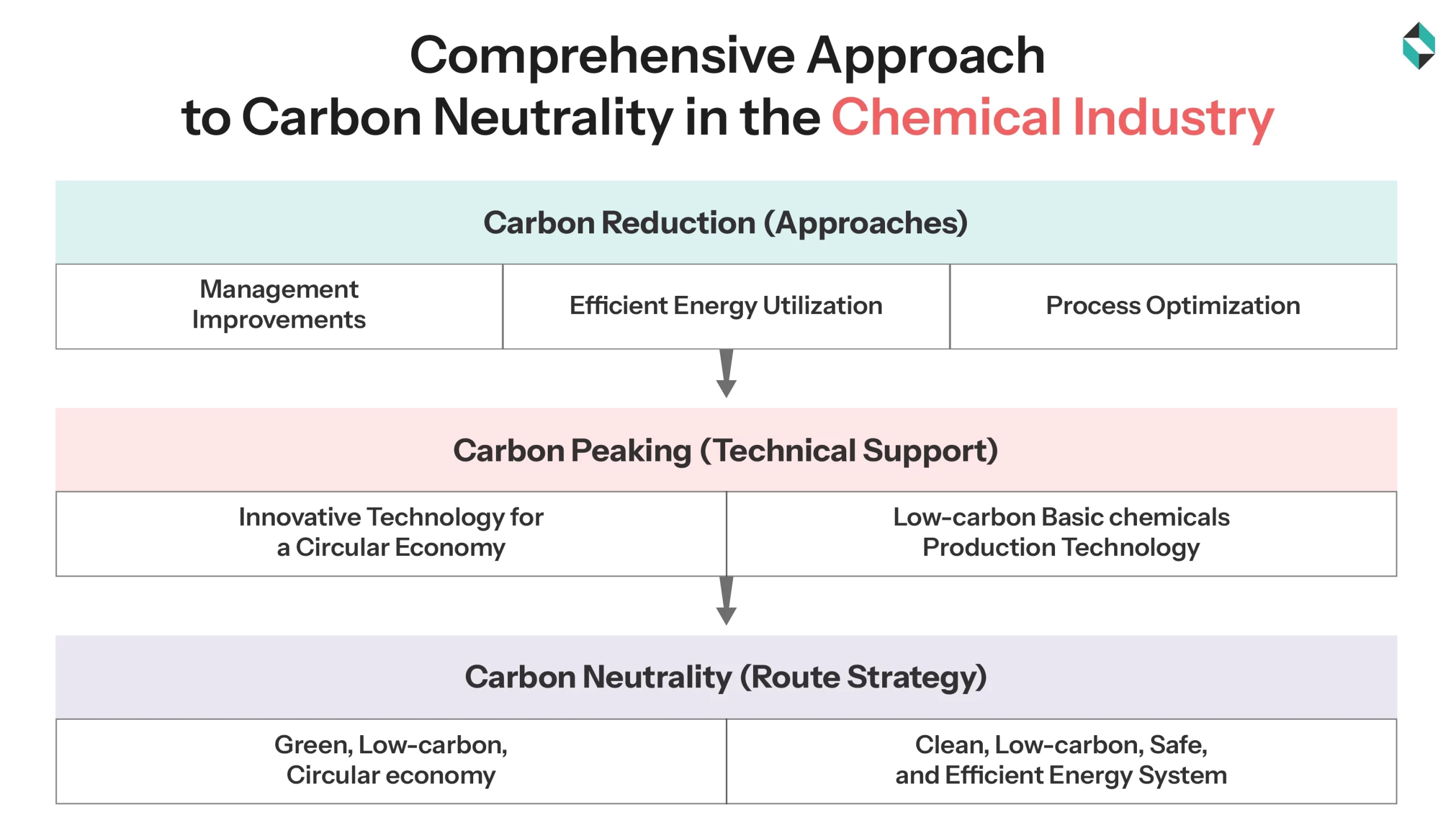
- Multifaceted Approach to Carbon Neutrality: As global climate policies aim for net-zero emissions and seek to reach peak emissions by 2050 and 2030, respectively, the chemical industry must address challenges related to process and energy emissions. Combining the transition to bio-based alternatives with hydrogen-based processes, particularly for CO2-to-olefins and methanol production, helps reduce upstream carbon emissions. Additionally, improved CO2 utilization technologies support circularity.
Real-time Applications: Scope 3 Carbon Reduction
The BASF Group: This German chemical firm integrates the Together for Sustainability (TfS) PCF approach across its entire supply base. The approach enables customers to understand each product’s carbon emissions and make procurement decisions accordingly. Also, BASF is allowing suppliers to compute and report their own PCFs in Asia, thereby effectively pulling Scope 3 transparency relating to upstream processes.
Indorama Ventures Poland: It implemented a structured environmental management system while increasing the utilization of recycled feedstocks and fostering transparency in upstream emissions monitoring. The initiative strengthened customer trust and helped businesses in marketing low-carbon products.
Scope 3 Ambition of Covestro: The organization announced its Scope 3 decarbonization goals in 2025, aiming to reduce 10 million metric tons by 2035. The ambition is based on four key principles: circular feedstocks, efficient production, supplier decarbonization, and product innovations.
The ISCC Working Group on Chemical Feedstocks: The technical group is striving towards traceability by developing analytical frameworks to verify the low-carbon criteria of waste-derived feedstocks and cooking oil.
Challenges Obstructing Chemical Industry Players
- Data Gaps: Inconsistency in supplier-level emission data, particularly in developing markets and among SMEs, hinders carbon-neutrality efforts. Many companies still depend on global averages that misrepresent actual carbon performance.
- Lack of Standardization: Even with TfS and the Partnership for Carbon Transparency (PACT), irregularities persist in recycled content accounting, allocation methods, and biogenic carbon monitoring.
- Cost and Infrastructure: Profitably scaling Green Hydrogen and CCUS technologies across chemical value chains requires proper coherence between long-term policy and incentives. Due to cost and infrastructure constraints, SMEs struggle to take action on Scope 3 emission reduction, while large companies tend to deprioritize Scope 3 projects in the early stages.
- Organizational Capability: Sustainability teams are frequently underfunded, and internal systems often lack integration among finance, procurement, and R&D, resulting in fragmented strategies rather than a holistic approach.
- Policy Uncertainty: Varying global regulations, such as the EU and China ETS and the US IRA, increase compliance complexity, as companies navigate overlapping emission factors and reporting frameworks. Additionally, the lack of unified carbon border adjustment mechanisms and incentives for CO₂ utilization slows deployment.
Through data-driven insights and forward-thinking guidance of Stellarix, you can turn these bottlenecks into strategic opportunities.
Final Words: The Way Forward
In summary, scope 3 decarbonization is the new strategic frontier in the chemical industry. Companies that adopt digital traceability, use low-carbon feedstocks, and establish collaborative value chains can overcome ongoing challenges and gain a competitive advantage in reducing Scope 3 emissions. Decoupling emissions is essential if the industry aims to meet 2050 net-zero goals.
Chemical companies can invest in circular chemistry, develop traceability infrastructure, empower suppliers, and internalize carbon economics, while accurately mapping the majority of their Scope 3 emissions to support the climate-neutrality agenda. Further, collaboration or co-innovation is one of the most sustainable ways for chemical industry companies to reduce Scope 3 carbon emissions.
Stellarix helps businesses overcome pressing challenges, from data gaps to costs and infrastructure, related to scope 3 emission decarbonization, by offering R&D and sustainability consulting solutions enriched with advanced data insights.
Let's Take the Conversation Forward
Reach out to Stellarix experts for tailored solutions to streamline your operations and achieve
measurable business excellence.