Chemical Engineering in Renewable Energy Transition
Chemical engineering is at the core of the global renewable energy transition. From carbon capture, utilization, and storage to hydrogen production, chemical engineering is powering technologies that enable large-scale decarbonization.
It focuses on working with raw materials and converting them into valuable products. Chemical engineers apply their understanding of different sciences to turn lab results into commercial ventures. Also, they develop modular nuclear reactors, increase global solar and wind power, and manufacture high-performing electric vehicles and low-emission chemicals, such as hydrogen and ammonia, for power generation.
The IEA calls this period the “Age of Electricity’ due to a sharp rise in electricity consumption driven by data centers, AI, industrial activity, and electric mobility. Global energy demand is projected to grow in 2025-26 compared to the previous decade. Nonetheless, the increase in 2024 is expected to be below 4.4%, following a 3.3% increase in 2025 and an estimated 3.7% in 2026. These are the highest growth rates observed in the last ten years.
Renewable energy has discovered new opportunities in electrolysis, photocatalysis, and fusion reactions. The International Energy Agency (IEA) states that the world must triple its renewable energy capacity and significantly cut emissions by 2030. To meet this goal, the total energy investment is projected to reach $3.3 trillion in 2025, with renewables and clean energy infrastructure making up $2.2 trillion, roughly double the investment in fossil fuels. Additionally, solar PV investment is expected to be $450 billion, while battery storage investment is estimated to surpass $65 billion.
Renewable Energy: Is Green Hydrogen the Next Generation Fuel?
H2 is seen as the future fuel powering cars, trucks, airplanes, long-haul transport vehicles, and high-temperature, heat-reliant steel/cement/fertilizer industries. Different methods harness hydrogen and have been named green, blue, brown, yellow, pink, white, and turquoise hydrogen.
- Derived from one of the most abundant elements, H₂O, green hydrogen stands out as the most pro-environmental option
- Producers produce blue hydrogen by reforming natural gas in the presence of a catalyst via steam methane reforming (SMR). Subsequently, they employ carbon capture, utilization, and storage (CCUS) to capture the resulting carbon, thereby enhancing the environmental friendliness of this hydrogen variant.
- Using solar power electrolysis, scientists produce yellow hydrogen, which is a relatively new advancement
- Gasification converts coal into brown hydrogen, rendering it environmentally hazardous when released into the atmosphere.
- An electrolysis process utilizes nuclear energy to power pink hydrogen
- White hydrogen production uses fracking, and mostly the process is energy-intensive, requiring heavy machines, chemicals/fossil fuels
- Turquoise hydrogen uses methane pyrolysis to produce hydrogen, a relatively new process. When carbon is captured, it becomes a pro-climate element
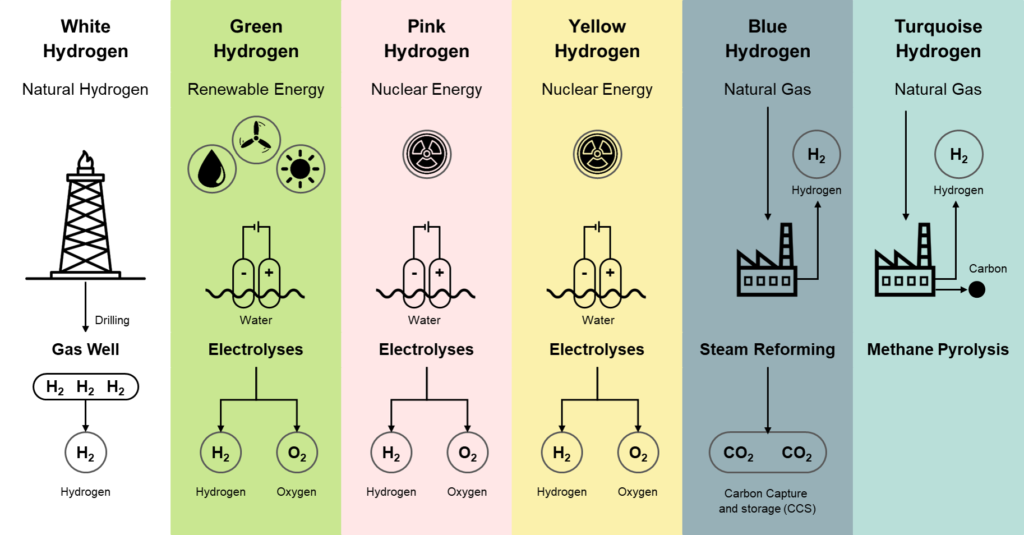
Figure 1: Elucidating Different Hydrogen Sources
The Chemical Engineering behind Green Hydrogen Production
The demand for hydrogen worldwide reached about 100 million tonnes in 2024, a 2% increase from the previous year, and is expected to rise further in 2025-26. Global hydrogen demand grew to nearly 100 million tonnes in 2024, up 2% from 2023, in line with overall energy demand growth. Additionally, investments in green hydrogen increased by $8 billion, nearly doubling in 2025.
Green hydrogen investments doubled in 2025, reaching around $8 billion. Additionally, it is projected that by 2035, low-emission hydrogen will replace approximately 30-35% of fossil-based hydrogen in refineries and heavy industries, which emphasizes the need for an effective renewable energy production system.
To meet hydrogen demand and support scalability goals, chemical engineers are focusing on improving electrolyzer durability and efficiency by optimizing catalyst layer porosity. Key strategies involve creating uniform, small pores to enhance ionomer conductivity and control catalyst agglomeration. Overall, improved membrane electrode designs boost efficiency and reduce ohmic losses.
Some of the leading renewable energy companies worldwide include NextEra, GE Vernova, Brookfield Renewable, Adani Green Energy, Iberdrola, and ACWA Power. Additionally, some of the top companies in the global hydrogen industry are Linde plc, Air Liquide, and Air Products & Chemicals.
Hydrogen is the most abundantly available element. Atomic number 1 shows a global demand forecast of 145 million metric tons in 2030 and 660 metric tons in 2050. Europe and North America’s hydrogen market is projected to grow fivefold from 2030 to 2050.
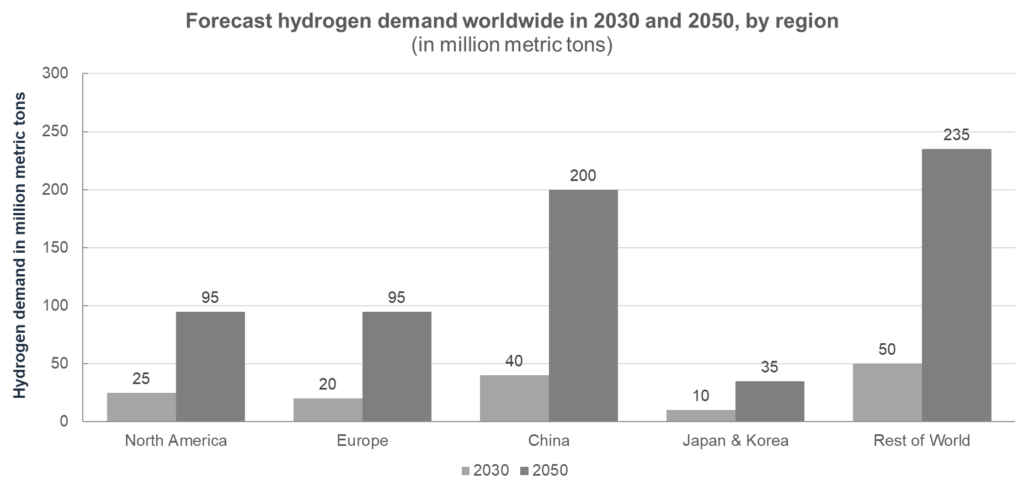
Figure 3: Global Hydrogen Demand Forecast 2030-50
How Material Innovators are Driving Energy Transition through Light-Activated Catalysts?
Over the past few decades, research has focused on photocatalysis to produce hydrogen. Researchers are actively working in laboratories to develop ways to turn it into a viable industrial process. Photocatalysis uses light to drive chemical reactions and generate hydrogen. Additionally, experiments by the Syzygy Plasmonics team are ongoing to explore how ammonia and light (including LED) can be used to create antenna-reactor plasmonic photocatalysts to produce the lightest gas on Earth. Moreover, other promising elements include metal oxides and visible light-active (VLA) materials for water-splitting reactions.
Moreover, photocatalysis is an entirely sustainable way to split water and achieve other responses, making it one of the key drivers of a sustainable, circular economy.
Process Innovation and Design: Linking Battery Chemistry with Recycling
Everything we need today comes with batteries. Different kinds of batteries are in use, namely lithium iron phosphate (LFP), lithium cobalt oxide (LCO), lithium manganese oxide (LMO), nickel-manganese-cobalt oxide (NMC), Lithium titanate (LTO), and Lithium nickel cobalt aluminum oxide (NCA).
The global Li-ion battery segment reached $150 billion in revenue in 2025, with LFP chemistries dominating NMC due to their cost-effective properties. Additionally, expanding battery recycling could reduce the primary demand for Li and Ni by 25% and Co by 40% by 2050.
As batteries use various metals and minerals like Lithium (Li), Cobalt (Co), Nickel (Ni), Aluminium (Al), Manganese (Mn), Vanadium (V), and Lead (Pb), the current intent is to recycle these elements rather than getting them from primary raw material sources. The adoption of thoroughly tested battery recycling techniques is necessary to establish effective recycling capabilities. This includes implementing government intervention, ensuring producer responsibility, and developing a comprehensive understanding of the end-of-life cycle of batteries.
Chemical engineers are utilizing advanced processes in green battery recycling by developing hydrometallurgical methods to recover Li, Ni, and Co from Li-ion batteries. Using deep eutectic solvents (DES) and organic acids, these methods achieve high metal recovery efficiency. Additionally, researchers are enabling the direct regeneration of cathode materials for reuse, reducing the need for raw materials.
The demand for sustainable materials is increasing as the shift to renewable energy accelerates, posing more challenges for chemical engineers. For instance, scaling up bio-based materials involves significant obstacles related to process design, costs, and structural stability. Additionally, it becomes difficult to navigate strict regulations like the EU’s Construction Products Regulation (CPR) and CE marking when using these materials. Overall, players in the chemical industry should aim to overcome regulatory and technical barriers associated with next-generation sustainable materials to build a low-carbon future.
Renewable Energy: Hydrogen Fuel Cells Changing Mobility
Researchers are considering hydrogen fuel cells for long-haul journeys involving class 8 trucks. In drivetrain technology, these fuel cells surpass electric cells in performance, as they enable the refueling of a 100 KG hydrogen tank 15 times faster and eliminate the need for frequent stops. Concerning road transport, heavy trucks are the rapidly growing segment for fuel cell EVs. Here, China accounts for around 95% of the international commercial vehicle fuel cell stock.
Daimler is the company developing this technology. Unlike electric batteries, hydrogen fuel cells generate their own electricity on board. Additionally, Renault’s hydrogen vehicle uses pressurized hydrogen fuel cell power along with a lithium-ion battery to operate its car. The fuel cell relies on an electrochemical reaction called oxidation-reduction (redox), which transforms hydrogen into electricity.
A significant challenge in chemical engineering related to hydrogen energy is improving the long-term durability of Polymer Electrolyte Membrane Fuel Cells (PEMFCs) by preventing the degradation of Nafion membranes and Platinum-group metal catalysts. Currently, research mainly focuses on transitioning to non-precious metal catalysts (M–N–C) and developing reinforced membrane structures to meet durability goals and maintain performance.
Moreover, the major manufacturers in the hydrogen fuel cell market include FuelCell Energy Inc., Bloom Energy, Hydrogenics Corporation, Ballard Power Systems, SFC Energy AG, Nedstack Fuel Cell Technology B.V., Doosan Fuel Cell America, Inc., and others.
The fuel cell market is growing at a rapid pace. In addition, the transportation vertical of the fuel cell market is also gaining much traction, as are portable fuel cells for use in laptops, mobiles, and personal electronics.
Chemical engineers act as catalysts. They analyze the physical world at the atomic level. They lead the development of new materials, design large-scale industrial processes, and oversee efficient production in chemical plants and other industrial settings. They develop process safety at plants/reactors and decide the best storage of renewable fuels and safe/economical transportation. Chemical engineers in the environmental/renewable sector use their expertise to convert abundant organic and inorganic compounds into new materials/fuels. They also capture harmful GHGs and develop various processes to accomplish the broad net-zero emission goals.
Emerging Trends in e-Fuels and Carbon Capture
Apart from the battery system and hydrogen, chemical engineering is crucial to advancing the fields of CCU and electrofuels. The primary challenge identified is developing selective tandem catalysts that convert CO2 and hydrogen into methanol, which is then converted into light olefins for chemical production in a single reactor system. In 2025, efforts focused on closing the gap between commercial applications and pilot projects, despite the high costs involved.
Sustainable Nuclear Fusion Tech to Produce Helium
With the earth’s population expected to reach 8.6 billion by 2030, stable energy generation is key to our future security and cohesion. Helium is the second most abundant element in the universe. Helion Energy is building a fusion reactor to generate electricity through the isotope deuterium.
Deuterated water (HDO) occurs in normal water. It’s available in copious amounts in our Earth’s oceans, as every atom has a nucleus with electrons, protons, and neutrons.
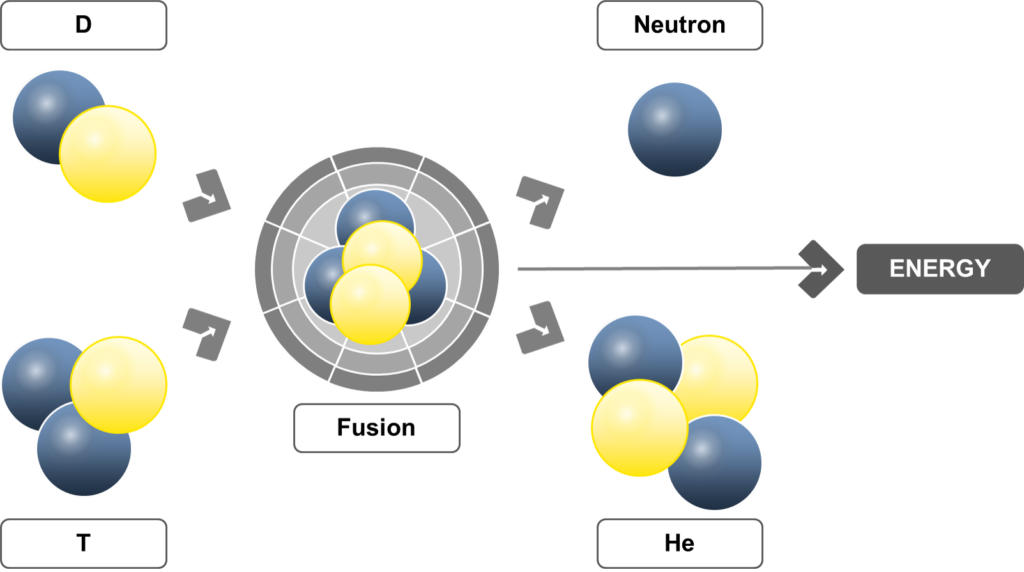
Figure 4: Nuclear Fusion at the Atomic Level
Heating leads to the loss of electrons from positively charged neutrons, forming a hot cloud known as plasma. Scientists and researchers term the process of combining two light nuclei into a single, heavier element nuclear fusion. Helion produces electricity directly from the charged plasma itself without the need to use energy to turn steel turbines. Additionally, chemical engineers are the ones who manage this pioneering nuclear fusion technology production on a large scale.
The global helium market is valued at around $2232 million in 2025 and is projected to grow at a CAGR of 5.31% between 2025 and 2030. The key players in helium production include Exxon, Gazprom, Qatargas, Linde, PGNiG, and Air Liquide. Helion is supported by the artificial intelligence (AI) company ChatGPT, and Microsoft has already launched its yet-to-be-produced electricity. Clean energy has become a top focus for leading IT companies today.

Figure 5: Current Global Energy Investment in Clean Energy
Conclusion
Chemical engineering has always driven future energy transitions and major industrial shifts. Renewable energy is humanity’s most important and rare opportunity to restore Earth’s atmospheric temperatures. As a result, green hydrogen, helium, ammonia, Ilios, wind, modern biomass, MSW, and potential future clean energy sources generate electricity. Another advanced materials company, Carbon Rivers, in partnership with the U.S. Department of Energy, has figured out how to recycle decommissioned wind blades into useful glass.
The current and future energy outlook emphasizes clean fuels, renewable energy, sustainable agriculture, and green chemistry. Hydrogen fuel for off-road vehicles, commercial energy production from helium likely by 2028, and the adoption of AI would introduce much-needed oversight in the energy sector. Furthermore, chemical engineers are at the forefront of all current innovations in the clean energy transition. They are also responsible for scaling up new clean technologies for industrial manufacturing. Additionally, standardization, public-private partnerships, international collaborations, and renewable energy value chains will enhance clean energy production.
The energy consulting team at Stellarix helps businesses navigate the complexities of the renewable energy market by providing strategic guidance, partner scouting, and R&D services. This supports sustainable innovation and risk mitigation at the intersection of chemical engineering and renewable energy initiatives.
Let's Take the Conversation Forward
Reach out to Stellarix experts for tailored solutions to streamline your operations and achieve
measurable business excellence.