Transformative Potential of Generative AI in MedTech

A new branch of artificial intelligence, called Generative AI or Gen-AI, has recently evolved and is rapidly being adopted across industries. Gen-AI represents a significant update over conventional AI. Unlike conventional AI, which utilizes predictive models to make predictions, Gen-AI can create content and synthetic data in real time. This capability has propelled Gen-AI to be leveraged by multiple industries across their workflows.
The article will delve deeper into generative AI in the MedTech industry and its revolutionary capabilities, impacting the domain. Also, it will highlight how Gen-AI is being incorporated from the product’s research and development phase to corporate functions, the advantages of Gen-AI, its industrial use cases, and the challenges associated with it.
What is Gen-AI?
Generative AI operates based on sophisticated machine learning techniques, particularly within generative models. The process comprises learning intricate patterns from pre-existing data and utilizing this acquired knowledge to create novel and distinct outputs. Gen-AI’s innovative aspects lie in its ability to produce content of a highly realistic and intricate nature, mirroring human creativity.
Recently, multiple trained models have come out that can generate various content. For example, Open-AI’s GPT-3 (text generation), GitHub’s Co-Pilot X (code generation), Runway’s Gen-2 (video generation), Meta’s SeamlessM4T (speech-to-speech and text-to-speech translation), and ElevenLabs (voice synthesis).
How Can MedTech Leverage Gen-AI?
One of the most prominent challenges in incorporating Gen-AI is knowing how and in what area of application to implement it. Due to its diversified applications, it’s important to identify and prioritize the right areas for its implementation. Here are a few areas;
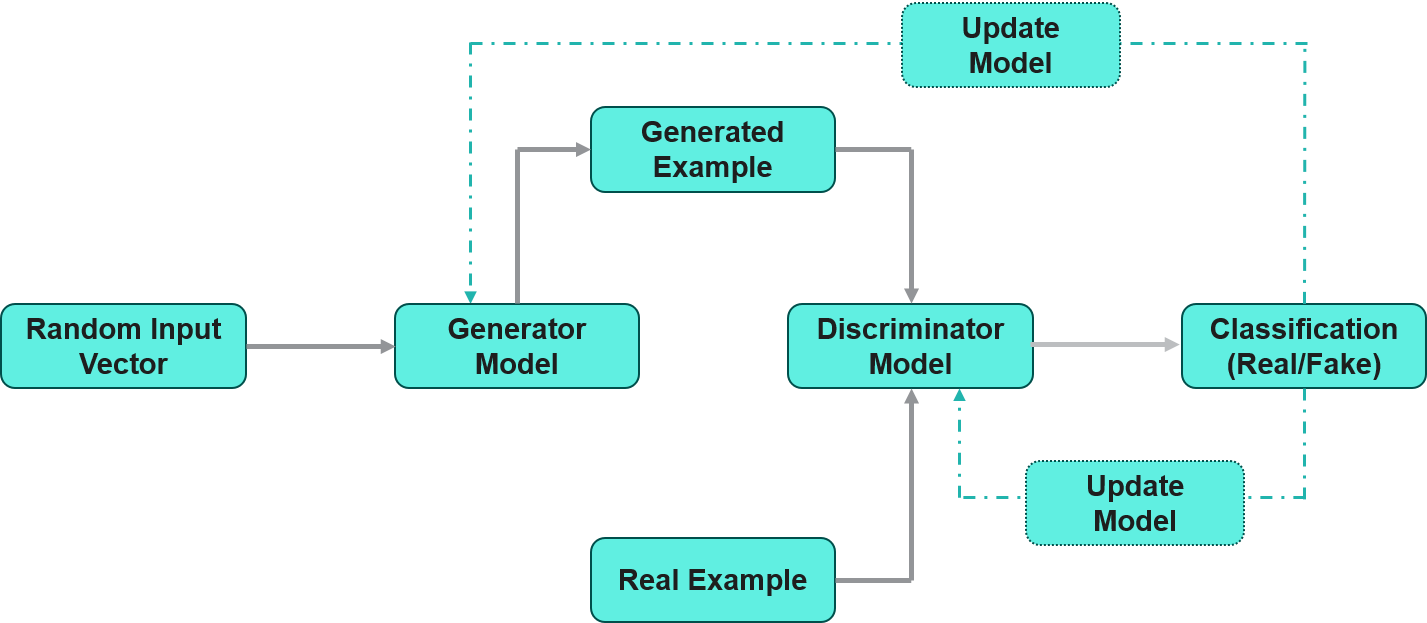
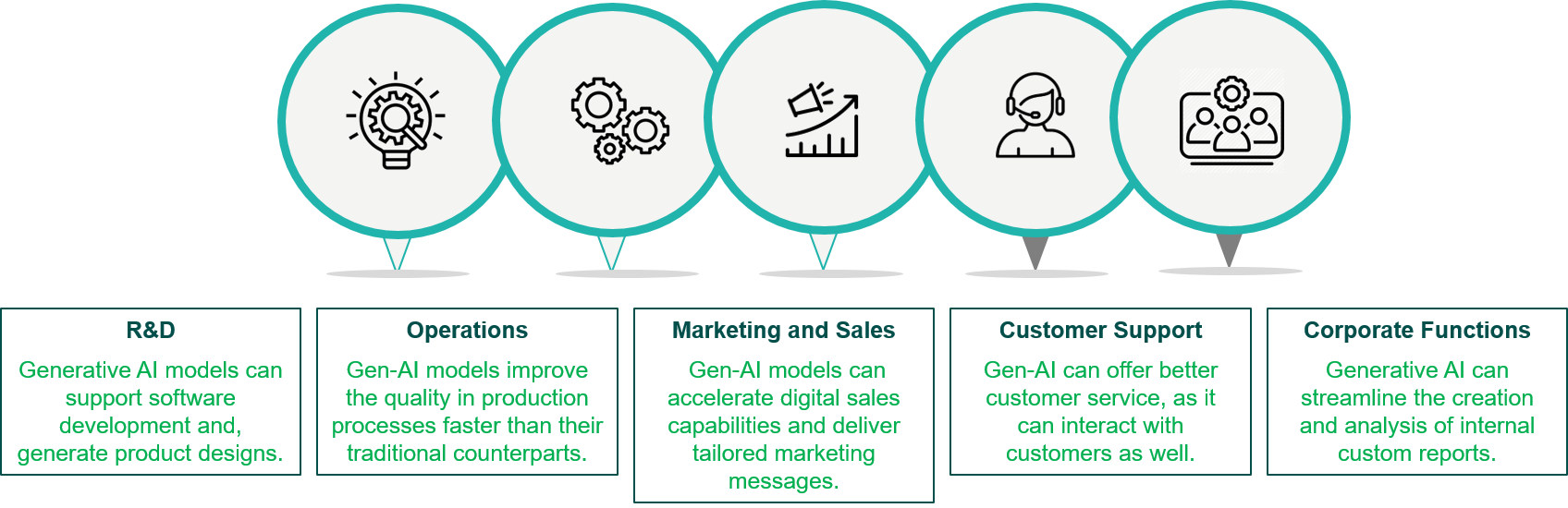
- Research and Development: MedTech software-enabled products have higher product development costs. Gen-AI can support software development by generating code, documenting code, and generating test cases. Additionally, it can help design new products and support documentation & review work for clinical trial reporting.
- Operations: Streamlining operations across the value chain is crucial for achieving optimal output. The ability of Gen-AI to generate synthetic data, which could be utilized to train machine learning models, can be incorporated to improve quality in the production process. Systems trained on this synthetic data can identify product flaws. Additionally, Gen-AI could also be used for procurement purposes.
- Marketing & Sales: Gen-AI solutions can help salespeople automatically document their visits, capture and analyze customer information, and generate insights that support the next interaction.
- After-sales & Customer Support: Gen-AI can be leveraged to reduce manual and time-consuming tasks. Interacting with customers is advantageous, as it can offer better customer service since it already has the necessary information about the customer.
- Corporate Functions: Gen-AI can boost collaboration and productivity amongst teams. It can streamline multiple reports and generate more actionable insights and outputs.
Download the full article here-
Generative AI Adoption Impact Map
Generative AI development in MedTech is uneven – innovations vary in the degree of adoption readiness and the magnitude of the effects they provide to patients and providers. The cross-layer of these innovations to the readiness of adoption and patient/provider impact can help companies prioritise opportunities and build custom strategies. This innovation radar circular framework provides a strategic perspective of the current position of various Gen-AI innovations and the potential positions where they might be, or be most valuable, in the MedTech market.

Figure 3: Innovation Radar: Gen-AI in MedTech
Generative AI Technology Momentum Across Horizons
In the next few years, generative AI is expected to revolutionize the MedTech industry and lead to innovation in clinical processes, diagnostics, and patient care. Over the short term, acceptance will be directed towards automating documentation, enhancing the correctness of the diagnostic process, and optimizing regulatory procedures. In the mid-term, AI will be used to discover drugs, allow customized medicine, and perform surgeries more precisely. Over the long term, the introduction of AI into health ecosystems and regenerative medicine will develop completely new models of care. Such changes will have both significant positive results and will have to consider ethical, regulatory, and data governance issues.
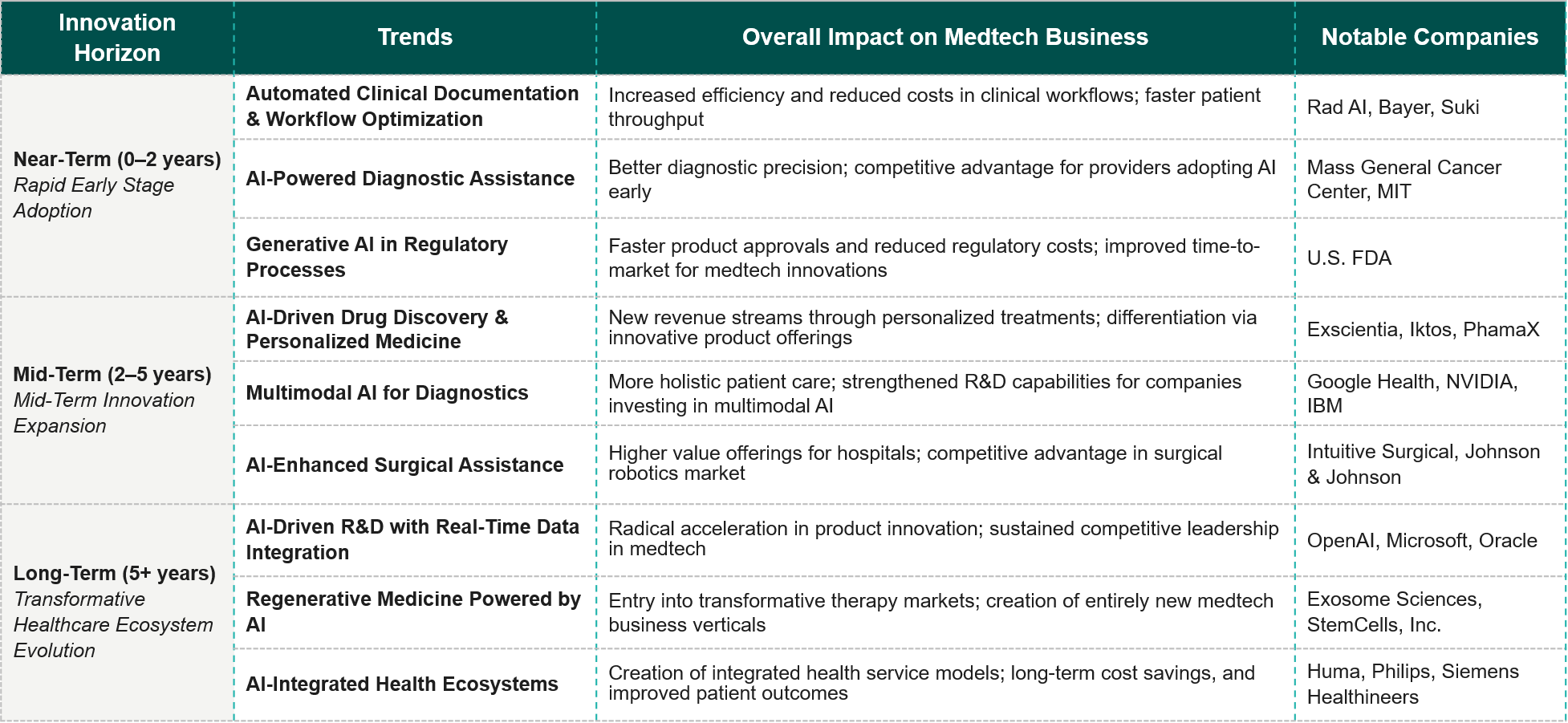
Table: Innovation Horizons: Gen-AI’s Impact on MedTech Business
Generative AI in MedTech Use Cases
Gen-AI can potentially shape how medical devices or services are provided. Below are some of the industrial use cases wherein Gen-AI has been incorporated within medical services.
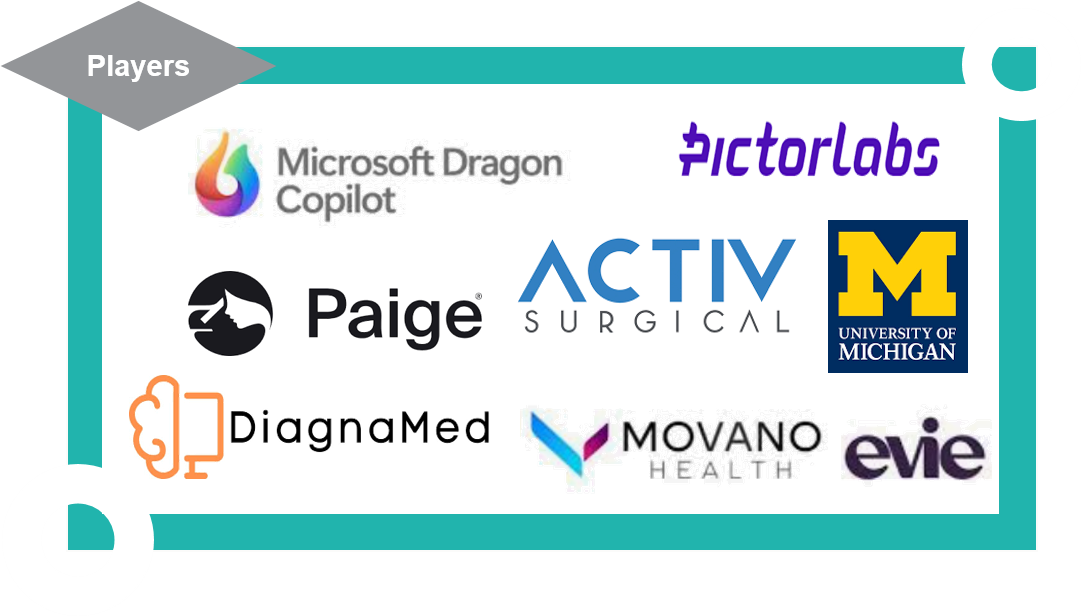
- Microsoft recently introduced Dragon Copilot, an AI assistant for clinical workflows that automates healthcare documentation tasks such as creating clinical notes, patient summaries, and referral letters by capturing patient-clinician conversations. This reduces administrative burden, lowers clinician burnout, and enables more focus on delivering quality patient care.
- Movano Health, a medical tech firm specializing in providing medical data via consumer health devices, recently created generative AI-powered Evie Ring and EvieAI as health solutions. The Evie AI is based on state-of-the-art AI processes used to process health data in real-time through the Evie Ring, providing personalized insights about health to its users.
- DiagnaMed has recently launched a Gen-AI medical chatbot, Dr. GenAI. The chatbot can obtain personalized medical conditions from a patient very quickly. Dr. GenAI can learn about a person using their medical information, such as physical traits, vitals, and lab test results.
- Paige and Pictor labs have incorporated Gen-AI to enhance image quality. In addition, the Paige Platform enhances doctors’ capabilities beyond the limits of traditional pathology. It promotes workflow efficiency and harnesses the precision of Gen-AI in cancer diagnosis.
- The University of Michigan has developed a Gen-AI model capable of simulating case scenarios during sepsis treatment
- Active Surgical has incorporated Gen-AI for intraoperative guidance during surgical workflows. The advanced visualization platform assists surgeons in better-informed decision-making.
Generative AI in MedTech: Challenges
Incorporating Generative Artificial Intelligence (Gen-AI) into the med-tech industry presents several challenges highlighted below:
- Regulatory Compliance: The MedTech industry is highly regulated. Incorporating Gen-AI may require adherence to regulatory frameworks that have not come up yet, although the FDA does have guidelines for AI/ML-enabled devices. As of now, there are no FDA-approved medical devices enabled by Gen-AI.
- Ethical Consideration: Artificial intelligence suffers from biases. As a result, Gen-AI applications may raise ethical concerns, especially when dealing with critical healthcare decisions.
- AQ2Costs: Gen-AI is projected to grow faster in health care than any other industry; it could reach a total market size of $21 billion by 2027. However, implementing Gen-AI in MedTech may involve high upfront costs for technology acquisition, training, and ongoing maintenance.
- Generation of Fake Datasets: LLMs or Language learning models have recently been found to generate fake datasets to support scientific hypotheses. This capability can be employed by a “researcher or a team of researchers to fabricate measurements for imaginary patients or generate an extensive dataset for medical devices testing involving animals.”
- Cybersecurity: Gen-AI applications in med-tech will raise new security and cybersecurity concerns, which are already well-established for healthcare companies. Additionally, unauthorized access to AI systems can potentially lead to the manipulation of medical data, which can compromise patient privacy and influence treatment decisions.
Conclusion
The integration of Gen-AI can potentially significantly influence the landscape of medical devices and services. For med-tech, the main advantages of leveraging Gen-AI are increased efficiency by reducing manual processes, enhanced personalization with customers & improvements in existing product designs. Also, several industrial use cases highlight the diverse applications of Gen-AI within the medical sector. Notable examples include Dr. Gen-AI chatbot for personalized medical conditions, Paige and Pictor Labs using Gen-AI to enhance pathology image quality. However, it has its own challenges when it comes to regulatory compliance. Determining accountability and liability in cases of Gen AI-generated errors or false positives poses a significant ethical challenge. Additionally, establishing responsibility for adverse outcomes becomes complex when AI systems are involved, potentially leaving patients without clear recourse. Moreover, Gen-AI has strong potential to help med-tech companies work efficiently, smarter, and faster, and create value for companies ambitious enough to apply it.
Let's Take the Conversation Forward
Reach out to Stellarix experts for tailored solutions to streamline your operations and achieve
measurable business excellence.