More than Just a Meal: The New Trends Changing How We Eat, Think, and Connect With Food
Food is not just about nourishment; it is also a reflection of technology and cultural values. As consumers are becoming more health-conscious, focusing on sustainability, and opening to new tastes, the culinary landscape is shifting at an unimaginable pace. The current trends range from plant-based processed innovations, fibermaxxing, sustainable sourcing, fusion cuisine, and improvement in gut health. Today’s food trends reveal how our plate is evolving to meet the demands of a rapidly changing world.
The basic question that galvanizes our minds:
How critical is it to decode these developments, and what impact do they exert on the food industry, with reference to manufacturers?
It is very important to know about these trends, as they help to understand the complete overview of the evolving food landscape, the patent activity in the particular domain, the market scenario of different food products, and the reason for the rise in startups. It also showcases the brands and ideas reshaping the industry, offering a clear perspective on where innovation is headed. More than just trend tracking, it uncovers fresh growth opportunities and empowers the creation of products that truly connect with the needs and aspirations of future consumers.
Yet, important questions remain.
Which emerging trends are steering the trajectory of the food sector against the backdrop of geopolitical turbulence, shifting climate realities, growing regional distinctions, and dynamic consumer needs?
In light of these concerns, the article delves into the trends that are acting as bright spots for the food sector.
Key Trends Currently Shaping the Food Industry
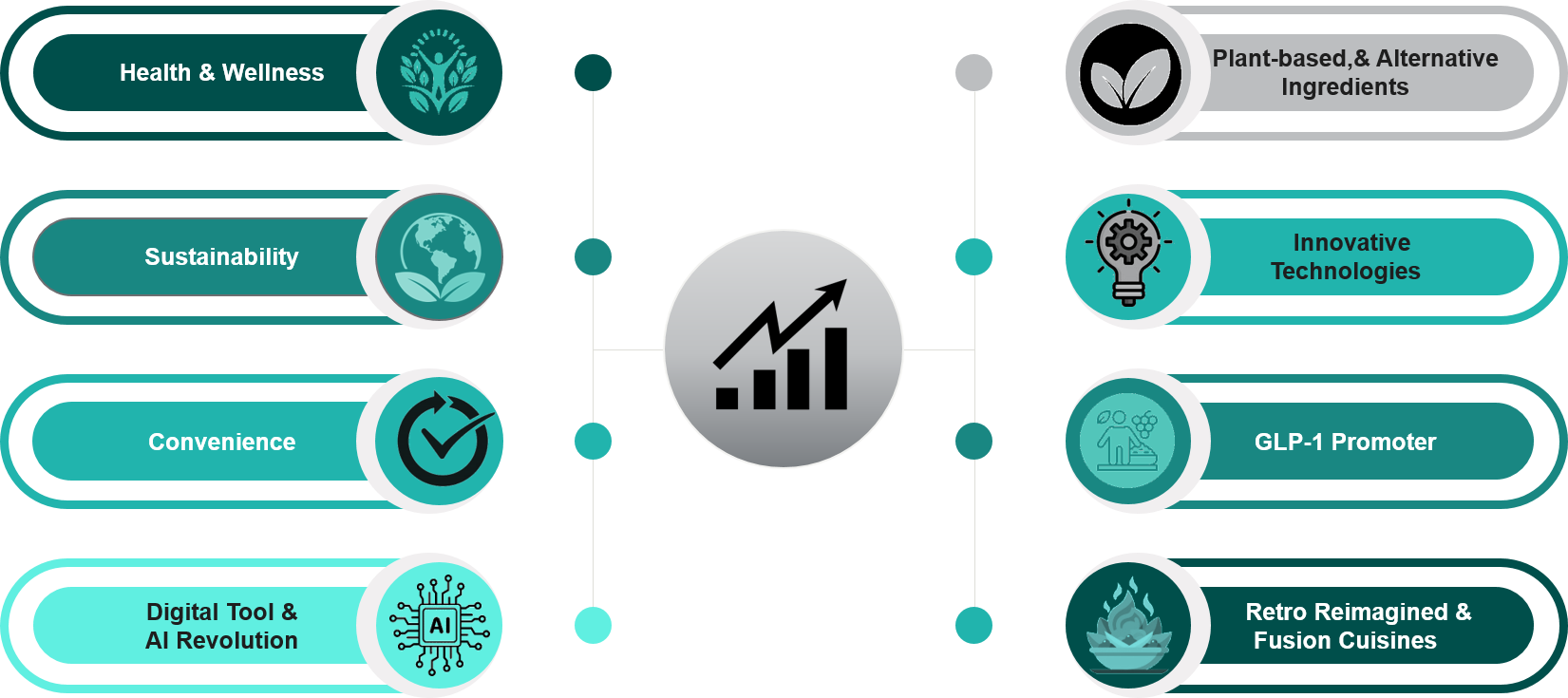
The food trends are continuously evolving, and they reflect the shifting tastes as well as the cultural values such as wellness, innovation, and sustainability. In Figure 1, the current trends in the food industry are being highlighted.
1. Health & Wellness
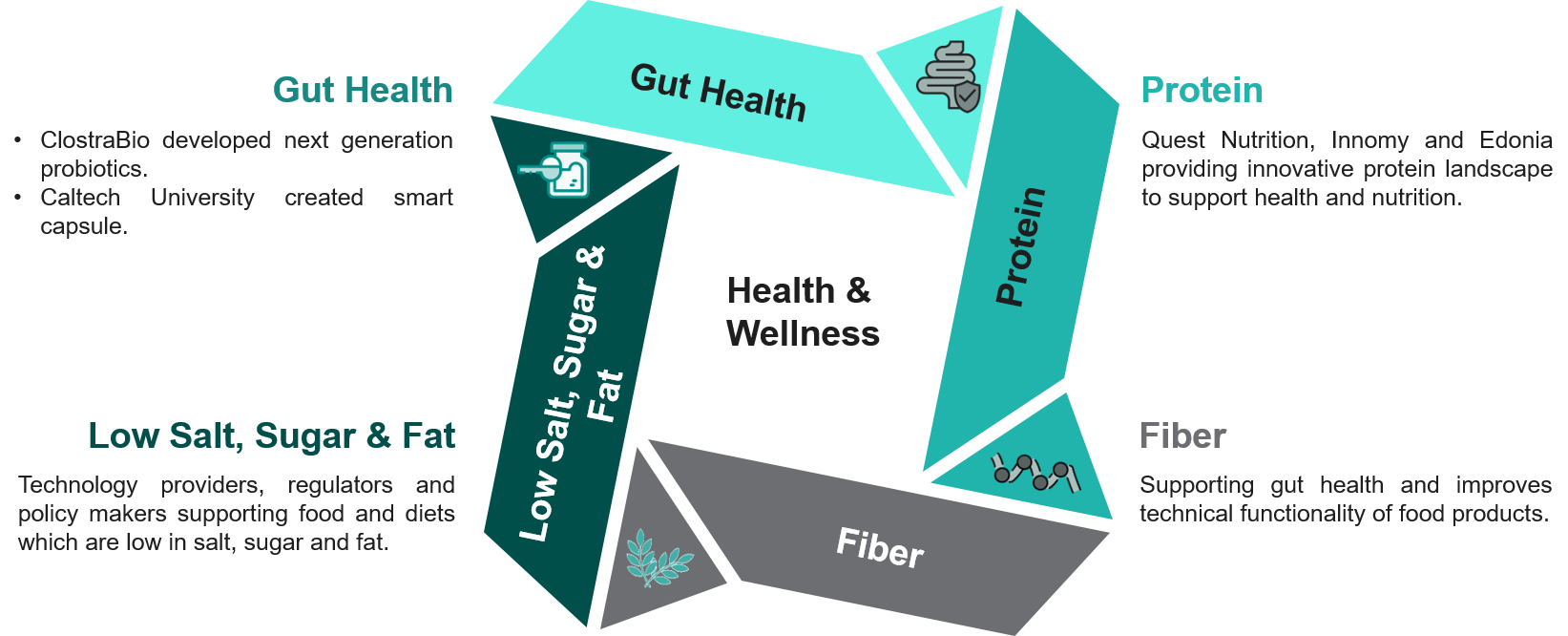
Health and wellness are going into mainstream; they are not just trends and are emerging as one of the biggest forces for transforming the food industry. In the current setup, consumers are giving priority to gut health, embracing protein-rich formulations, and improving fiber content for better vitality. The innovations also headed toward food products or diets that are lower in salt, sugars, or fats.
In 2025, a survey conducted by Innova Trends found that 59% of global consumers consider gut health very important for maintaining overall health.
- Gut health is evolving beyond simple fortification toward a holistic, microbiome-focused approach that integrates probiotics, prebiotics, and synbiotics.
- ClostraBio, a University of Chicago spin-out, developed a next-generation probiotic that delivers butyrate and supports gut health. Butyrate, the main energy source for colonocytes, is essential for intestinal homeostasis and enhancing barrier integrity. Other next-generation probiotics help strengthen biofilms to enhance microbial resilience and stimulate short-chain fatty acid production, contributing to anti-inflammatory benefits.
- Caltech University has developed a smart capsule, “PillTreck”, which measures temperature, pH, and other biomarkers, ultimately helping integrate diagnostic capabilities with gut health support.
- In the realm of ingredient innovations, protein remains a cornerstone of wellness. Quest Nutrition, an established brand, manufactures protein bars that help in muscle recovery. Startups such as Spain’s Innomy have developed fungal mycelium-based foods that replicate meat’s sensory qualities with lower environmental impact, and France’s Edonia advances towards nutrient-rich microalgae proteins. At the same time, research centers are focusing on plant protein functionality, sustainability, and innovation.
- Fiber has traction from GLP-1 movement, providing satiety to consumers and adding value to gut health. Apart from functional benefits, they also add technical value in the form of emulsifier, texturizer, and stabilizer to the food system. It is believed that fiber could be the next big thing after protein.
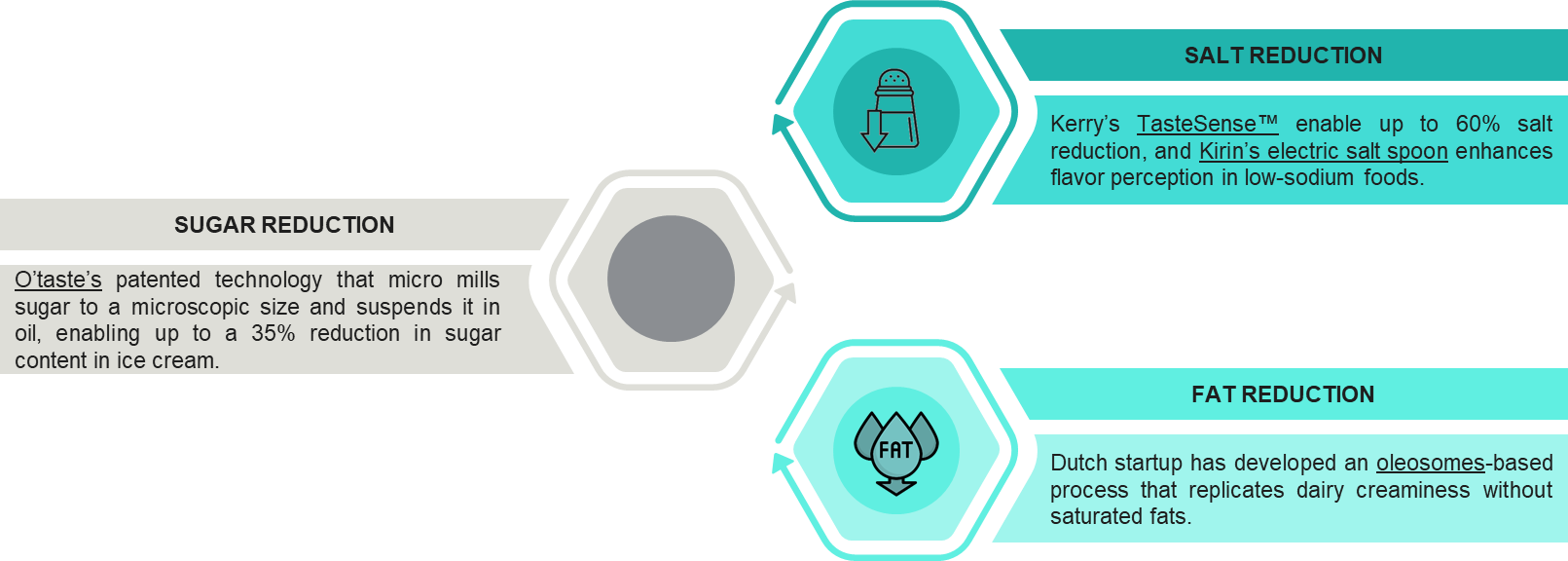
- Globally, over 20% of consumers, especially older groups, are opting for foods with reduced salt, sugar, and fat. Regulators are driving this shift, with the UK banning HFSS advertisements and seven EU countries adopting Nutri-Score labeling. The technology providers are likewise supporting the trend, as outlined below.
The shift towards a healthy lifestyle is reinforced by recent U.S. national dietary guidelines, which emphasize protein consumption and urge consumers to limit sugar and highly processed food.
2. Sustainability
Sustainability is now part of every aspect of the food industry, ranging from sourcing to packaging, which is driving focus for technology-enabled services, regenerative agriculture, and recyclable design. Consumers are increasingly paying attention to value claims such as natural, sustainable, and locally sourced, while also demanding transparency and authentic experiences that connect health with environmental responsibility. The initiatives like Zero-waste initiatives are gaining importance, and the convergence of sustainability, innovation, and technology is reshaping brand storytelling and trust. Reflecting this shift, Barentz has partnered with Crush Dynamics to distribute advanced fermentation and upcycled ingredients, enhancing flavor, nutrition, and sustainability for customers.
A revolutionary product, oat milk slices developed by milkadamia®, which is easy to reconstitute as plant-based milk while reducing packaging by 85% and shipping weight by 86%. In addition, a growing trend toward clean-label ingredients is evident, with many manufacturers moving away from artificial preservatives in food products. This shift is further reflected in the development of the Clean Food Consumerism Scale.
3. Convenience
Convenience is becoming the cornerstone of the modern food sector, varying from ease of buying from supermarkets to premium single-serve dishes, due to evolving lifestyles. By 2026, gourmet and instant foods, and chef-inspired ready-to-heat meals that balance time with sophistication are expected to increase. The advances in preservation and packaging will further support this evolution.
Furthermore, according to Innova Market Insights, the pre-prepared ingredients, such as chopped vegetables, are also rising. These trends are powered by the younger generation of consumers.
4. Digital Tool & AI Revolution
Artificial intelligence is quietly revolutionizing the food sector, evolving from trial technology into a vital driver of innovation, efficiency, and consumer connection.
AI-driven systems or applications are increasingly employed to analyze biometric and lifestyle data, assist in personalizing dietary recommendations, particularly in sports. The Innovative tools, such as MealMeter, leverage sensing and machine learning to check macronutrient intake and optimize performance outcomes.
Furthermore, Nestlé takes advantage of a proprietary generative AI tool to accelerate product innovation through rapid idea generation and testing. This approach has helped them to create more than 1,300 new products while reducing the average R&D cycle from three months to just three weeks. PepsiCo has similarly harnessed generative AI, compressing the timeline from product concept to market launch from six to nine months down to as little as six weeks.
At the same time, rising foodborne illness outbreaks, stricter regulatory frameworks, and heightened consumer demand for transparency are driving companies to adopt real-time food safety monitoring solutions. AI and ML-enabled autonomous control systems are increasingly applied to safeguard production environments. Complementing these advances, the blockchain technology has emerged as a powerful tool to enhance transparency and provide rapid access to supply chain data, assist in complying with food safety standards.
In a conducted survey, the data indicates that 26% respondents plan to invest in advanced pathogen detection technologies. A good example of this shift comes from HyperSpectral, a U.S. startup that is using AI to make food safer. Their new spectroscopy platform can quickly spot pathogens and contaminants in food by reading the electromagnetic fingerprints of different materials.
5. Plant-based & Alternative Ingredients
Plant-based and upcycled ingredients are moving beyond basic meat alternatives, as they also focus on enhanced nutrition, sustainability, and sensory appeal. Solutions like Fibruline™ boost fiber and gut health, while Pisane™ T9 provides highly digestible plant protein for bars and meat substitutes.
Taiwan-based Ubisprout has co-developed new food products using its proprietary rapid germination technology, with Ubiquity specializing in sprouting legumes, grains, seeds, nuts, and vegetables in climate-controlled chambers. Additionally, Devigere BioSolutions from India has developed plant-based protein concentrates (cowpea and mung bean), plant-based egg mixes, and peptides, with the help of a chemical-free, water-based extraction method. The developed proteins are non-GMO, soy-free, gluten-free, and easy to digest.
In recent times, the cost of important ingredients such as cocoa and palm oil has exceeded the sustainable limits, which has created strong incentives to explore alternatives. The food manufacturers and venture capitalists are investing heavily in this area. Barry Callebaut has introduced cocoa-free chocolates, while Lindt & Sprüngli is researching lab-grown cocoa as a way to stabilize prices and ensure long-term viability.
6. Innovative Technologies
Precision fermentation is emerging as a key pillar within the broader wave of food biotechnologies transforming production. Bühler and Pow.Bio has partnered to launch an integrated, continuous precision fermentation platform capable of producing enzymes, organic acids, alternative proteins, lipids, and bioactive compounds.
In policy, the European Union proposed a “Biotech Act” in 2025 to stimulate industry growth by fostering innovation, streamlining regulations, and funding novel food technologies. If the law is passed in 2026, it could accelerate approvals for precision-fermented and other biotech foods across Europe. In light of these developments, the Netherlands has already taken a pioneering step by authorizing public tastings of novel fermentation-based foods prior to commercial approval.
At the same time, the product-specific technologies are gaining importance, such as freeze-dried fruits and snacks. They are gaining popularity among toddlers and Gen Z consumers as clean-label and additive-free options. Diana’s Bananas has developed organic upcycled certified bites by freezing bananas at peak ripeness, which reduces food waste and also preserves flavor and nutrition.
Going forward, robotic chefs are revolutionizing food preparation by automating repetitive steps such as chopping, mixing, and cooking, which increases precision and speed. These AI-enabled systems improve safety in commercial kitchens & manufacturing facilities and also reduce labor costs. In this area, Chipotle has introduced the Autocado, a robotic solution capable of cutting, coring, and peeling avocados in just 26 seconds, which streamlines operations and lowers labor expenses. Similarly, Faster Food Tech, a Polish startup, has developed AI-driven robotics that help in process automation tailored to the food industry.
7. GLP-1 Promoter
One of the eye-catching developments in recent times is the GLP-1 promoter, which is central to diabetes and obesity research. The increased use of GLP-1 as a weight-loss medication is changing the way people eat. Smaller portions that are rich in protein, fiber, and essential micronutrients are becoming the norm. In this respect, various consumer packaged goods (CPG) brands have introduced tailored products and recipes, such as Nestlé’s Vital Pursuit frozen meals and Daily Harvest’s GLP-1 support box. This evolving trend is set to shape the way people shop, sparking more interest in cooking with whole foods and bringing them into everyday meals across different occasions. At the same time, research-driven companies such as Diet4Life APS are providing scientific solutions that stimulate GLP-1 release from intestinal cells, ultimately enhancing satiety, helping to prevent obesity and related health conditions.
Read our latest article on How the GLP-1 Era is driving a Paradigm Shift in Food Industry Growth?
8. Retro Reimagined & Fusion Cuisines
The food industry is experiencing a wave of nostalgia right now, bringing back the old flavors with a focus on healthier options, sustainability, and a culturally-centric approach. The brands are giving importance to emotional familiarity with modern wellness priorities for today’s consumer.
At the same time, fusion cuisine is reshaping the dining area by blending techniques, flavors, and styles from different culinary traditions. It helps in creating experiences that feel fresh & memorable, which gives an edge to brand and restaurant chains.
Future Perspective
In the coming times, the food industry is likely to put more focus on collaboration, sustainability, and personalization. Companies or brands are finding new ways to create value through technology, social responsibility, and consumer-centric design. Consumers are seeking interest in transparency and meaningful engagement, which could drive innovation in the food domain. Convenience foods are also expected to grow, driven by changing lifestyles and demand for quick options that support health and wellness. Companies or brands using healthier ingredients and clear labeling in their products may position themselves better, though success could vary. Global expansion of convenience foods could continue through international supplier partnerships, but growth will depend on regional dynamics and consumer adoption.
Stellarix as Solution Provider
Stellarix leverages its deep industry expertise and capabilities to offer solutions that address key pain points.
- Technology & Ingredient Scouting: Identifying protein off-flavor ingredients and relevant technologies, such as innovative thermal processing methods that enhance the protein functionality in bakery products.
- Collaborator Study: Pinpoint the companies and startups demonstrating market growth potential in dry pet food, which can be good targets for acquisition or collaboration.
- Consumer Review Analysis: Discovering what truly matters to consumers, for example, how food fibers could emerge as the next proteins, which helps in product innovations, increasing service engagement, and building strong brand loyalty.
- Ecosystem Mapping: Mapping players in the GLP-1 enhancer domain supports overcoming regional tensions by identifying interdependences, diversifying resources, and building resilience.
Engage with our Food and Beverage consulting team to transform trends into opportunities, elevate your global footprint, and shape a stronger, future-ready business.
Let's Take the Conversation Forward
Reach out to Stellarix experts for tailored solutions to streamline your operations and achieve
measurable business excellence.