Inside Japan’s Move from Centralized Computing to Smart Islands
Executive Summary:
Japan’s shift from centralized data centers to edge computing is a strategic move based on structural realities, rather than trends alone. The well-aligned government policies, industry partnerships, and initiatives like Smart Islands present a strong growth template for other high-risk regions.
Why Japan Is Rethinking Its Digital Backbone
For a time, Japan’s digital system was set up in a pretty standard way. They largely operate data centers in major cities such as Tokyo and Osaka to provide services nationwide. This approach worked well during the early phases of digitization. Now, Japan is dealing with a lot of data and needs real-time digital services to operate quickly. The problems with having all the computing power in one place are becoming more obvious.
Japan is at a crossroads right now. The country faces many challenges, including being an island nation and frequent natural disasters. Japan also has to be careful with its energy use. It is getting older, as a country. So it is trying something called edge computing. This means that a decentralized model processes data closer to where it is generated. You can really see this change unfold in Japan’s vision for Smart Islands. On these islands, people are using technology to make their communities stronger and more able to withstand problems. Japan and its Smart Islands are trying to make a future.
The Limits of Centralized Data Centers in a Distributed Nation
Centralized data centers offer scale and efficiency, but they also introduce structural vulnerabilities, especially for a country like Japan.
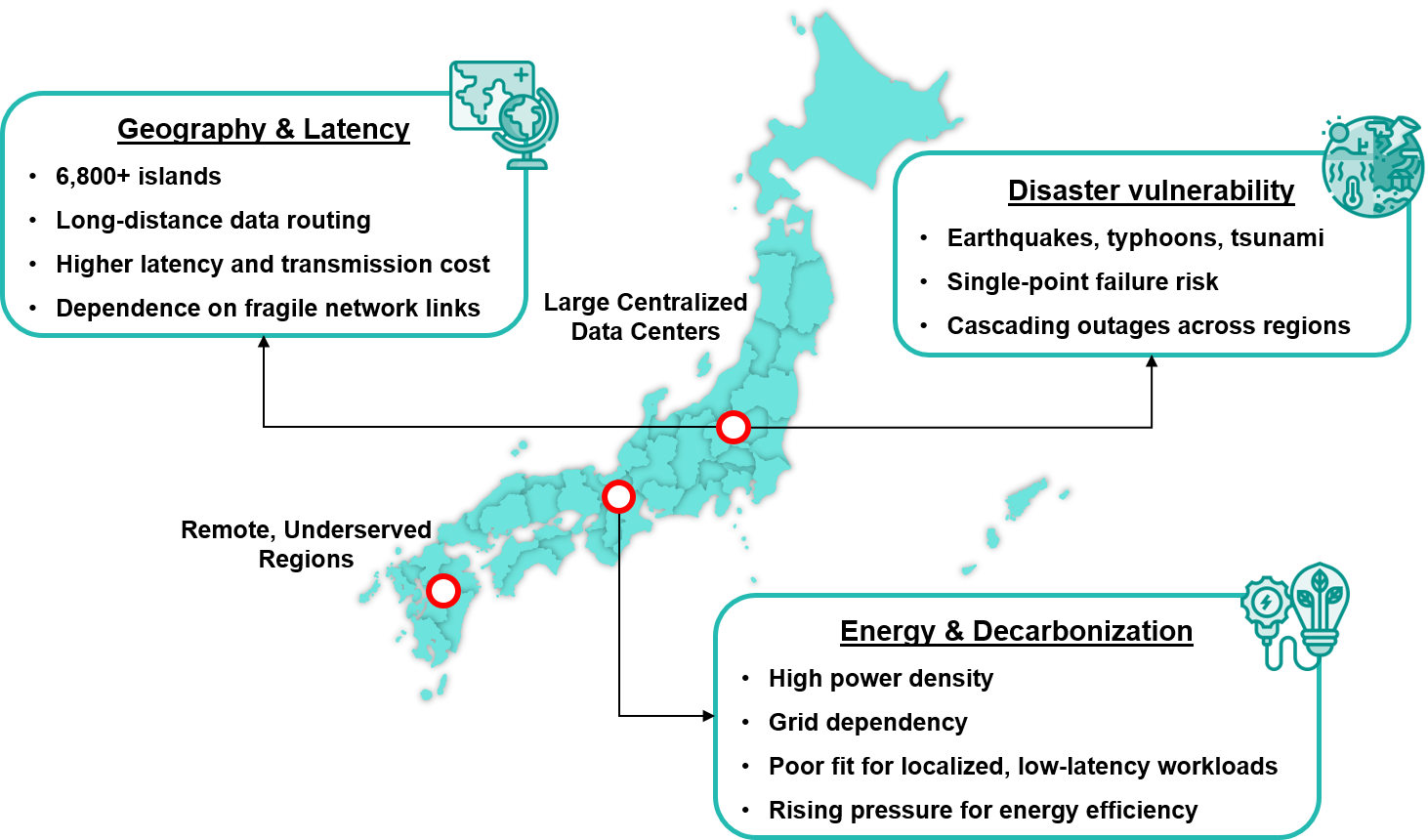
Japan is a dispersed country with more than 6,800 islands, many of which are remote and thinly populated. Due to long-distance data routing and brittle network connections, this configuration makes relying on mainland data centers expensive and causes delays. Japan is also at risk from earthquakes, tsunamis, and typhoons. Local failures are more likely to swiftly impact other places when computation is concentrated in a small number of core locations. Furthermore, centralized data centers use a lot of energy and are misaligned with Japan’s objectives of lowering carbon emissions and increasing energy efficiency, particularly for local, low-latency digital applications. Japan is reevaluating the place of digital intelligence in its ecosystem as a result of these difficulties.
Where Edge Computing is Being Deployed in Japan Today
Edge computing in Japan is really taking off now. It used to be about testing, but now people are actually using it. Edge computing is used where you need to process data reliably and make smart decisions. In some of the islands and smaller towns, companies like NTT, KDDI, and SoftBank are building edge computing infrastructure. This means people in these areas can get to things like healthcare, education, and government services. Edge computing also helps these areas not to have to rely much on big data centers on the mainland.
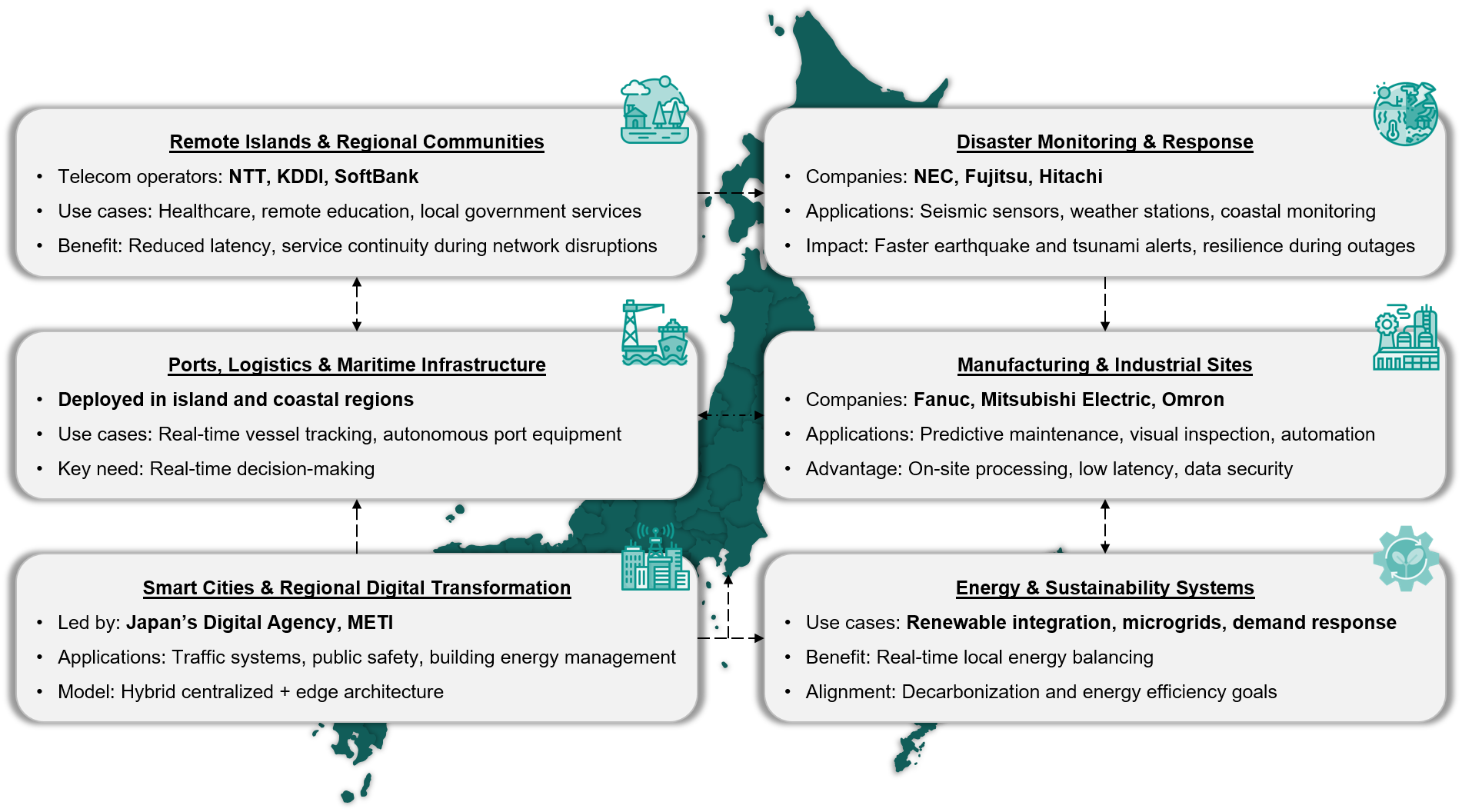
In Japan, edge computing is really important for businesses. They use edge computing to monitor issues such as natural disasters. Companies such as NEC, Fujitsu, and Hitachi analyze sensor data. These sensors monitor weather, coastal changes, and earthquakes. This technology is very helpful because it keeps systems running when the network is down. It also sends out warnings for earthquakes and tsunamis. Edge computing is also used in factories, ports, and places where goods are stored. It helps people manage ships and makes it easier to automate things. It keeps track of what is stored. Companies like Fanuc, Mitsubishi Electric, and Omron are using edge computing to make their businesses smarter. They are at the forefront of this approach to edge computing.
The government is helping transformation projects in cities and regions. Digital transformation projects are making edge computing common in neighborhoods and buildings. These projects focus on managing traffic, public safety, sustainability, and energy use. Edge computing platforms help with energy efficiency, small energy grids, and timely energy management. This helps Japan achieve its goal of reducing carbon emissions and meet its targets by improving energy efficiency.
The Government Strategy: Building the “Digital Superhighway”
The Japanese government is the primary architect of this pivot, moving away from a model where data travels thousands of miles to a central hub.
- Vision for a Digital Garden City Nation (Digi-Den): Launched by the Kishida administration, this initiative intends to revitalize rural areas by providing the same digital ease as Tokyo. It includes a ¥1 trillion+ ($7 billion) budget for regional digital implementation. (Source)
- The Digital Superhighway: A government-backed project to encircle the Japanese archipelago with a high-speed submarine cable network. This assures that even the most remote islands have the backbone needed to host edge nodes. (Source)
- Super City Law: This allows designated “Super Cities” (like Takamatsu and Tsukuba) to avoid certain regulations to test edge-driven AI in medical care, education, and autonomous transport. (Source)
- The Digital Agency: Established in 2021, this agency acts as the “command center,” making sure that data standards are unified across all 1,700+ municipalities so that edge devices can “talk” to each other. (Source)
These actions have greatly changed Japan’s digital plan. Through government policies and infrastructure, the country is intentionally spreading out intelligence. The government is combining big investments, flexible rules, nationwide connectivity, and shared data standards. Instead of just enabling edge computing, they are actively including technology in Japan’s goals for strength and local growth. This high-level teamwork lays the foundation for edge technologies to move beyond testing and become integral to Japan’s future digital world.
Industry Momentum: Companies Driving Japan’s Edge Ecosystem
Japan’s transition to edge computing is driven by teamwork among telecom and industrial technology leaders. Telecom operators are rethinking how they build, share, and secure networks. At the same time, industrial technology companies are putting intelligence directly at the edge. The infographic below shows how major players are putting their plans into action through real-world infrastructure, resilience, and localized intelligence.

These initiatives show how intelligence, networking, and computers are combining to create a more connected world. Japan’s leading companies are turning edge computing from a technological advancement into a national asset by combining shared infrastructure, disaster-ready networks, satellite connections, and edge-native AI systems. Across the nation, robust, autonomous, and locally driven digital systems are being built because of this collaborative effort.
Key Case Studies: From Theory to “Smart Islands”
Although industry momentum and policy direction lay the groundwork, real-world applications are the best way to measure edge computing’s true impact in Japan. Edge architectures already enable autonomous energy systems, reliable healthcare services, smart urban areas, and next-generation manufacturing in various cities, islands, and industrial districts. The following case studies, many of which highlight the growing idea of “Smart Islands,” show how Japan is turning edge computing from theory into practical, location-specific solutions.
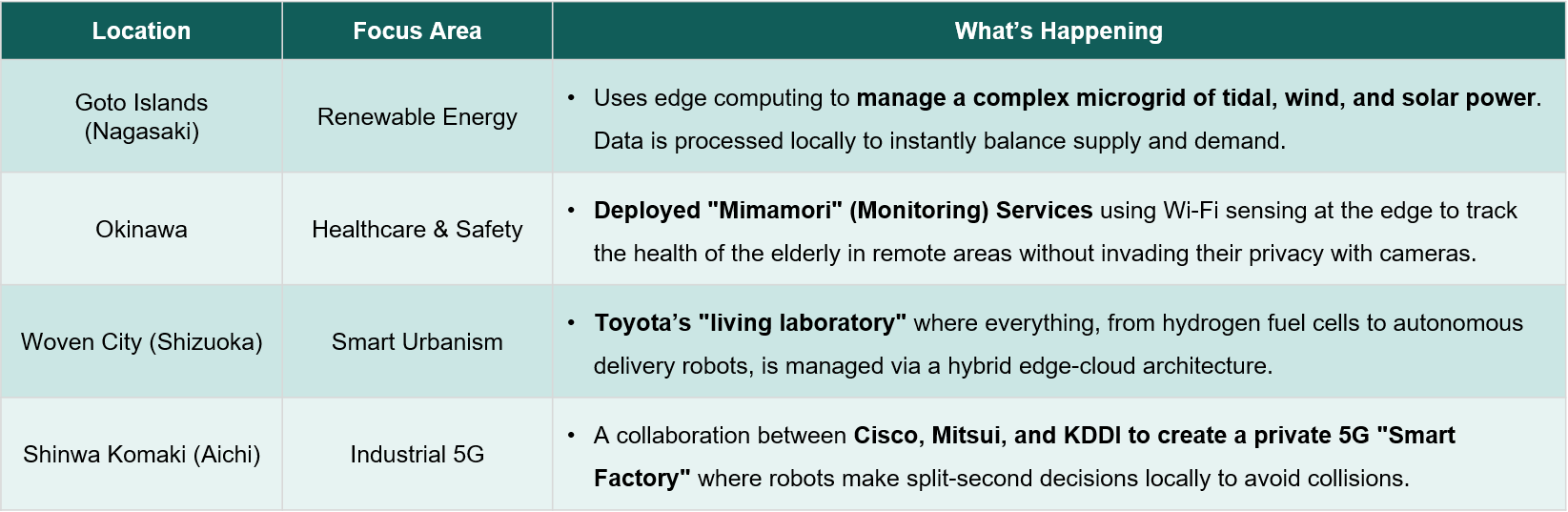
When taken as a whole (collectively), these deployments show how edge computing aligns with regional needs. This includes managing renewable energy on isolated islands, implementing real-time industrial automation, developing autonomous urban systems, and advancing privacy-focused healthcare. Resilience, sustainability, and operational independence are being driven more and more by localized computing. It reduces reliance on distant, centralized infrastructure.
Stellarix supports such changes by mapping technology structures, reviewing global pilot projects, and IP trends and ecosystem readiness in edge, connectivity, and AI areas. Stakeholders can find models that can scale, opportunities for collaboration, and technology gaps as Japan’s edge computing and smart island efforts keep expanding.
Conclusion: Edge Computing as a Structural Necessity for Japan
The adoption of edge computing in Japan shows a major change in the country’s digital infrastructure. The nation faces challenges due to its location, vulnerability to natural disasters, and limited energy resources. To improve resilience, responsiveness, and efficiency, data processing should be closer to data sources in cities, factories, islands, and critical infrastructure.
Japan is building a large digital infrastructure through business partnerships, practical projects, and well-organized government policies. Instead of being an add-on, edge computing is a key part of this setup. Other high-risk areas can learn from this model as it develops. It shows how the placement of data processing within the digital economy is shifting due to edge computing. Stellarix is helping companies translate this shift and harness Japan’s model of collaboration, practical innovation, and policy to build resilience and responsiveness where it matters the most.
Let's Take the Conversation Forward
Reach out to Stellarix experts for tailored solutions to streamline your operations and achieve
measurable business excellence.