Edge AI Technology: A Strategic Advantage for Smart, Sustainable Cities
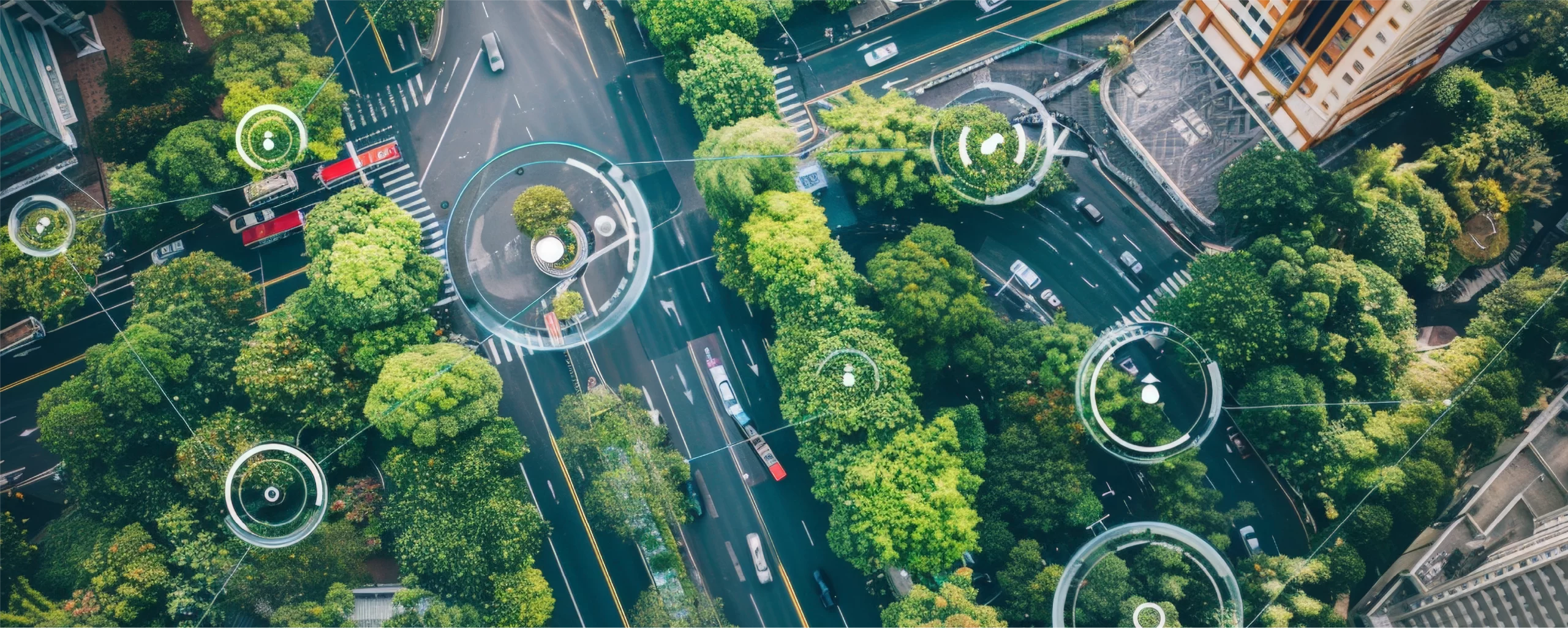
When cloud computing with virtually unlimited resources was introduced, it was deemed as an answer to the most critical questions regarding the high computational complexities of smart cities. However, these capabilities came with inherent limitations that ranged from non-context-aware behavior to high latency, processing time inefficiencies, and zero-mobility support. These gaps contradicted its application in a real-time innovative environment and opened doors for edge AI computing that abridged most of these gaps, enabling real-time smart city environments. Combine it with recent developments in 5G/6G networks and AI-driven analytics, and you get hands-on transformative solutions for intelligent urban systems. Nevertheless, the impact of Edge AI in smart cities goes way beyond these features.
In this article, we have assimilated its impact across various building blocks of smart cities and how it paves the way for highly responsive and cognitively intuitive urban ecosystems.
Edge AI for Resilient and Efficient Smart City Infrastructure
Traffic Management
Edge AI-based traffic systems reduce peak-house congestion by 24-41% through real-time predictive analysis and signal optimization. The article presenting these figures analyzed the integration of AI with cellular wireless technologies in smart city ecosystems. With edge AI computing implementations and 5G networks, support reduced congestion during peak hours and improved threat detection rates for public safety systems.
| Network Parameter | Achievement | Target Specification |
|---|---|---|
| Downlink Speed | 1.35 Gbps | 1.0 Gbps |
| Uplink Speed | 328 Mbps | 300 Mbps |
| Average Latency | 4.2 ms | 5.0ms |
| Device Density | 1.2M/km2 | 1.0M/km2 |
| Network Reliability | 100.00% | 99.99% |

Similarly, another paper proposing an edge AI-based architecture for future metropolises implicated intelligence and edge computing as paradigm-changing data processing and management factors. Although, some open ends still need to be explored:
- State-of-the-art DL-based object detection models have more than 100 complex layers. There is a scope for model optimization technologies like neural algorithmic search, inference scheduling, and weight pruning in practical systems.
- The reliance on supervised datasets still needs to be scaled, which implies that the quality and cost concerns must be addressed.
- Data fusion from various cameras will yield significant improvements in tracking and detection accuracies.
- While achieving low latency for lower-rate little-data applications is possible, new streaming protocols and video coding methods need to be employed to get 1/30 second latency for higher-resolution videos.
Energy Distribution in Smart Cities
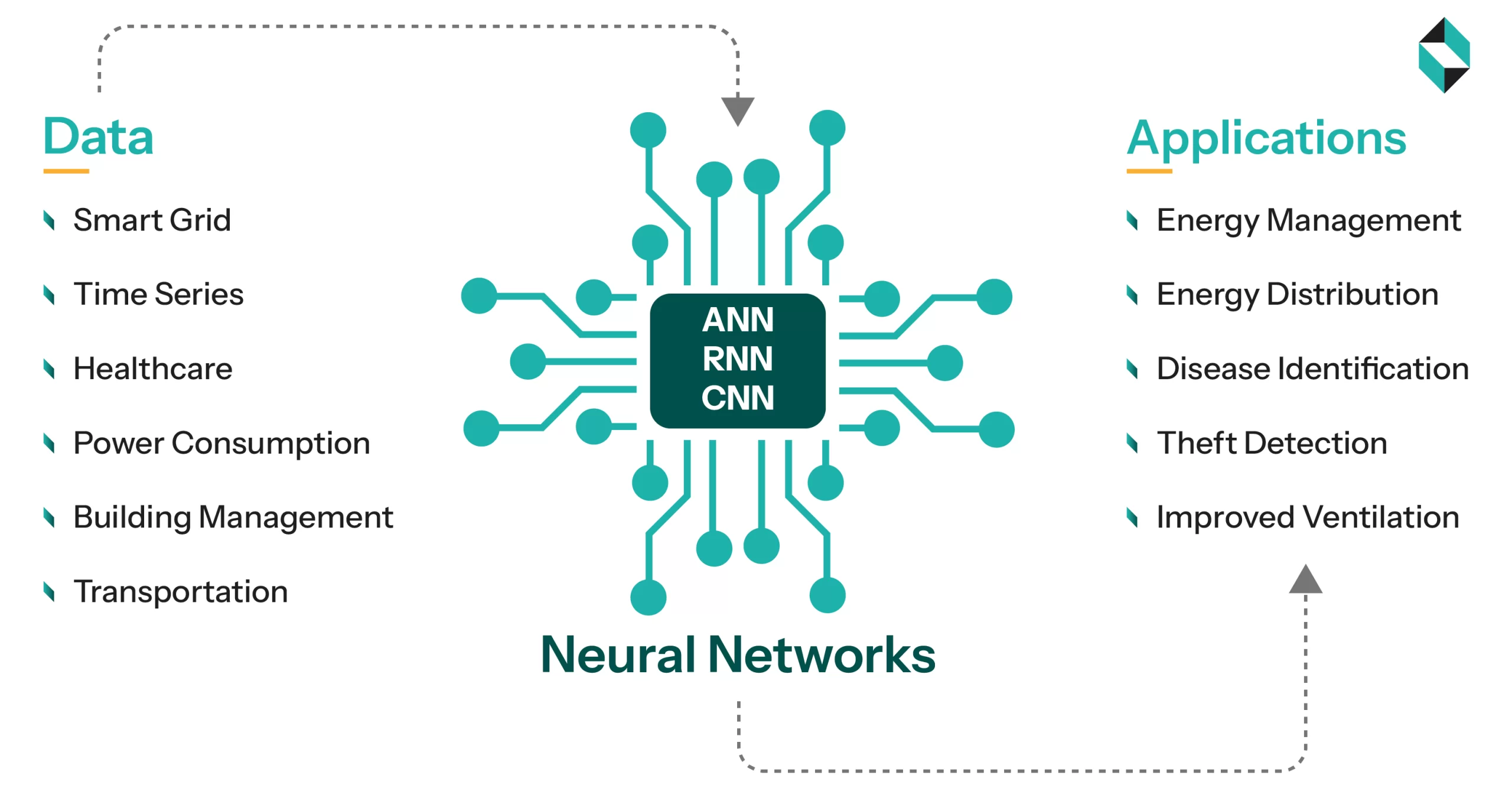
Machine learning and AI techniques have been crucial in improving the energy efficiency of smart cities by equipping them with advanced capabilities for data analysis, prediction, anomaly detection, modeling, and decision-making for energy systems. Specific techniques like artificial neural networks are key in evaluating thermal comfort parameters and ensuring significant energy consumption savings. With respect to AI-powered edge systems, they smoothen up grid management through 15-30% of energy optimization. They analyze consumption patterns and dynamically adjust energy supply to the grids.
Edge AI in Water Management
The use of acoustic sensors, as well as edge-based machine learning models, is pivotal in minimizing resource waste with a leak detection accuracy exceeding 92%.
Improved Public Safety with Edge AI
Threat Detection and Mitigation
Video surveillance in smart cities needs to be upgraded from centralized networks as over-reliance on networks on the cloud could lead to delays or malfunctioning due to intermittent net connectivity. Edge computing offers a simple solution to this problem. Distributed real-time object detection frameworks rooted in edge-cloud could be the key to intelligent video surveillance, achieving rapid response to real-time video surveillance. On the other hand, the media data collected from multiple edges is consolidated in the cloud through AI. This kind of framework is ideal for internal networks where privacy protection and data security aren’t a priority; however, as cryptosystems come into the picture, they will overcome this gap in the near future.

A modified approach to the same is the embedded vision systems that can implement sophisticated ML algorithms to the edge, enabling cost-adequate scaling of automated video surveillance for smart cities. This is further facilitated by improved lightweight open-source middleware like EdgeXFoundry, which facilitates the collection and analysis of data up to the sensor level with exceptional communication capabilities for data exchange with a cloud enterprise application. A recently published paper showed that embedded vision systems at edge nodes achieved 95% accuracy in security threat identification with a sub-100ms latency.
Disaster Response
AI-enabled edge devices are capable of predicting fires and floods almost 20-30 minutes faster than cloud-based systems. It is enabled by IoT sensors employed on the edge nodes that can process the data locally and send alerts instantly.
Building Sustainable Urban Ecosystems with Edge AI
Carbon Footprint Reduction
Edge AI is pivotal to carbon emissions mitigation as it enables real-time energy optimization at the ground level locally. As the data is directly processed at the source, like smart grid sensors and building management systems, it assists utilities and urban planners in keeping an eye on energy consumption and adjusting the supply accordingly. It can integrate renewable resources efficiently to balance the supply-demand equation and forecast energy requirements with utmost accuracy, adjust grid operations, and minimize energy wastage, resulting in a lower carbon footprint of urban establishments. A recent study reported that AI-enabled smart grids achieved up to a 35% mitigation level in carbon emissions compared to their conventional counterparts. However, the overall impact of edge AI on emissions may vary by industry and region. Here is a summarized evidence of it:
| Variables | Observations | Mean | SD | Min | Max |
|---|---|---|---|---|---|
| CEI | 23,419 | −2.7971 | 1.9676 | −5.6941 | 1.7799 |
| AIA | 23,419 | 1.7901 | 1.3375 | 0.0000 | 5.2149 |
| Size | 23,419 | 22.1286 | 1.2147 | 20.0473 | 25.9290 |
| Fixed | 23,419 | 0.2324 | 0.1438 | 0.0168 | 0.6749 |
| OPR | 23,419 | 0.0863 | 0.1576 | −0.6778 | 0.5066 |
| ATO | 23,419 | 0.6103 | 0.3456 | 0.1083 | 2.1180 |
| LEV | 23,419 | 0.3911 | 0.1932 | 0.0521 | 0.8588 |
| Ages | 23,419 | 2.8988 | 0.3330 | 1.0986 | 4.1744 |
| LBoard | 23,419 | 2.2311 | 0.1713 | 1.7918 | 2.7081 |
| TOP1 | 23,419 | 0.3417 | 0.1445 | 0.0905 | 0.7367 |
Smart Waste Management with AI
Edge AI holds immense potential to revolutionize how cities manage waste. For instance, smart bins with AI algorithms and sensors could detect fill levels, classify and sort waste according to types, and schedule collections in real time. Similarly, it could also be used to optimize waste collection routes by analyzing real-time conditions and historical data and designing the most efficient routes for waste collection vehicles, minimizing fuel consumption and operational costs.
Key Challenges
- Security: The security of decentralized edge nodes is still a big challenge as it increases the attack surface. Some recent research suggests federated learning, privacy-preserving techniques, blockchain integration, centralized security orchestrations, and hardware-based security as countermeasures to this challenge.
- Interoperability: Heterogenous IoT devices lack standardized middleware and APIs for seamless integration. Adopting open-source, lightweight platforms like EdgeXFoundry could be the key to solving this challenge. Along with unified namespaces (UNS), data & protocol standardization and blockchain for device management will help secure standardized communication and onboarding between heterogenous devices.
- Scalability: Edge AI systems need to handle fifty to a hundred times the growth of data by the end of this decade, which is a daunting undertaking. Integrating adaptive hardware, lightweight AI models, and green computing techniques could help manage the enhanced computational load for higher data volumes and support the sustainable growth of smart cities.
Last Word
Edge’s AI integration with quantum-inspired algorithms and 6G networks will unlock 10-15x faster decision-making within the next five years. They will play a key role in enhancing urban systems’ adaptiveness and responsiveness, paving the path for smart cities in the next decade. However, ethical AI governance challenges and workforce upskilling still need to be resolved along with the above-mentioned challenges.
Let's Take the Conversation Forward
Reach out to Stellarix experts for tailored solutions to streamline your operations and achieve
measurable business excellence.