AI in Cars: From Assistance to Autonomy

AI has revolutionized the automobile industry by enabling cars to be as intelligent as their electronics, which consumers demand in today’s tech-driven society. Artificial Intelligence is pervasive, from self-driving vehicles to industrial robots in production lines. Leading businesses, including Tesla, Audi, Toyota, and Mercedes-Benz, are implementing AI to improve the consumer experience. With the help of data-driven insights, artificial intelligence enables automotive companies to tackle obstacles, foster innovation in design, and enhance efficiency in the supply chain.
ADAS, equipped with artificial intelligence capabilities, is improving the quality of driving experiences. Quality control in production processes is enhanced by utilizing Internet of Things (IoT) sensors. In general, AI is transforming the way cars perform, their safety features, and how users interact with them, indicating a significant advancement in automotive technology.
Role of AI in Cars
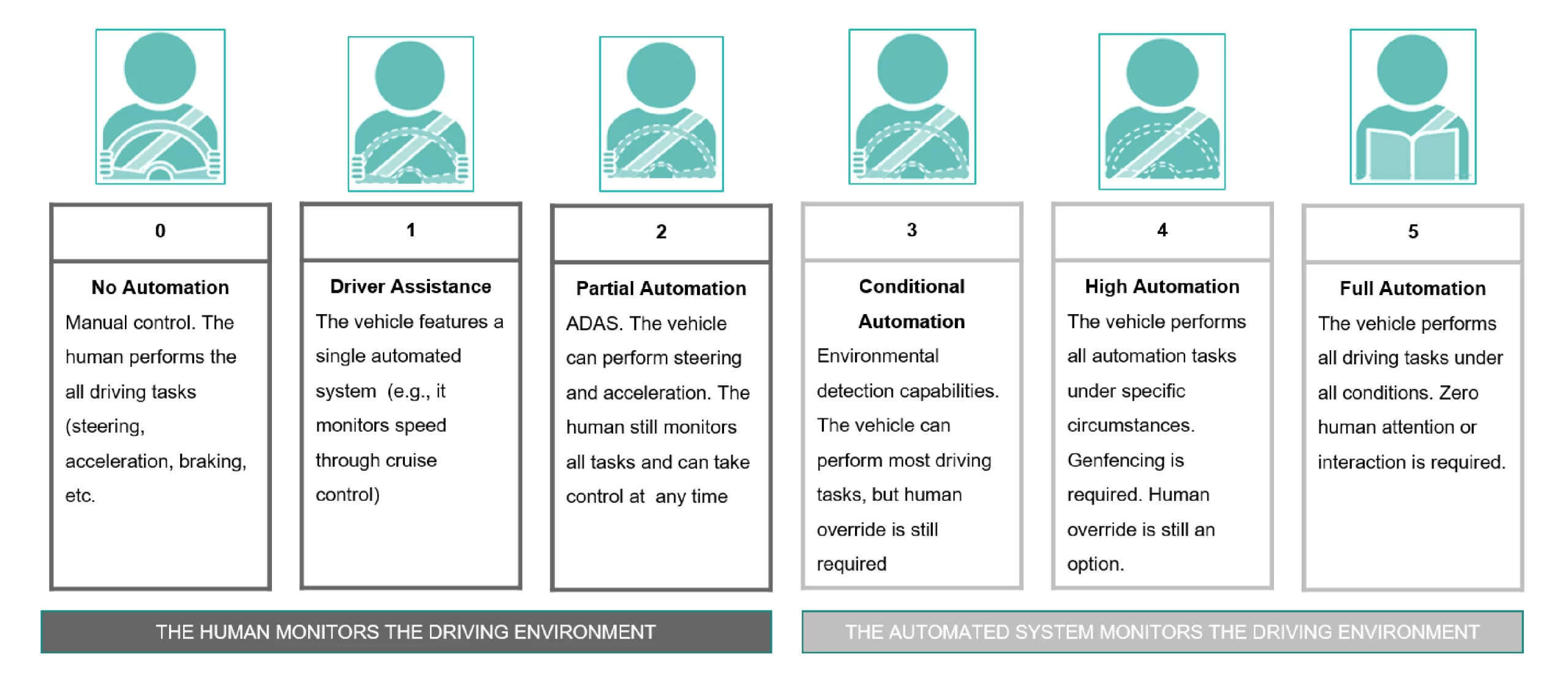
When individuals consider artificial intelligence in the automotive industry, autonomous cars, particularly those produced by Tesla, are frequently mentioned. Self-driving cars, like those from Tesla, demonstrate AI’s potential in transportation. The National Highway Traffic Safety Administration classifies autonomy into six levels, from Level 0 (no automation) to Level 5 (full autonomy), with Level 5 operating entirely without human control.
AI is transforming contemporary automobiles through enhancements in safety, performance, convenience, and the overall driving experience. The following are the main areas where AI has a significant impact.
Development of AI in Cars
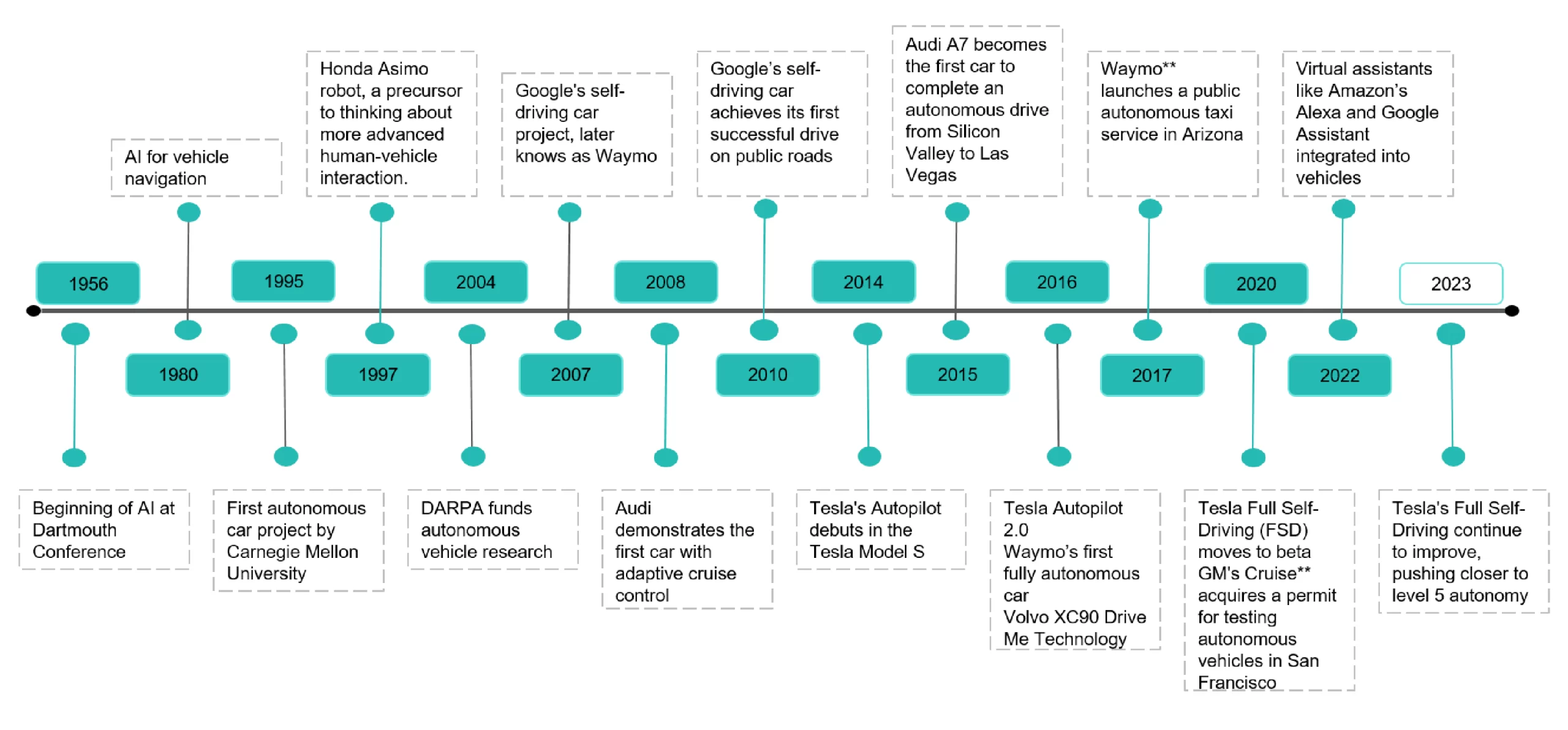
Since the 1950s, AI in cars has progressed from early automation and robotics research to experimental autonomous vehicles in the 1970s. By the 1990s, AI-driven systems such as adaptive cruise control and parking sensors had been introduced in production cars. Advanced Driver Assistance Systems (ADAS) appeared in the 2000s, and Tesla launched semi-autonomous Autopilot in 2014.
Technology
Artificial intelligence (AI) is revolutionizing the automotive industry by enhancing performance, safety, and convenience. Essential components include machine learning for in-the-moment decision-making, computer vision for navigation, natural language processing for voice communication, and predictive analytics for maintenance. Together, these advancements are creating cars that are more intelligent and effective. These are some of the key technologies that will affect vehicles in the future:
- Collision Avoidance System (CAS)
AI enhances vehicle safety through Collision Avoidance Systems (CAS) by using real-time data from sensors and cameras to monitor the environment. It tracks nearby vehicles, detects pedestrians, and assesses hazards, allowing quick driver responses. AI anticipates threats and averts collisions by activating functions like autonomous braking, speed reduction, and steering control. In addition to protecting drivers and pedestrians, using emergency brakes in dire circumstances and adjusting speed to keep a safe distance improves safety, comfort, and decision-making.
- Advanced Driver Assistance System (ADAS)
ADAS utilizes real-time data and automated technology to enhance vehicle safety by reducing human error. Adaptive cruise control adjusts a car’s speed according to the traffic around it, maintaining a safe distance between vehicles. To prevent unintentional lane departure, the lane-keeping system continuously monitors the road, sounds an alert, and directs the vehicle. The lane-keeping system continuously scans the road, issuing warnings and making adjustments to prevent the car from inadvertently straying off the lane. Automated parking utilizes sensors to guide the vehicle into spaces and assess nearby vehicles and objects, ensuring precise and safe parking.

- Collaborative Vehicle-to-Everything (V2X) Networks
AI enhances Vehicle-to-Everything (V2X) communication by analyzing data from sensors, traffic cameras, and weather stations. It predicts traffic patterns, suggests optimal routes, and enables cooperative adaptive cruise control for improved traffic flow. Audi’s “Traffic Light Information” system exemplifies V2X, offering speed recommendations to optimize travel time and fuel efficiency.
- Natural Language Processing (NLP)
NLP is a division of AI that facilitates computers and humans to communicate effectively through natural language. NLP in autonomous vehicles enhances safety and ensures adherence to traffic rules by enabling vehicles to comprehend and respond to voice instructions from humans and revolutionizing the automotive sector with voice-activated systems for navigation, traffic updates, and entertainment. By 2024, NLP will enable hands-free control of music, podcasts, and climate settings, while also offering voice-based checks for fuel levels, tire pressure, and maintenance to enhance safety, convenience, and enjoyment while driving.
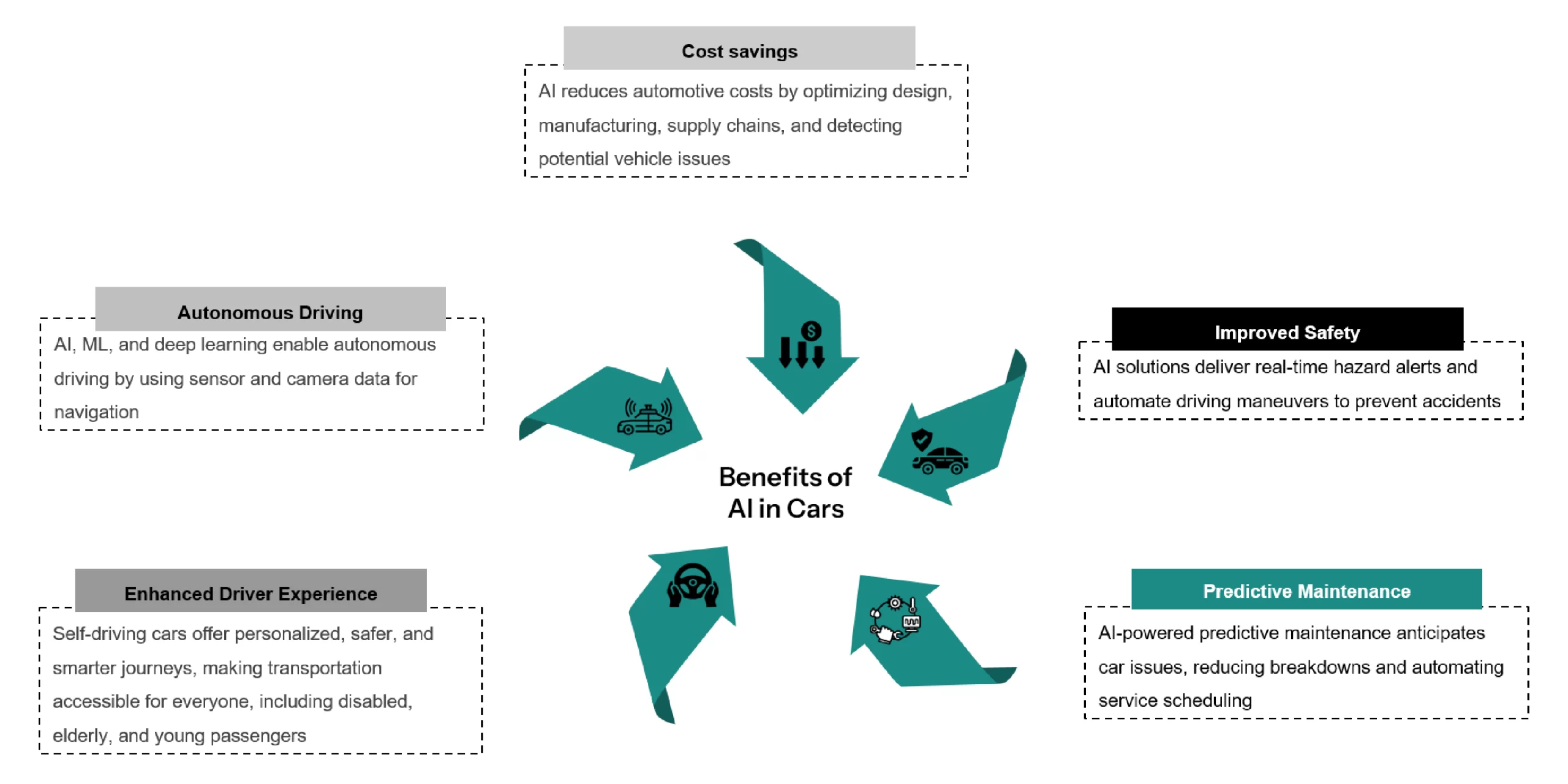
Benefits of AI in Cars
Collaborations and Key Players
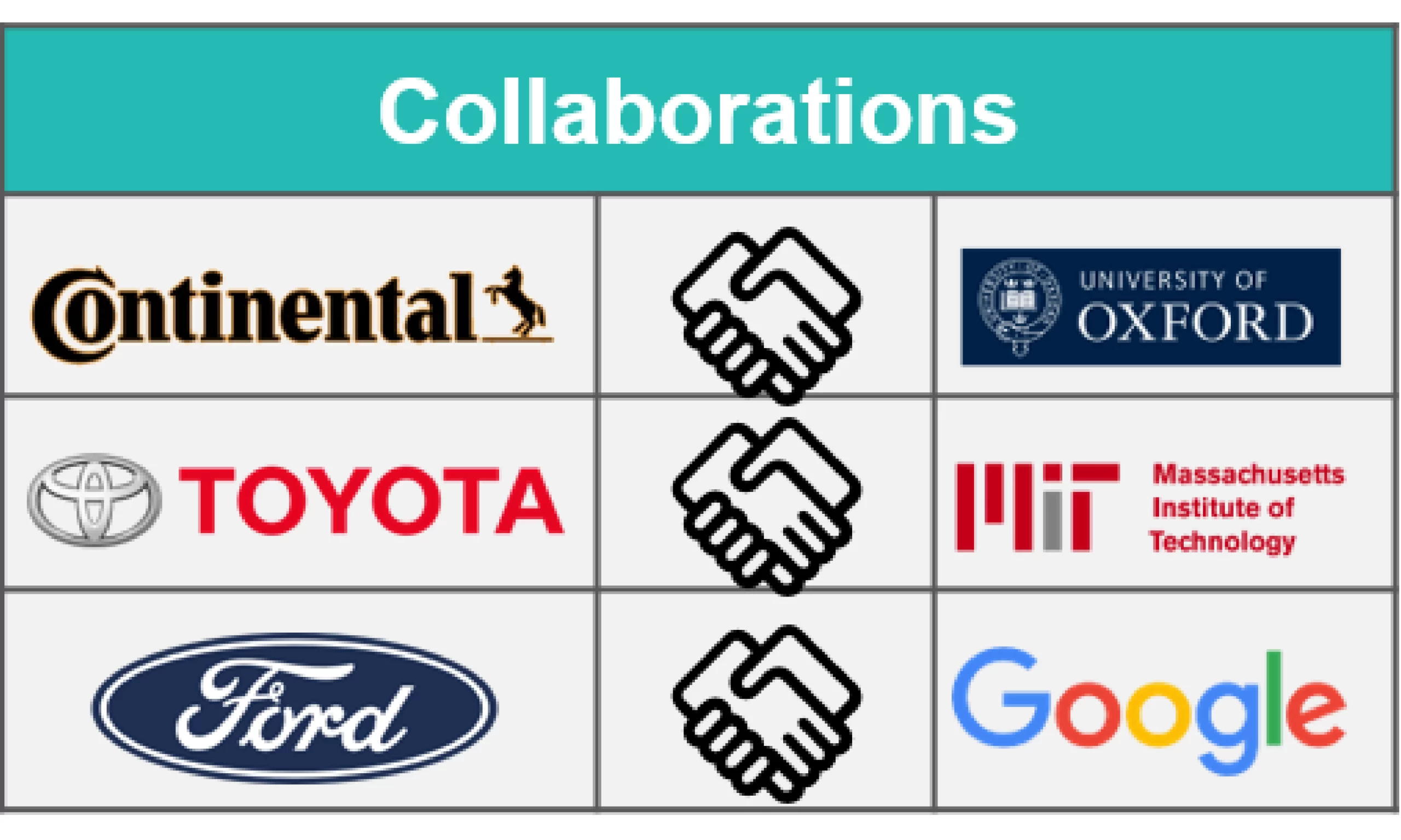
Continental has partnered with the University of Oxford’s Department of Engineering Science to explore the development and application of AI algorithms that could enhance future mobility solutions. These deep-learning algorithms have the potential to significantly improve visual object detection and human-machine interaction, paving the way for more advanced and reliable technologies in the future.
Toyota Motor Corp is partnering with Stanford and MIT on AI and robotics research to advance its self-driving car development. The automaker will invest $50 million over the next five years to establish joint research centers at both universities, located in Silicon Valley and near Boston.
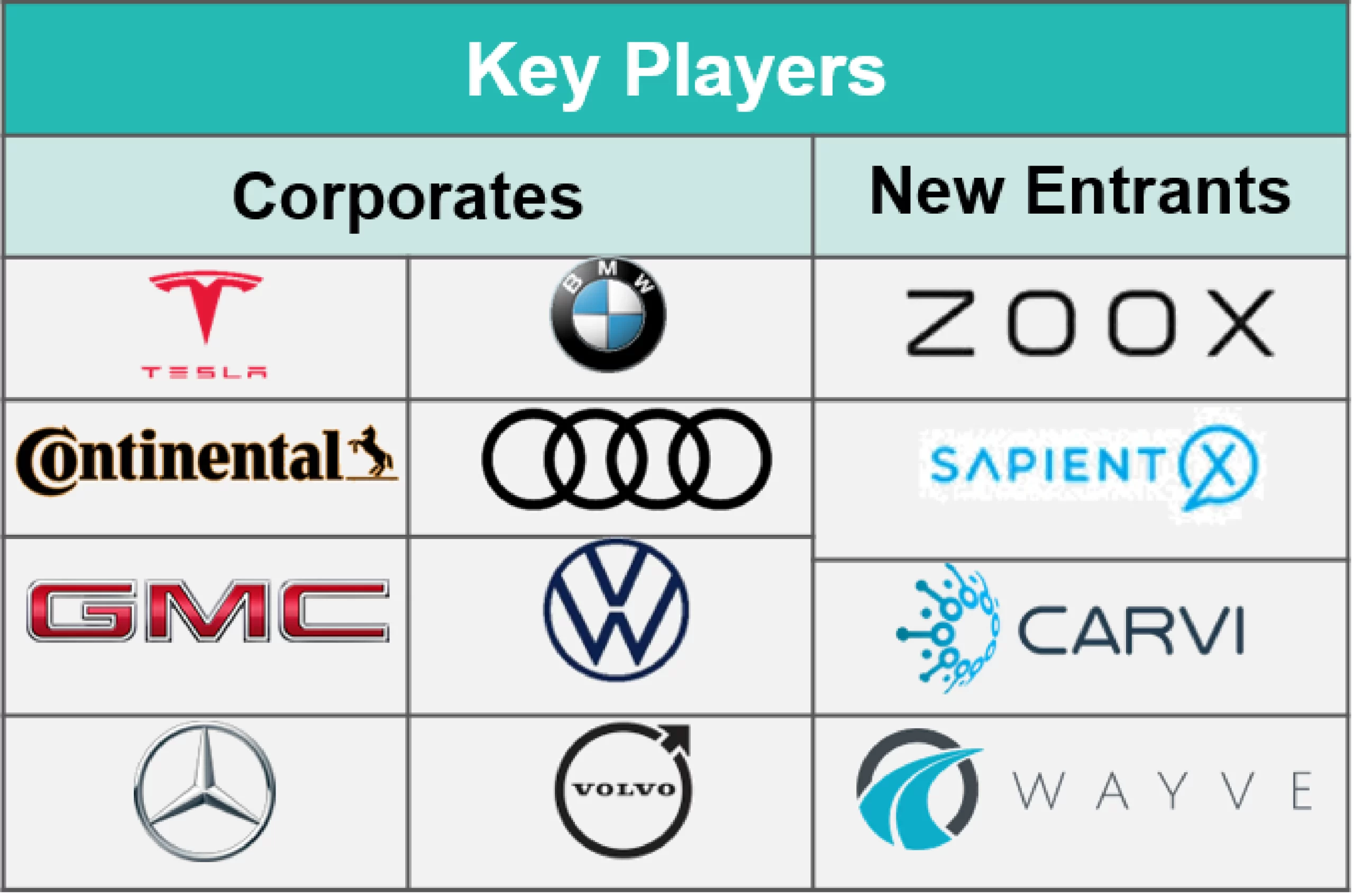
A combination of cameras, radar, and ultrasonic sensors is used by Tesla‘s Autopilot and Full Self-Driving (FSD) systems to perform functions such as adaptive cruise control, lane centering, and autonomous lane changes. These features are powered by an advanced neural network that processes sensor data in real-time to mimic human steering and acceleration judgment.
BMW‘s Personal Co-Pilot system utilizes artificial intelligence to provide features such as lane departure warning and adaptive cruise control with stop-and-go capabilities. Additionally, to improve efficiency and convenience, Parking Assistant Plus technology utilizes ultrasonic sensors and cameras to assist with parking in constrained locations automatically.
Highway driving is elevated to a new level with GM’s Super Cruise technology, which enables hands-free driving on designated highways. Using LiDAR, cameras, and high-precision GPS, Super Cruise ensures a safe and enjoyable hands-free experience by continuously monitoring the vehicle’s location and its surroundings.
Conclusion
The introduction of Artificial Intelligence in the automotive sector has sparked a wave of creativity, revolutionizing the driving experience. Although concerns exist about the risks associated with AI, its practical applications demonstrate substantial benefits. AI is transforming vehicle technology and the production process by enhancing efficiency, streamlining tasks, and reducing costs. Its impact is progressively improving safety, convenience, emissions, and energy efficiency.
Advancements in artificial intelligence will result in future vehicles becoming intelligent, environmentally friendly companions that enhance our daily interactions and encourage a safer, more eco-conscious community. Analyzing road conditions through machine learning will improve the safety of self-driving vehicles, ensuring the safety of drivers, passengers, and pedestrians. AI has a promising future in the automotive sector, with room for further expansion.
Let's Take the Conversation Forward
Reach out to Stellarix experts for tailored solutions to streamline your operations and achieve
measurable business excellence.