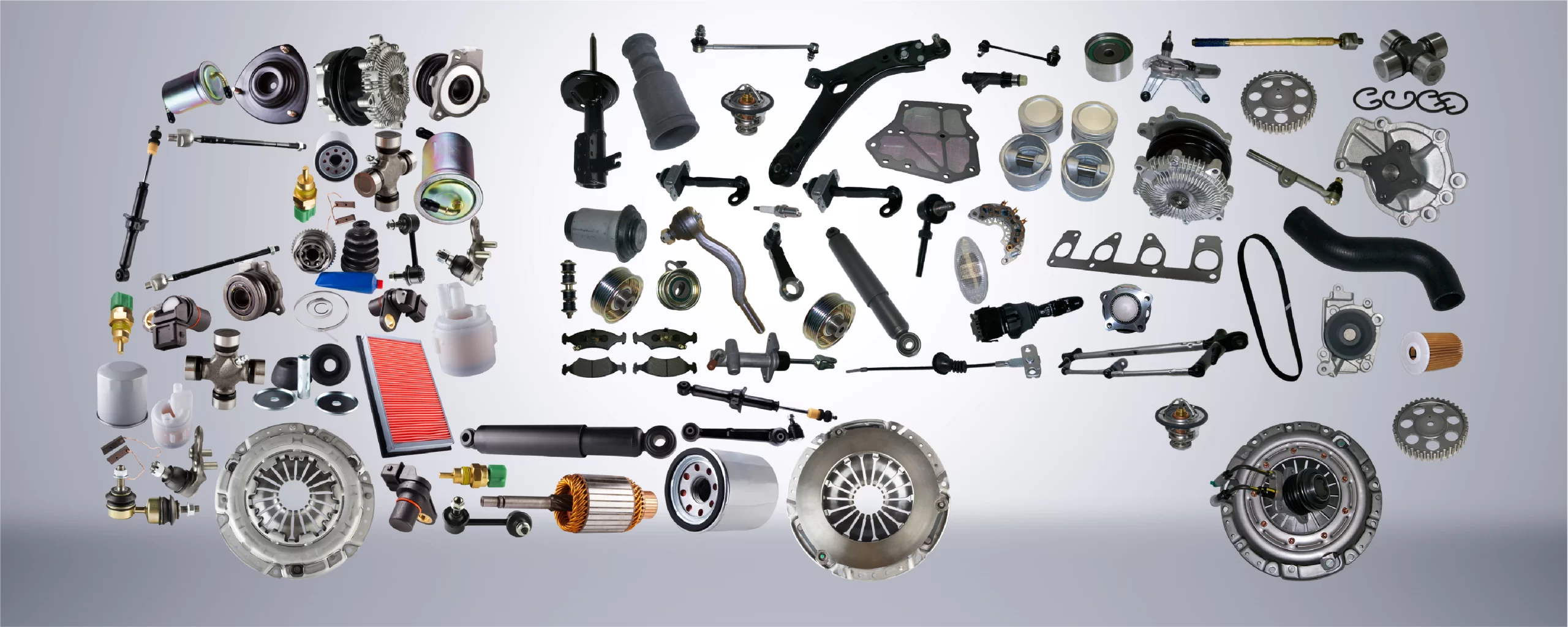
Advances in the Heavy Vehicles Maintenance

Heavy machinery equipment is mostly used in rough terrains with limited access to proper roads. They experience harsh environmental conditions like heavy rocks, bumpy roads and are susceptible to breakdowns hence, their regular maintenance is inevitable. Different types of maintenance can be performed for heavy machinery equipment such as reactive, preventive, predictive, and proactive maintenance. Preventive, predictive, and proactive maintenance helps to prevent components from excessive wear-and-tear, sudden failure, etc. Thus, it helps reduce overall operating costs and equipment downtime.
Advanced technologies such as predictive maintenance, telematics, 3D printing, and remote diagnostics significantly optimize maintenance processes and minimize downtime. Predictive maintenance utilizes sensor data and machine learning algorithms to predict and prevent potential equipment failures, allowing for proactive maintenance rather than reactive repairs. Telematics systems provide real-time data on vehicle performance, enabling fleet managers to monitor key metrics and schedule maintenance tasks more effectively. Remote diagnostics allow technicians to remotely access vehicle systems, diagnose issues, and provide guidance for repairs, saving time and reducing costs. These innovations in heavy vehicle maintenance are streamlining operations, improving reliability, and ultimately reducing costs for fleet operators.
Challenges in the maintenance of heavy vehicles
Availability of spare parts
Management and tracking of heavy equipment components are space and cost-intensive. This sometimes causes rare parts to be unavailable, prolonging delays and downtimes. In addition, their transportation from the store to the remote location where the vehicle breaks down is time-consuming.
Locating breakdown equipment at remote locations
Identifying and locating broken equipment in a remote location is difficult due to the lack of communication infrastructure. This wastes resources and time, which results in increased maintenance costs.
Logistics and human transport
Accurate information about vehicle health is critical for planning and scheduling maintenance. It minimizes downtime and ensures the optimum use of labor and resources. With limited information, planning is based on assumptions and experience, resulting in inefficient maintenance planning. Allocation of resources is also difficult when carrying out unplanned maintenance of breakdown vehicles.
Maintenance equipment and accessory
Facilitating the availability of all the maintenance tools at remote locations is challenging and sometimes impossible. It takes longer maintenance time for the technicians to go and inspect the broken equipment to identify problems physically. Fixing minor faults with limited tools, which the technician can carry, is feasible and viable. However, in case of a major breakdown, the vehicle must be towed to the workshop for repair. The latter option is tedious and time-consuming; also, it affects production efficiency and causes a monetary loss.
Fault Detection
Limited tools restrict a technician’s ability to determine which component has failed in the vehicle. In addition, it is challenging to determine the malfunction of multiple components, such as drive belt, coolant level, brake fluid, hydraulics, lubricant level, lubricant pump, etc., at remote locations with limited tools.
Innovations to overcome challenges
The industry is overcoming these challenges by utilizing remote health monitoring tools, unmanned aerial vehicles (UAVs), 3D Printed spare components, augmented reality (AR), and virtual reality (VR) based training systems.
UAV for monitoring and inspection
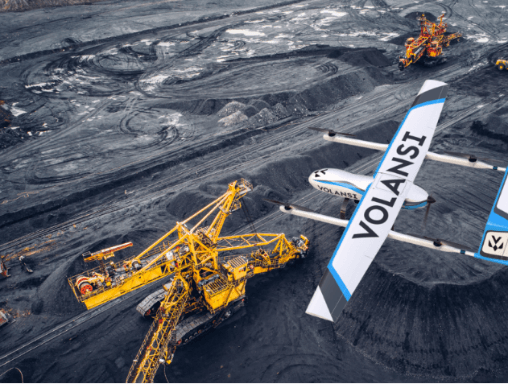
Unmanned aerial vehicles (UAVs) are used to monitor and inspect heavy equipment. They locate points of incidents and report maintenance requirements. UAVs can yield a 10-40% reduction in field service costs by eliminating the need for in-person technician visits, guiding the maintenance teams towards the broken equipment, and providing insights on equipment or accessories required for repairs.
Drones speed up the delivery of spare parts required for maintenance in remote locations, reducing downtime. Volansi, a US-based company, provides autonomous point-to-point drone delivery solutions. It delivers spare or replacement components required for the maintenance of heavy machinery at a remote location, helping to move logistics quickly and reduce costs.
3D printing of spare parts
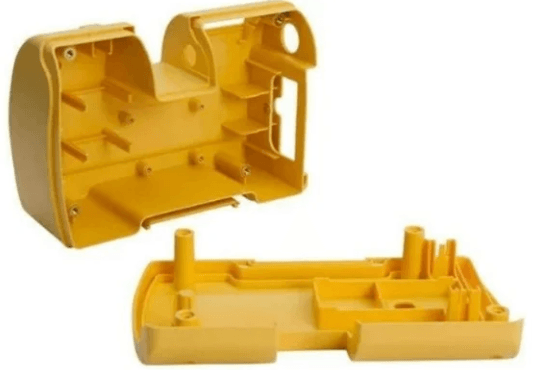
(Image source – Zeal 3D Website)
3D printing technology has transformed the maintenance supply chain for heavy machinery by offering quick access to a broad range of spare parts. It has aided quick availability by reducing the inventory management of the components.
- Fortescue Metals Group mining company has partnered with Aurora Labs to 3D print spare or replacement parts required during maintenance to eliminate the need for spare part procurement and inventory management.
- Zeal3D provides 3D printing solutions to the mining industry by providing highly accurate components for mining equipment to optimize supply chain management.
- Sandvik has partnered with Boliden for a proof-of-concept 3D printing trial, which involves the testing performance of spare or replacement components, which are 3D printed in the Sandvik facility to provide a replacement for broken components quickly.
Virtual Reality (VR) and Augmented Reality (AR) based solutions
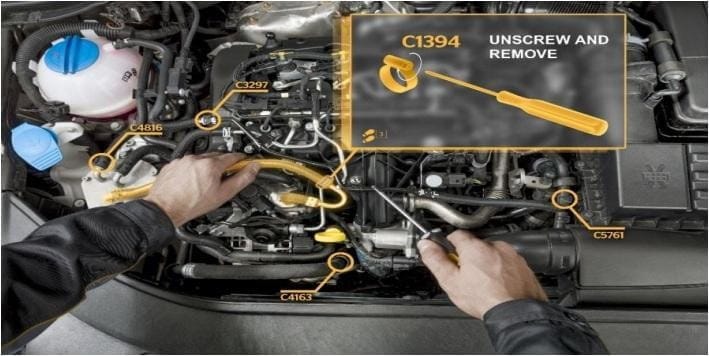
(Image source – Plutomen Website)
VR and AR are emerging technologies being used in heavy machinery to train operators on maintenance activities by providing virtual interaction with machines. VR reduces training time and makes training more intensive and informative. AR has the potential to provide real-time insights during maintenance and can assist in maintenance by visually displaying the location of the problem on the machine.
The EU-funded project, “Enhanced miner-information interaction to improve maintenance and safety with augmented reality technologies (EMIMSAR),” has developed a system that allows miners to view AR versions of complex equipment on helmet-mounted displays. It uses sensors to record and analyze temperatures, acceleration rates, and sample noise from sprockets, allowing operators to assess heavy-duty components like gears and chains. It is combined with background maintenance data to create real-time virtual visualizations of the machinery, which can be viewed by other miners while working on the same machine.
Remote Monitoring
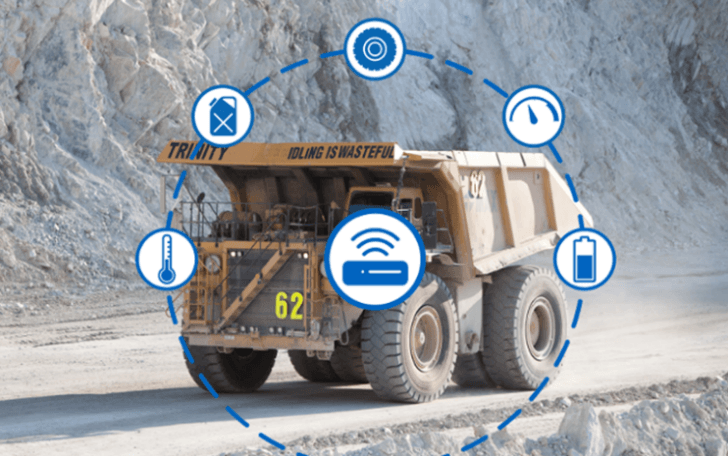
Remote monitoring of a vehicle’s health involves sensors and electronics & communication systems to remotely monitor and collect data on various components of vehicle health, such as battery charge, tire pressure, coolant level, and hydraulics. It helps to analyze operational trends and patterns to predict failures and receive repair recommendations. It provides easy access to critical parameters and real-time data, which are essential for maintenance planning.
Key Players in Heavy Vehicle Maintenance Solutions
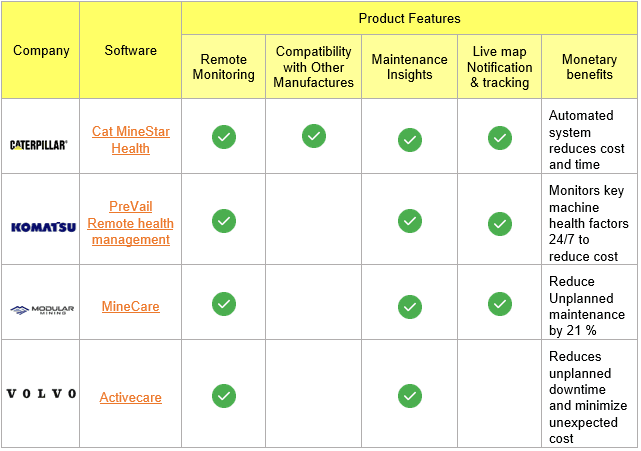
Key players in the domain have already developed and deployed remote health monitoring of heavy vehicles. Of the top companies, Caterpillar provides a promising remote monitoring solution that is compatible with other manufacturers’ heavy vehicles. It also has live map notification and tracking features to easily locate broken equipment.
Conclusion
Maintenance of heavy vehicles is vital and inevitable. Predictive, preventive, and proactive maintenance can help reduce vehicle breakdown and improve production efficiency. Innovations such as UAV-based monitoring, 3D printed parts, remote vehicle health monitoring, and AR & VR-based training of technicians can help reduce maintenance time, facilitate the availability of components, and plan the production of components that wear out frequently. All this finally helps in reaping monetary benefits directly or indirectly.
Hence, we strongly recommend that heavy vehicle manufacturers and construction and mining companies research, develop, and deploy these technologies.
Let's Take the Conversation Forward
Reach out to Stellarix experts for tailored solutions to streamline your operations and achieve
measurable business excellence.