The Recovery Economy: How Expectations Are Shifting Across the Sports Medicine Ecosystem
Executive Summary
For sports medicine manufacturers, the need to move beyond implant performance has never been higher. They must build integrated recovery systems that offer decision support and continuous visibility across the patient’s journey. Marketing efforts must move away from speed-focused claims and center the narrative on predictable, safe, and complete recovery. Clinics and hospitals are looking for partners with solutions that reduce outcome variance and support value-based contracts and bundled care. Moreover, even investors and payers will prefer organizations that verify predictability with real-world data. Companies that excel in balancing efficient recovery with outcome confidence will shape the next era of sports medicine.
The Recovery Economy: Why Faster Recovery Is Becoming a Dangerous Expectation in Sports Medicine
The sports medicine industry is on the cusp of the next inflection point, supported by several favorable trends, including increased sports activity, aging and physically active lifestyles, growing musculoskeletal problems, and a desire for less invasive interventions. Based on market research, the global sports medicine market is expected to exceed ~$15 billion by 2033 at a CAGR of ~9 percent. As market revenues grow, healthcare providers, payers, and athletes are leaning into optimizing patient recovery while preserving longer-term functional outcomes, focusing on which innovations are prioritized within the sports medicine ecosystem. Athletes are moving towards enhancing acceleration in patient recovery while ensuring sustained long-term functional benefits – the focus is on which innovations are worth supporting in the sports medicine environment.
But a growing question is: As expectations for faster return-to-play continue to rise, how might sports medicine groups balance the pace of recovery with long-term patient outcomes and preparedness?
A quiet revolution is taking place in sports medicine. Patients are now demanding faster recovery times, weeks instead of months. Promotion of faster recovery is becoming ubiquitous in hospitals worldwide.
On one level, things are clearly improving. But there is a crucial tension here, a system in which the focus on faster recovery is outpacing a focus on risk management. This is the fundamental paradox of the Recovery Economy, a system in which faster recovery is outpacing risk management.
As sports medicine continues to evolve, changing market dynamics are creating opportunities for organizations to refine their innovation priorities and identify new areas for value creation.
We describe the Recovery Economy as a new market shift in which companies are increasingly measured by whether and how reliably, safely, and confidently their patients recover and function over time.
At Stellarix, we think recovery will evolve into a core “product” rather than an outcome of your treatment approach. Given the evolution of procedures, implants, biologics, and recovery therapies, competitive differentiation will be driven by how organizations optimize and integrate the entire recovery pathway rather than solely the technology. Competitive differentiation will likely shift away from individual pieces of tech towards fully integrated recovery products that ensure predictable outcomes.
Expectation vs Reality: The Growing Mismatch
Most MedTech companies, physicians, and coaches believe under a familiar assumption: “value is created if recovery time is shortened.”
That assumption is changing more quickly than expected.
A vast amount of data gathered from verified patient reported outcome measure (PROM’s) such as the KOOS (Knee Injury and Osteoarthritis Outcome Score), the IKDC (International Knee Documentation Committee Subjective Knee Evaluation Form) and the Oxford Knee Score shows that when assessing the degree of recovery, patients report in a multidimensional manner, for example pain relief, function, confidence in their body mechanics when performing activities, their ability to return to wanted activities, their quality of life and so on. This is evidence that the time required for return is not the sole measure of recovery but rather reflects long-term functional outcomes and patients’ confidence. This creates a fundamentally different problem.
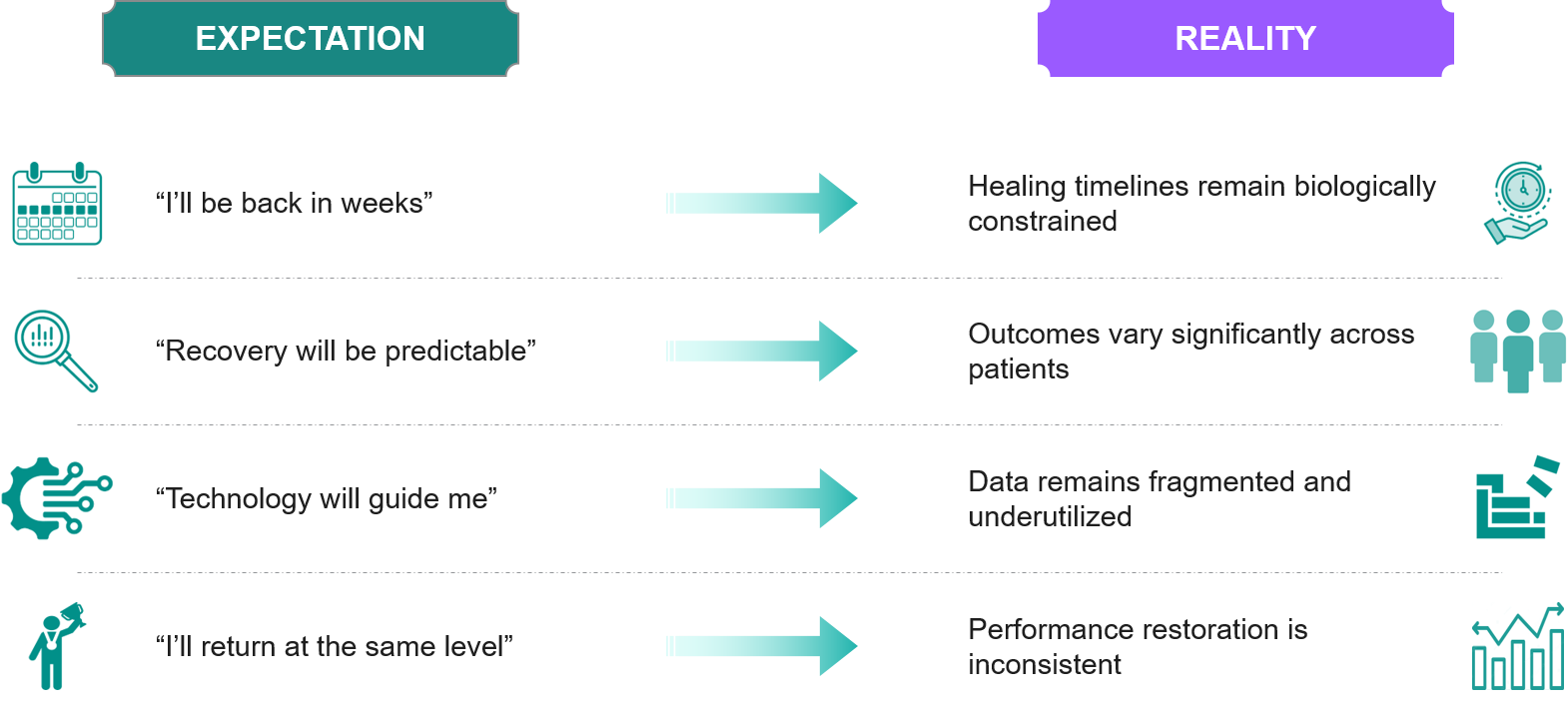
We observed that “Most current solutions improve one or two of these dimensions, highlighting the potential for more integrated solutions that address all four simultaneously”. This is the gap where the Recovery Economy is being defined in the current context.
The expectations pose a strategic risk to the stakeholders in the ecosystem:
- Patients’ dissatisfaction with treatment despite being “successful.”
- More pressure on the physician to speed up the process
- Problem with people losing faith in hospitals, groups, and Accountable Care Organizations (ACOs)
- Payer pressure to ensure consistency in outcomes
In other words, the Recovery Economy is driving demand while elevating the cost of failure.
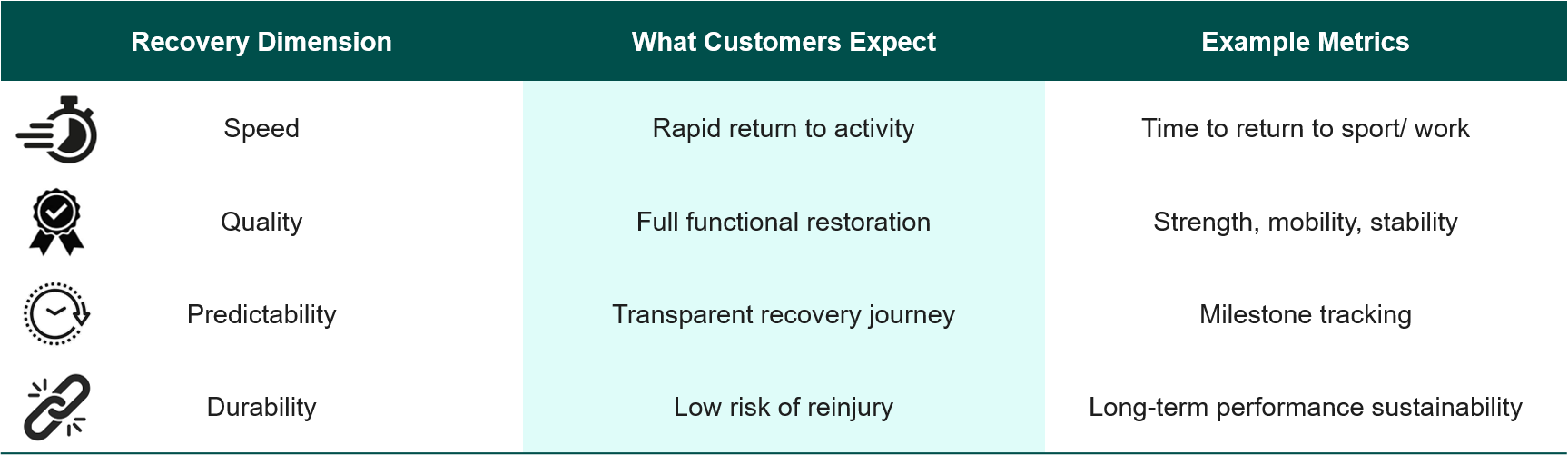
In light of the shift, we feel that the Design Teams and System Designers should build a recovery ecosystem considering the following evaluation Metrics:
The Positioning Shift: Speed to Control
Along with product development, Marketing Teams can shift the value messaging from “We help patients recover faster” to “We help patients recover safely, predictably, and completely.”
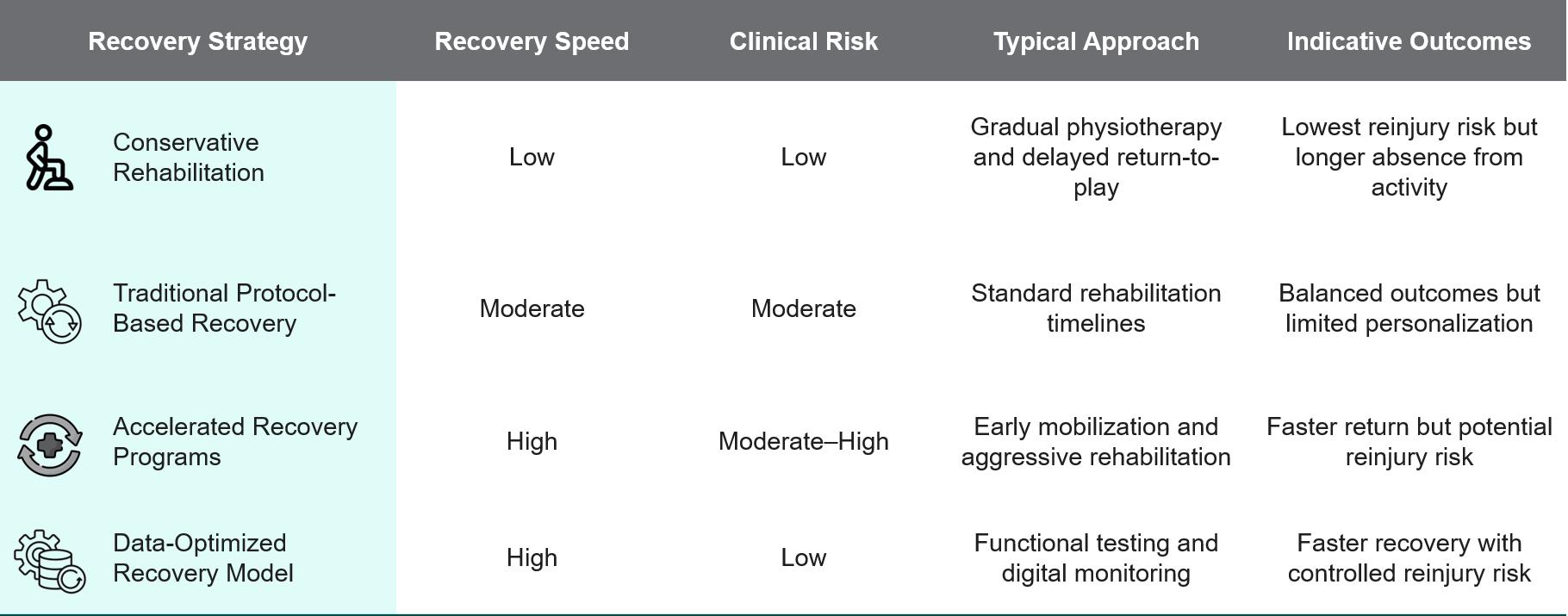
Our study suggests that the question should be addressed in the marketing campaigns:
- The system will measure recovery objectively
- Deviations will be detected early
- Rehabilitation will be adapted dynamically
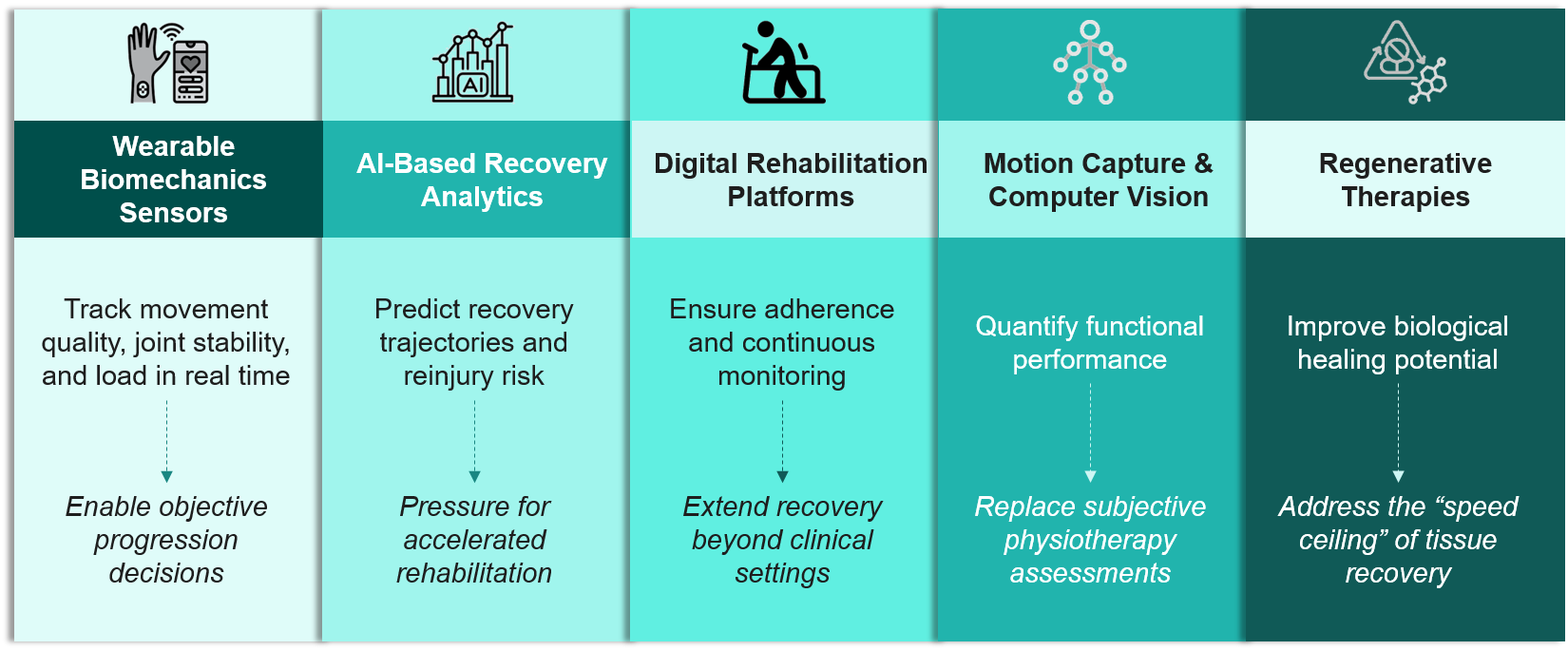
Thus, predictability would generate value, and a competitive advantage will be offered by a recovery control system, built on the following four principles:
- Real-time biomechanical monitoring
- Criteria-based (not time-based) progression
- AI-driven recovery analytics
- Continuous patient engagement beyond the clinic
The Capability Gap: Not All Players Are Ready
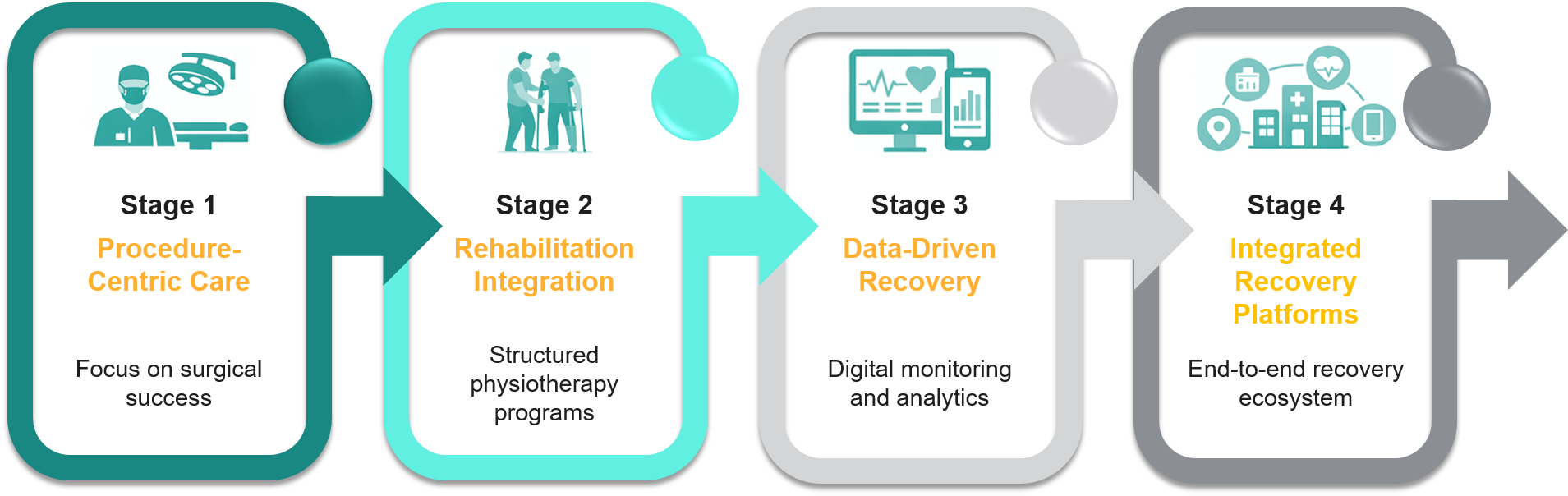
Rising expectations for fast, safe, and predictable recovery are outpacing industry capabilities. Players sit at different maturity levels:
- Surgical Leaders (Strong Procedure Control, Weak Recovery Visibility):
Companies like Zimmer Biomet, Stryker, Smith & Nephew, Arthrex, and DePuy Synthes lead surgery, but rarely track full recovery.
- Rehab Device Providers (Structured Protocols, Limited Analytics):
Enovis, Breg, and Össur support rehabilitation execution, but not continuous recovery intelligence.
- Digital Recovery Platforms (Strong Monitoring, Limited Surgical Integration):
Sword Health and OneStep enable objective tracking, but sit outside surgical pathways.
- Integrated Recovery Ecosystems (Emerging Leaders):
Isokinetic Medical Group and Catapult Sports connect monitoring with return-to-play readiness.
Currently, most providers are between Stage 2 and Stage 3. But demand is already shifting toward Stage 4 expectations.
This gap creates both:
- Risk (failure to meet expectations)
- Opportunity (first-mover advantage)
While predictions for sports performance are continually evolving, it is evident that sports medicine groups are busy building their skill sets to support emerging models of recovery and care delivery
Where Most Players Are Getting It Wrong
Many organMany organizations are responding to the Recovery Economy by:
- accelerating rehabilitation protocols
- marketing faster return-to-play
- investing in isolated technologies
But this response is based on a flawed interpretation of demand.
Customers are placing growing value on recovery experiences that provide greater predictability and clarity.
This distinction is critical.
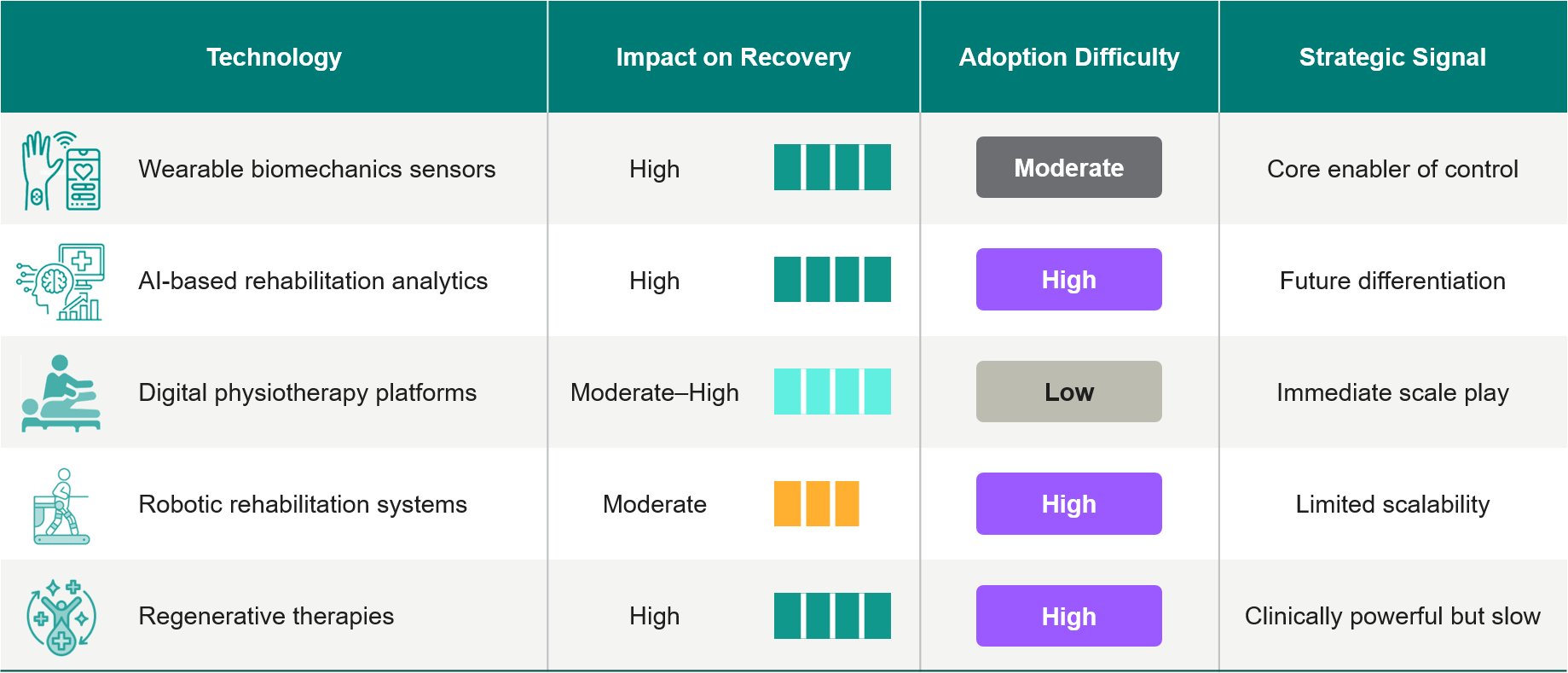
The takeaway: Winners who can combine efficient recovery pathways with predictable outcomes may be well-positioned to create long-term value in sports medicine.
Conclusion: Recovery Is Becoming a Trust Economy
Success in sports medicine has become much broader within The Recovery Economy. It’s no longer focused on the perfection of a surgical procedure or on the speed of someone recovering. Instead, it is the confidence in a reliable, validated, and measurable pathway to recovery for everyone that is becoming increasingly important.
The new strategic question the industry must address is less about how we speed recovery and more about how we gain the high ground of recovery. Organizations competing only on the capabilities of their individual products or on the speed at which their solutions can facilitate rehabilitation may soon face a very difficult market if other players offer faster-recovery technologies with greater ease.
Businesses that differentiate themselves through intelligence on patient recovery, the orchestration of a coordinated ecosystem, consistent communication and feedback with patients, and measured patient outcomes are more likely to sustain an enduring advantage. At Stellarix, we believe future innovation is less about speed to recovery and more about a trusted patient experience. In the Recovery Economy, there may not be a more coveted strategic differentiator than trust.
Let's Take the Conversation Forward
Reach out to Stellarix experts for tailored solutions to streamline your operations and achieve
measurable business excellence.