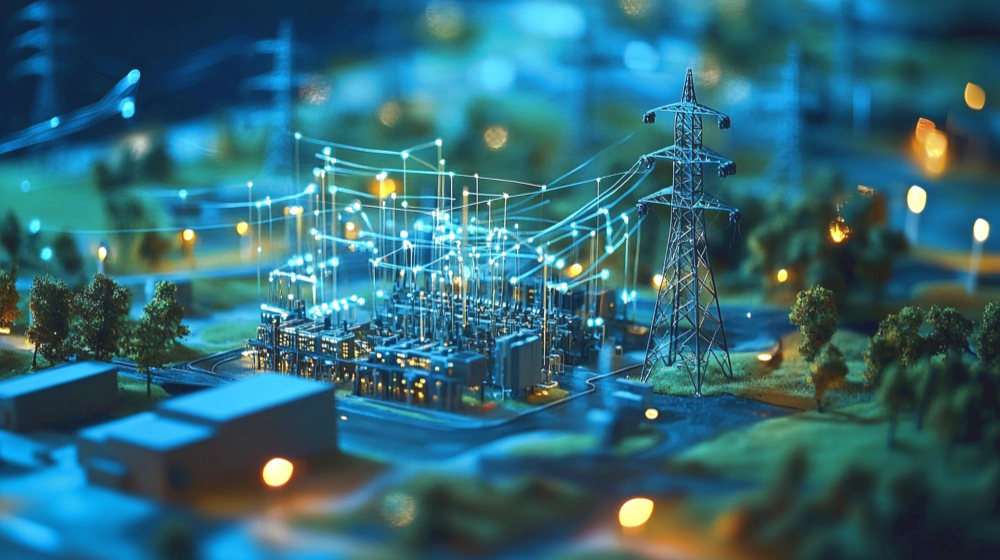
Grid Modernization: Transforming the Future of Energy Infrastructure

Grid modernization is a process that upgrades existing grids by integrating new technologies to build a more efficient, resilient grid infrastructure. It requires significant changes, including the incorporation of new energy generation and storage subsystems, the installation of smart technologies, and upgrades or extensions to the existing infrastructure. In this era, the electric grid is one of the most complex systems in the world.
Yet, the objectives have evolved in response to several changes, including climate change. Grid modernization leads towards a complete energy transition, eliminating reliance on fossil fuels to produce energy. Throughout generation, transmission, and distribution, the power sector has undergone a significant change. A successful grid modernization strategy enables the system to keep up with these developments.
This article explores the significance of grid modernization, key enabling technologies, leading industry players, and emerging innovations. It also outlines the various regulatory frameworks, global initiatives, and the future outlook for modern grid systems.
The Critical Importance of Grid Modernization
The increasing need for energy, combined with the incorporation of innovative technology and renewable energy sources, highlights the importance of grid modernization. Businesses may enhance grid resilience, reduce operating costs, and better respond to demand increases by integrating digital controls, smart technologies, and renewable energy sources. Smart grids also play a crucial role in building a more reliable and sustainable energy infrastructure, offering benefits such as real-time monitoring, improved load management, and the smooth integration of renewable energy.
To strengthen long-term energy security and efficiency, investing in grid modernization would be the strategic move to meet consumers’ energy demand.
Key Drivers of Grid Modernization:
Aging Infrastructure and Need for Upgrades
Due to the grid’s transmission lines and power transformers being well past their prime, there is an urgent need to invest in infrastructure upgrades to ensure a secure and stable energy supply that meets current energy demands.
Integration of Renewable Energy Sources
Since renewable energy sources are often distributed geographically, integrating them into the current grid requires advanced grid technologies. Smart grids with improved real-time monitoring and forecasting capabilities help ensure that energy supply matches demand.
Technological Advancement in Grid Automation
Advancements in grid automation, AI, and IoT play a critical role in modernizing grids. These enable predictive maintenance, real-time monitoring, and optimized energy distribution. Additionally, technological upgradation reduces losses, enhancing grid efficiency and providing grid operators with greater access to management capabilities.
Decentralization & Electrification
A significant rise in distributed energy resources (DERs), such as electric vehicles, rooftop solar, and energy storage, is fueling demand for electrification and decentralized grid management for peer-to-peer energy trading. Advances such as virtual power plants (VPPs), blockchain, DERMS, and more are promoting decentralization in modern grids to improve integration and reliability.
Key Challenges in Grid Modernization:
High Initial Capital Investment
Implementing advanced technologies, such as smart meters, energy storage systems (ESS), sensors, and automation tools, is crucial to improving grid efficiency. However, these require substantial initial capital investments, which can hinder grid modernization by creating high financial barriers.
Regulatory and Policy Barriers
Outdated regulations and slow-moving policy frameworks across regions worldwide hinder the adoption of new technologies and investment in grid infrastructure. The complex regulatory landscape navigated by operators delays the implementation of several modernization projects.
Cybersecurity Risks
Rising digitalization and connected technologies expose power systems to cyberattacks like system interruptions and data breaches. Hence, strengthening cybersecurity measures is crucial to safeguard critical grid infrastructure and maintain grid stability.
Interoperability Issues
Combining technologies from multiple suppliers can create compatibility issues, hindering smooth coordination and communication among grid components. Additionally, the compatibility of legacy systems with modern grid infrastructure is a major issue, necessitating the development of standardized protocols to ensure efficient integration.
Stellarix assists clients by navigating the complexities of grid modernization, bridging the gap between innovation and implementation by identifying the right technologies and partners to deliver solutions tailored to their needs.
Key Technologies Transforming Grid Modernization
Grid modernization is essential to enhance efficiency, resilience, and sustainability, among other parameters, paving the way for a smarter, more reliable infrastructure. The key technologies transforming the current infrastructure are as follows:
Advanced Metering Infrastructure (AMI)
AMI is a major component of grid modernization, providing an intelligent interface between consumers and system operators. AMI enables real-time monitoring, intelligent energy management automation, and two-way communication to enhance grid reliability, optimize demand response, and allow seamless integration of distributed energy resources.
In December 2025, Nokia & MIT collaboratively demonstrated a Quantum-Safe IP/MPLS Communications framework for AMI backhaul. The framework utilizes a Multi-layer Quantum Key Distribution approach to ensure the two-way communication between the consumer and the utility remains resilient against future decryption threats.
Grid Automation
Grid Automation is a key element of grid modernization. It consists of technologies used to automate routine tasks and functions associated with electricity distribution, such as asset monitoring, protection relays, communications, control, and response to grid events. Moreover, grid automation helps enhance overall efficiency, reliability, and security.
In August 2025, Stanford University presented an Agentic AI framework for Autonomous Rerouting based on Large Action Models. This framework autonomously reroutes power during localized faults, achieving a response time of less than 100ms to prevent cascading blackouts.
Digital Twin
A digital twin is a virtual model that mimics a physical system, capturing its characteristics and behavior while providing real-time sensor data. Digital twins enable utilities to improve planning, operations, and maintenance, ultimately enhancing grid resilience and efficiency.
In March 2025, Schneider Electric and ETAP unveiled a digital twin system for AI factories powered by NVIDIA Omniverse, enabling precise power system design, real-time monitoring, and predictive maintenance. It also improves grid reliability and energy efficiency by supporting smarter, sustainable infrastructure management.
Distributed Energy Resource Management System (DERMS)
DERMS is a software platform that supports utilities in managing and optimizing the operation of distributed energy resources (DERs), such as solar panels, energy storage, and electric vehicles. These are crucial for grid modernization and integrating diverse, decentralized energy sources.
In October 2025, the Energy Research Institute at Nanyang Technological University demonstrated a regulatory-free research Sandbox for Virtual Power Plants (VPPs) for real-time transactive energy management, wherein AI agents bid on energy markets on behalf of residential solar owners.
High-Voltage Direct Current (HVDC)
As HVDC enables efficient long-distance power transmission, integrates renewable energy sources, and interconnects grids, it is a crucial technology for grid modernization, leading to a more reliable and sustainable energy system.
In July 2025, researchers at the New Jersey Institute of Technology presented a Feed-Forward Neural Network (FFNN) for a modular multi-level converter-based HVDC inverter. The FFNN can monitor HVDC network health in real time with 99% accuracy in predicting AC/DC faults.
Energy Storage System (ESS)
Energy storage technology is a crucial part of the grids as it helps by storing energy for later use, resulting in stabilizing the grids, integrating renewable energy, and improving overall grid efficiency. ESS often includes batteries, pumped hydro storage, capacitors, and several other technologies.
In December 2025, China Green Development commissioned a 200 MW/800 MWh semi-solid-state energy storage system utilizing semi-solid-state LFP batteries. This deployment shifts the Solid-Electrolyte interface technology from pilot to full commercial use for large-scale grid operations.
Blockchain
By facilitating decentralized, safe, and transparent energy transactions and reducing dependency on centralized utilities, Blockchain technology is transforming smart grids by combining renewable energy sources, optimizing EV charging, and enabling peer-to-peer (P2P) energy trading. It enhances grid stability and resilience. Through real-time energy trading, dynamic pricing, and secure smart contracts, Blockchain improves efficiency and sustainability.
In April 2025, the New Jersey Institute of Technology demonstrated a Generative AI-based Smart Contracts for P2P Energy Trading wherein Gen AI acts as a “negotiation agent” for homeowners on a blockchain network and places bids for the cheapest renewable energy based on the predicted household demands, while reducing the energy bills by an average of 12% in the lab settings.
AI Integration
The integration of AI offers multiple advantages for modernizing the grid, including improved grid security, predictive maintenance, and more effective energy distribution, leading to a more dependable and robust power system.
In November 2025, MIT demonstrated the implementation of Neuromorphic Computing for Real-Time Anomaly Detection at Grid Edge, processing the data locally with brain-inspired “spiking neural networks.” The study has shown a 95% reduction in data latency, enabling the grid to detect and isolate cyber threats or physical faults at the source.
Innovations in Grid Modernization
To improve grid modernization, several innovations have been implemented within energy systems through smart automation, decentralized networks, advanced storage solutions, and more. The following are key emerging innovations that help modernize grids.
Self-Healing Grids
A smart network that utilizes sensors, control systems, and communication technology to identify and quickly locate faults, automatically restoring power to affected areas without any manual intervention, is called a Self-Healing grid. Some key recent activities are:
1. Smart Microgrid System
In January 2025, Sepuluh Nopember Institute of Technology presented a smart Microgrid System utilizing self-healing capabilities, online monitoring & power management, aiding to boost efficiency and dependability. This reduced repair time by 89.51% and fault-detection time by 99.54%, enabling faults to be detected, isolated, and recovered automatically.
2. Minute-level Self-Healing Technology
In December 2024, State Grid Kashgar Power Supply Company utilized Minute-Level Self-Healing Technology, reducing fault isolation and power restoration from hours to minutes. Using automated distribution and network topology analysis, it obtained a 98.28% terminal access and 90.68% remote control, marking a significant breakthrough in grid automation.
Grid Edge Computing
By deploying computing resources and processing power closer to end users or at the edge of the grid, grid edge computing offers faster data processing, real-time asset monitoring, and control, all of which improve grid performance and reliability. Some recent key developments are:
1. Revelo Cellular Grid Sensor
In March 2025, Landis+Gyr presented the Revelo Cellular grid sensor, integrating grid edge computing and LTE-M communications for real-time management. It enables high-resolution data streaming, anomaly detection, and advanced power-quality monitoring without additional infrastructure. The system supports EV charging and distributed energy management, boosting grid resilience and efficiency.
Peer-to-Peer Energy Trading
P2P energy trading enables direct energy exchange between consumers and prosumers (those who produce and consume energy) without intermediaries, fostering a decentralized, potentially more efficient energy system. Some key recent activities are:
1. Multi-layer P2P Energy Trading
A multi-layer P2P energy trading model was introduced in February 2025 to boost grid efficiency through integrating prosumers and EVs. The strategy reduces operational costs by 21.66% and power loss by 19.99% through power exchange optimization and pricing, while also boosting computational efficiency and local generation use.
Quantum Computing
Quantum computing leverages the power of quantum mechanics to tackle complex optimization problems, potentially enabling more efficient and reliable energy management, resource allocation, and grid security. Some key recent activities are:
1. Variational Quantum Algorithms (VQAs)
In 2025, Western University presented a hybrid quantum-classical optimization framework utilizing VQAs to boost smart grid energy efficiency by minimizing the energy losses by 26%. It improves grid management, sustainability, and scalability, outperforming traditional methods while remaining practical regardless of quantum hardware limitations.
Regulatory & Policy Framework for Grid Modernization
In Grid modernization, regulatory frameworks and standards play a crucial role, ensuring safety, sustainable integration, and interoperability of advanced technologies. Here, Stellarix can guide companies in staying ahead of the shifting regulatory landscape by decoding the complex global framework and compliance, ensuring grid modernization investments are not only compliant but also strategically positioned to capitalize on emerging policy initiatives.
Below are some regulations for grid modernization:
Action Plan for Affordable Energy
In February 2025, under the Clean Industrial Deal, the European Commission’s Action Plan for Affordable Energy aims to improve affordability, sustainability, and efficiency across the EU’s energy system. The plan centers on market optimization through tariff reforms and grid investments, accelerating clean energy via electrification and renewables, and investing and digitalizing to mobilize private capital and drive innovation. Additionally, it strengthens energy resilience through crisis response measures and a Tripartite Contract for price stabilization, ensuring long-term affordability.
Federal Energy Regulatory Commission, Order No. 2023
In July 2023, to accelerate the implementation of sustainable energy, the U.S. Federal Energy Commission issued FERC Order No. 2023, which simplified the interconnection process. By using first-come, first-served cluster studies, strict timelines, and penalties for delays, it promotes openness, effectiveness, and equity in connecting new energy projects to the grid. By requiring advanced modelling, it also improves grid planning and allocates costs more fairly, preventing developers from being unfairly burdened. The goals of these measures are to eliminate bottlenecks, enhance grid stability, and ease the shift to a cleaner energy system.
Australian Energy Sector Cyber Security Framework (AESCF)
The Australian Energy Market Operator (AEMO) and the Australian government collaborated to launch the AESCF in 2018 as a voluntary program that enabled energy organizations to assess and improve their cybersecurity maturity, thereby strengthening the resilience of Australia’s critical energy infrastructure. In July 2024, energy ministers reaffirmed their continued support for AESCF. The AESCF would continue to perform self-assessments to support the cyber uplift programs, the prioritization of investment, and the Risk Management Plan (RMP) regulatory obligations under the SoCI Act.
Key Market Players & Activities
Below are the major established players, startups, and research institutes that help define the changing terrain of grid modernization by supporting transformative projects and advanced ideas.
Industry Leaders in Grid Modernization

Key Market Activities
- In December 2025, GE Vernova and Seatrium partnered to deliver the BalWin5 project for TenneT, a 2.2-gigawatt offshore high-voltage direct current (HVDC) grid connection designed to transmit renewable energy from North Sea wind farms to the German mainland.
- In December 2025, ABB and Vulcan Energy partnered to deliver the complete electrical infrastructure for the Phase One Lionheart project in Germany, integrating renewable energy generation with high-voltage switchgear to support the European electric vehicle battery supply chain.
- In November 2025, Siemens and IFS entered a strategic partnership to deliver integrated Industrial AI solutions for energy and utilities, combining Siemens’ Gridscale X platform with AI-driven asset management to enable autonomous grid operations and improve the integration of distributed energy resources at scale.
- In November 2025, Schneider Electric’s One Digital Grid Platform, an integrated AI-powered solution designed to improve the grid resiliency, efficiency, etc. The platform enables utilities to integrate independent software solutions that support grid modernization and more efficient energy management, while reducing overall costs and providing real-time insights, predictive analytics, and automation to minimize outages, streamline DER interconnection, and accelerate application deployment.
- In October 2025, Honeywell and LS ELECTRIC partnered to deliver AI-driven battery energy storage systems (BESS) and electrical power monitoring tools through the Honeywell Forge platform to enhance data center resilience and microgrid stability globally.
- In October 2025, Hitachi Energy and Grid United entered the next development phase for the North Plains Connector, a 420-mile interregional HVDC system spanning the U.S. eastern and western power grids to boost transmission capacity by 3,000 MW and improve resilience against extreme weather.
Global Initiatives & Future Outlook
Initiatives for grid modernization have been essential to raising the overall efficiency, robustness, and resilience of electrical distribution and transmission networks globally. The United States, India, and several other countries have introduced various initiatives to improve their electrical grids. Some of the major actions taken are outlined below:
- In October 2025, Australia updated its National Energy Transformation Partnership, a collaborative framework between federal and state governments designed to achieve a net-zero energy system by 2050. Backed by the AU$20 billion “Rewiring the Nation” program, the initiative focuses on accelerating smart meter deployment, expanding long-distance transmission for Renewable Energy Zones, and implementing digital platforms to manage two-way energy flows from the country’s massive rooftop solar uptake.
- In October 2025, China officially unveiled its 15th Five-Year Plan (2026–2030), which prioritizes a “Modernized Infrastructure System” and technological self-reliance for its power sector. The strategy aims to integrate over 1,200 gigawatts of wind and solar capacity by 2030. It earmarks significant funding for ultra-high-voltage (UHV) transmission, smart grid integration, and AI-driven infrastructure to support the country’s “dual-carbon” goals.
- In April 2025, India’s Central Electricity Authority (CEA) launched the STELLAR Model, a next-generation, indigenously developed resource adequacy tool designed to enable integrated planning for generation, transmission, and energy storage. The software supports the Revamped Distribution Sector Scheme (RDSS), aiming to eliminate load shedding and optimize infrastructure investments through AI-based demand response and real-time grid monitoring through 2035.
- In December 2024, the UK Department for Energy Security and Net Zero published the Clean Power 2030 Action Plan, a blueprint for transitioning the nation to a 95% clean power system by 2030. Supported by over £30 billion in investment between 2025 and 2029, the initiative accelerates “The Great Grid Upgrade” to build twice the transmission infrastructure of the last decade, focusing on offshore wind integration and removing regulatory roadblocks to release 500GW of grid capacity.
In the future, grid modernization would shift its focus to integrating renewable energy sources, enhancing grid resilience through key technologies like predictive maintenance and Quantum computing, and accommodating the growing demand from electric vehicles via flexible charging solutions and V2G integration.
Conclusion
Our electric infrastructure is aging and is being pushed to do more than it was originally designed to. Modernizing the grid to make it “smarter” and more resilient through cutting-edge technologies that communicate and work together to deliver electricity more efficiently can greatly reduce the frequency and duration of power outages, reduce storm impacts, and restore service faster when outages occur. Key insights have been provided on how grid modernization plays a critical role in today’s electric infrastructure, the factors driving it, and the challenges it faces.
Key technologies, such as AMI, HVDC, Blockchain, and others, are being used for grid modernization today, and industry leaders such as Siemens, Schneider Electric, and Itron are also playing a vital role. Emerging technologies that are newly commercializing or actively being researched, such as Quantum computing and Self-healing grids, are also identified. To foster Grid Modernization effectively, various regulations and global initiatives have been put in place to support the cause and build a future.
At Stellarix, we empower industry players to turn modernization challenges into strategic advantages through technology scouting, partner identification, and regulatory consulting. Whether uncovering high-impact grid solutions or navigating complex compliance frameworks, our team strategically enables clients to bridge the gap between innovation and implementation.
Let's Take the Conversation Forward
Reach out to Stellarix experts for tailored solutions to streamline your operations and achieve
measurable business excellence.