The Defensible Moat: How Telomere Science is Redefining Competitive Advantage

A Strategic Transition from Traditional Surface-Level Skincare to Cellular Longevity
Ageing is a natural process with manifestations that begin in the skin. However, the progressive decline in its physical integrity can be addressed on the cellular level.
Though current skincare mainly targets surface symptoms, a new class of compounds addresses the underlying cellular causes of aging. But the question is: are you ready to lead this shift?
The next frontier in the anti-aging market advances beyond merely managing symptoms to addressing fundamental biology. Telomere science serves as a vital, commercially proven entry point for this paradigm shift.
However, several roadblocks hinder the smooth transition and commercialization of telomere-targeting compounds: heavy investment, complex R&D, consumer skepticism, and a knowledge-intensive competitive landscape.
In this context, the article delves into the twelve main hallmarks of aging, telomere activators- ingredient innovations, details of telomere shortening, and technical challenges.
What are the Principal Hallmarks of Aging?
Guido Kroemer (Sorbonne Université) and colleagues have delineated twelve principal hallmarks of aging, distinct biological alterations that collectively drive the ageing phenotype, as illustrated in Figure 1.
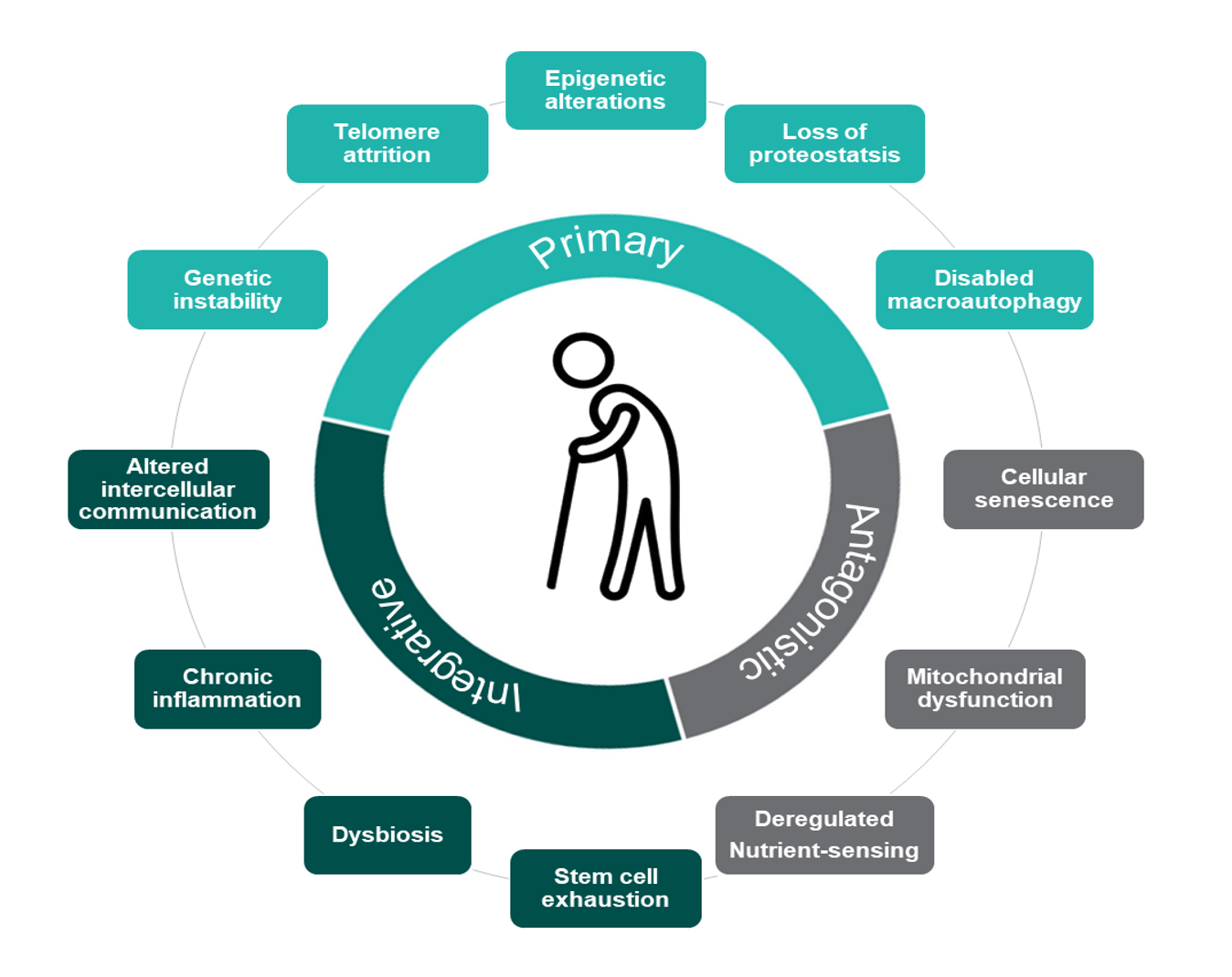
These underlying cellular processes impair cellular function, increase inflammation, and raise levels of oxidative stress, weakening the epidermal barrier. It diminishes skin firmness and elasticity.
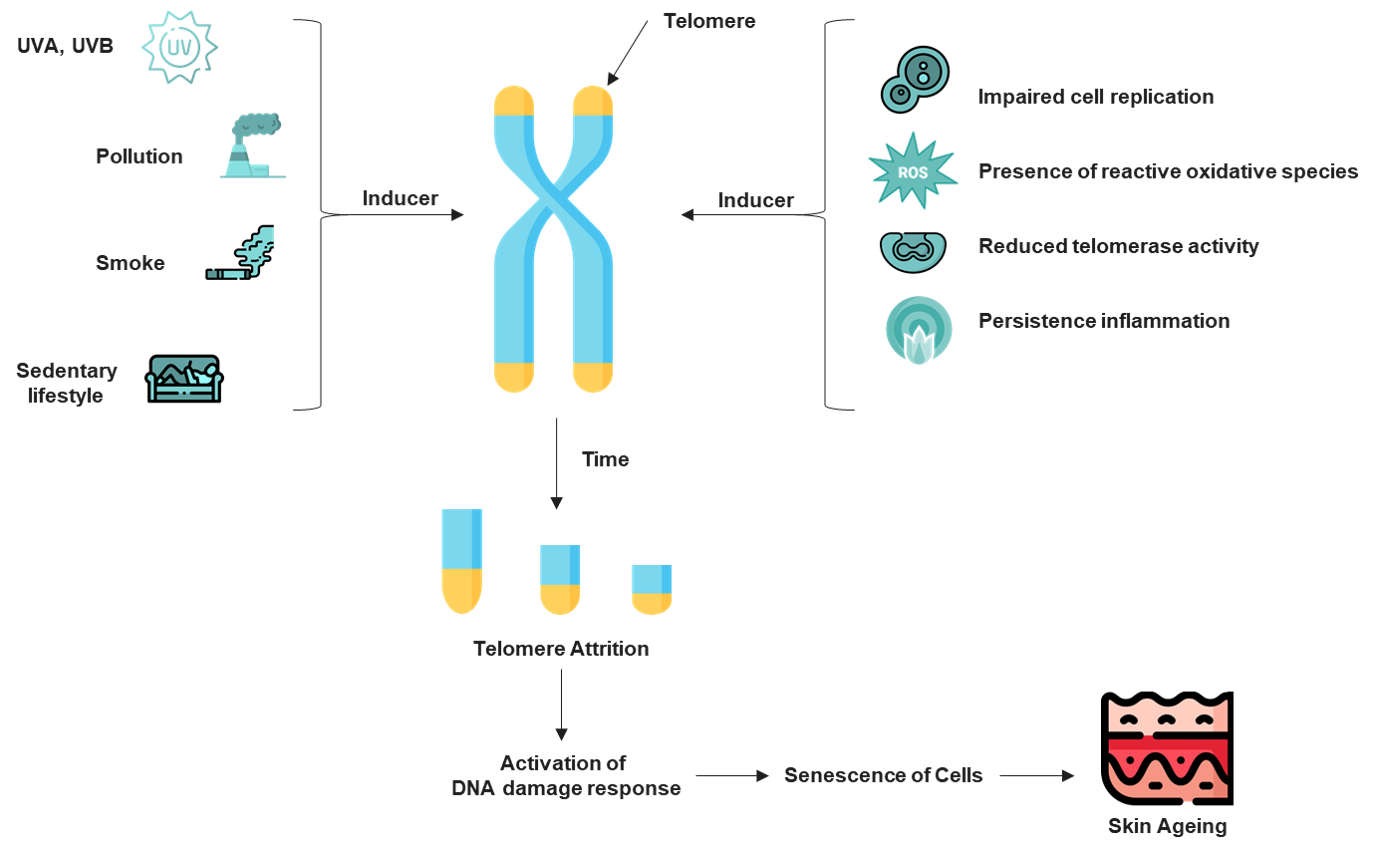
Telomere Shortening: Among the twelve hallmarks of aging, telomere shortening (attrition) is a significant factor that impairs cellular responses and ultimately contributes to skin aging. The primary factors responsible for telomere shortening are categorized into intrinsic and extrinsic factors.
Intrinsic factors include:
- Cell Division: During successive rounds of replication, the inability of DNA polymerases to fully replicate chromosome ends results in progressive telomere attrition.
- Oxidative Stress: Reactive oxygen species (ROS) induce DNA damage, accelerating telomere loss beyond the limits imposed by replication.
- Reduced Telomerase Activity: Although telomerase can replenish telomeres, its activity is minimal in most somatic cells, permitting gradual shortening.
- Inflammation: Persistent inflammatory states increase cellular turnover and oxidative damage, thereby hastening telomere erosion.
Extrinsic factors are:
- Lifestyle Influences: Smoking, poor nutrition, obesity, and chronic psychological stress are linked to accelerated telomere shortening.
- Environmental Exposures: Ultraviolet radiation, pollutants, and chemical toxins contribute to DNA damage and telomere attrition.
Overall, the cumulative impact of these intrinsic and extrinsic factors on telomere dynamics and their subsequent role in skin aging is illustrated in Figure 2.
What are the Challenges in Turning Telomere Science into a Successful Market Product for Industry Players?
- Developing telomere-targeting compounds requires advanced research infrastructure, including modern molecular biology facilities, expertise in animal models, and extensive experience in clinical trials.
- From a commercial standpoint, consumer skepticism continues to be a significant obstacle to broad acceptance and market adoption.
- New entrants often lack knowledge of the scientific principles and mechanisms behind telomere activators. They are also unaware of the technologies and ingredients that enhance telomerase activity, as well as the competitive landscape of existing players in this field.
Overall, for telomere-targeting compounds to reach the market, industry stakeholders must ensure that scientific viability aligns with market preparedness to facilitate adoption.
“The science of telomere activation is now developed. The key issue is whether the industry is ready to tackle the significant commercial challenges it brings.”
Telomere Activators – Recent Ingredient Innovations
Recent efforts by research organizations, biotechnology firms, and start-ups have focused on discovering telomere activators or modulators to improve skin appearance and reduce the effects of aging.
Several promising candidates have been identified, which are explained in detail below.
- Botanical Extracts (Pomegranate, Sweet Orange, Cistanche, Centella Asiatica)
- Investigations conducted by Life Length SL (Spain) showed that a combination of four herbal extracts promotes healthier skin aging. In vitro studies revealed that these botanicals reduced the rate of telomere shortening in both stressed and non-stressed replicating fibroblasts.
- Furthermore, transient increases in relative telomerase activity were observed after 24 hours, alongside the prevention of UVR-induced glycated species accumulation. Collectively, these findings support the potential of these plant-derived ingredients as anti-aging agents.
- Narcissus Tazetta (Daffodil Bulb Extract)
- In vitro studies using aged human dermal fibroblast cultures confirmed that Narcissus tazetta extract restrained the proliferation rates of fibroblasts. The extract also preserved telomere length, reduced mTORC1 activation, and enhanced procollagen I production relative to untreated aged controls.
- Functionally, it improved key ageing-associated skin parameters, including wrinkling, hyperpigmentation, barrier integrity, and elasticity.
- Taurine (2-Aminoethanesulfonic Acid)
- Taurine, a sulfur-containing amino acid abundant in the heart, retina, skeletal muscle, and brain, has been implicated in the regulation of the aging process. Experimental evidence links taurine supplementation to less DNA damage, better telomerase function, improved mitochondrial activity, and reduced cellular senescence.
- A randomized clinical trial involving 12,000 older European adults further suggested that taurine deficiency contributes to human aging, underscoring its potential relevance in anti-ageing interventions.
- Astragaloside IV (Astragalus membranaceus Extract)
- Astragaloside IV, a principal compound derived from Astragalus membranaceus, has demonstrated telomere-protective effects both in vitro and in vivo.
- Clinical evaluation of an anti-aging face cream containing Astragaloside IV reported significant improvements in skin parameters: hydration increased by 95%, brightness by 90%, and wrinkle visibility decreased by 70%.
- These findings highlight its potential as a multifunctional anti-ageing ingredient.
Companies’ Landscape in the Domain of Telomere Activators
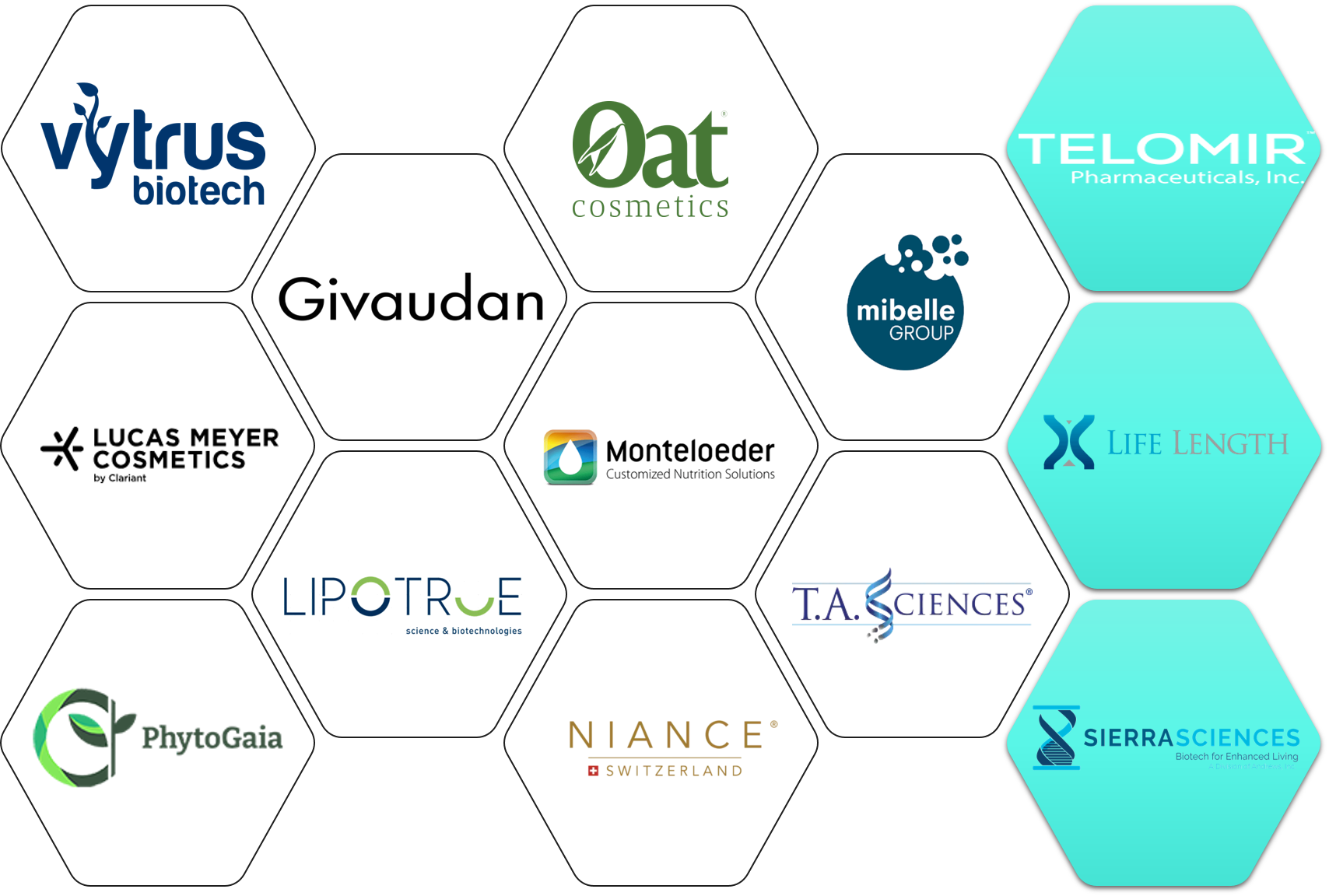
The companies and start-ups working in the relevant domain are present in the schematic diagram below.
Commercial Products
The commercial formulations are designed to enhance telomere integrity and combat skin aging issues. These products use a variety of approaches, including botanical extracts and bioengineered actives, with several showing proven clinical or in vitro results.
- Clarivine™ (Vytrus Biotech)
- Vytrus Biotech has introduced the novel concept of fasting-mimicking in cosmetics through the development of a secretome enriched with Plant Fasting Factors. This secretome is a blend of polyphenols, signaling peptides, proteins, and natural plant exosomes and is derived from intermittent fasting of Vitis vinifera flower stem cells. The bioactive molecules promote cellular repair, detoxification, and renewal processes, including autophagy, telomere protection, and oxidative stress defense, thereby enhancing skin resilience.
- Clarivine™ received the silver award for best Ingredient in the Innovation Zone at in-cosmetics Global.
- PrimalHyal™ 50 (Givaudan)
- This anti-ageing ingredient consists of low molecular weight hyaluronic acid obtained via fermentation.PrimalHyal™ 50 has been reported to counteract telomere attrition, amplify DNA repair mechanisms, and address ageing processes associated with epigenetic modifications.
- It is suitable for use on dry, mature, irritated, or post-shave skin.
- Rejuvaveen (Oat Cosmetics)
- Developed in the United Kingdom, Rejuvaveen incorporates oat beta-glucan, tryptophan actives, and skin-beneficial lipids and starches. The formulation protects against stress-induced skin thinning, alleviates dryness, improves texture, and enhances brightness.
- Experimental data suggest preventive effects on telomere shortening and collagen degradation.
- EPIGEN12™ Cell Renewal (Niance)
- Niance (Switzerland) has formulated an age-reversing agent containing flavonoid-rich extracts from scarlet beebalm and lemon balm. Clinical studies indicate that EPIGEN12™ can reduce biological age by up to 12 years.
- It optimizes DNA repair, elevates NAD+ levels, and defends against oxidative stress.
- The product preserves telomere length and counters attrition, with additional actives including trans-resveratrol, nicotinamide riboside, and niacinamide.
- Eternalyoung® (Monteloeder)
- Eternalyoung® is a patent-pending formulation combining pomegranate (Punica granatum), sweet orange (Citrus sinensis), desert ginseng (Cistanche), and gotu kola (Centella asiatica).
- Clinical evaluation demonstrated improvements in skin moisturization, radiance, and elasticity, with efficacy linked to reduced telomere shortening. A recommended dosage of 225 mg/day has been established.
- IBR-Dormin® (Lucas Meyer Cosmetics, Clariant)
- This anti-ageing active is derived from Narcissus tazetta bulb extract. It has been shown to reduce the appearance of wrinkles, improve elasticity, and diminish the appearance of visible spots.
- The extract protects fibroblasts from telomere erosion, inhibits mTORC1 activation, and slows fibroblast proliferation.
- Telessence Breeztel™ (LipoTrue)
- Breeztel™ is a marine ferment obtained from microorganisms collected from sea breezes near Tonga (Fiji). It modulates Substance P and cortisol levels, thereby mitigating emotional stress.
- The product prevents telomere shortening, enhances skin hydration, improves elasticity, and reduces wrinkle depth.
- Telessence Mitelion™ (LipoTrue)
- Mitelion™ incorporates actives from bilberry fruit and rosemary leaves. It protects against mitochondrial oxidative damage by boosting endogenous antioxidants and reducing ROS production.
- The formulation supports telomere function under fatigue conditions and improves skin elasticity and gloss.
- MonaJuventa™ Nu (Mibelle)
- Derived from scarlet beebalm (Monarda didyma), MonaJuventa™ Nu is rich in the flavonoid didymin. It has proven effective in influencing epigenetic aging, telomere shortening, and the buildup of senescent cells.
- Additionally, it protects against oxidative stress and mitochondrial dysfunction.
- Applications extend to healthy ageing supplements, wellbeing support, and longevity products.
- Stgaia™ (Phytogaia)
- Stgaia™ is a complex of natural plant-derived squalene and tocotrienols.
- Preclinical evidence suggests potential to preserve telomere length and support genomic integrity at the cellular level.
- The formulation is suitable for use in dietary supplements, functional foods, beverages, and cosmetic applications.
What are the Technical Challenges of Telomere Activators?
The primary challenge of telomere activators is the potential risk of cancer development. The activators may activate telomerase to an uncontrollable level, leading to the development of cancer. Additional challenges include:
- Specificity and Off-Target Effects: Telomerase activators should be highly selective for dysfunctional telomeres in target tissues, avoiding healthy, normal cells. Unintended activation of healthy cells could lead to unforeseen side effects or promote tumor growth.
- Mechanism of Action Delays: Therapies that work by slowly extending telomeres need a longer treatment period before showing noticeable anti-aging or therapeutic benefits.
- Lack of Reliable Data on Long-Term Impact: The long-term safety and effectiveness of telomerase activators in humans remain largely unknown, as most research is still ongoing or in early stages.
- Ethical Concerns: The potential to “turn back the biological clock” raises critical ethical questions about human longevity and fair access to these therapies.
For R&D and innovation leaders in this space, a key strategic question is: how to leverage telomere biology to develop safe, effective, and market-ready products that address the root cause of skin aging?
Conclusion
The uniqueness of telomerase activators makes them more promising in comparison to mitochondrial boosters, epigenetic modulators, and senolytics.
However, to harness their true benefits, research initiatives need to focus on developing highly selective activators, conducting comprehensive long-term safety evaluations, and understanding the tissue-specific and time-dependent behavior of telomerase activity. These efforts will be crucial for ensuring safe, effective, and targeted applications in the pharmaceutical, nutraceutical, and cosmetic fields.
The upcoming battleground in skincare and wellness is not about peptides or hydration; it’s about cellular senescence. Is your R&D and business pipeline heading in the right direction?
Stellarix as Solution Provider
Stellarix leverages its deep industry expertise and capabilities to offer solutions that address key pain points.
- Strategic Partnerships and R&D Capabilities: Accelerate GTM timelines while neutralizing ingredient development risks through well-planned collaborations with biotech companies and labs.
- Technology Scouting: Identify emerging telomere-related technologies or ingredients and advise on licensing or collaborations to reduce upfront infrastructure costs.
- Consumer Perception & Branding Study: Help companies craft transparent messaging backed by peer-reviewed data to build trust among consumers.
- Competitive Intelligence: Map the landscape of existing players, technologies, and patents to guide strategic positioning.
Connect with our CPG Consulting team to learn how industry leaders are turning telomere science into practical market solutions, reshaping next-generation offerings in the pharmaceutical, nutraceutical, and cosmetic fields.
Let's Take the Conversation Forward
Reach out to Stellarix experts for tailored solutions to streamline your operations and achieve
measurable business excellence.