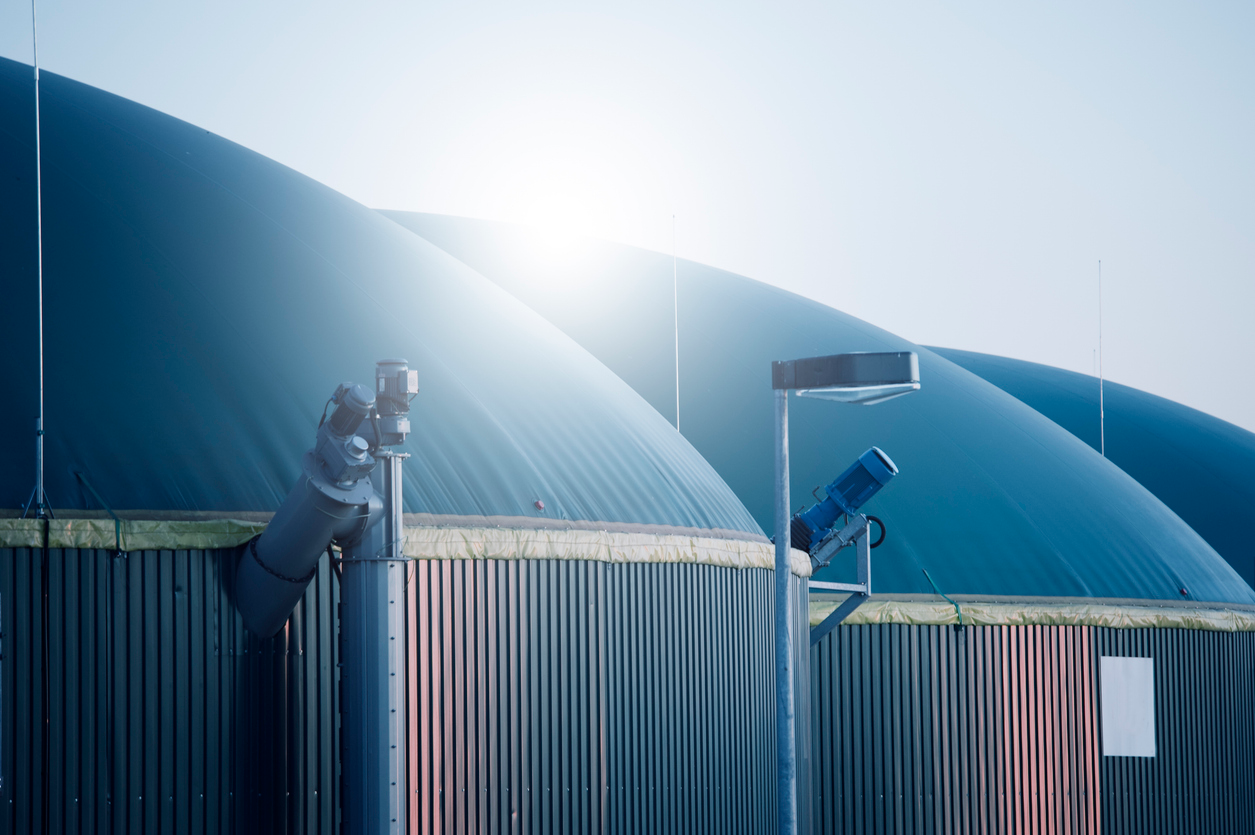
Bio-LNG: The Clean Fuel Evolution Transforming LNG’s Future

As the world is struggling for net-zero emissions, the energy industries are also significantly transforming to become carbon-negative. In recent years, Bio-LNG (bio-based Liquefied Natural Gas) has emerged as a feasible, scalable, and quick-deployable clean fuel alternative. Bio-LNG, which is generated from biological waste and chemically equivalent to fossil LNG, has the potential for deep decarbonisation as well as compatibility with present LNG infrastructure.
This article discusses the importance of bio-LNG, its commercial and technological maturity, and the increasing market pressures that are driving its adoption. In addition, it highlights the current state of the conventional fossil-based LNG market, including regulatory pressures, uneven demand, and oversupply warnings, and discusses how these trends will benefit the bio-LNG market.
What is Bio-LNG?
As the name suggests, Bio-LNG is obtained from bio-based waste, specifically organic waste such as agricultural waste, food waste, and livestock waste. The production of Bio-LNG involves the following steps:
First, biogas is obtained through the anaerobic digestion of organic waste. This biogas is then upgraded (purified) to obtain bio-methane and is further liquefied through a process called liquefaction (i.e., cooling it to very low temperatures, typically between -120°C and -162°C) to produce liquefied bio-methane (LBM), commonly known as Bio-LNG.

It is a renewable/non-fossil version of conventional fossil-based Liquefied Natural Gas (LNG), also known as Liquefied Biogas (LBG). It achieves a significantly higher purity of 99% methane as compared to conventional fossil LNG, having ~90% methane content. It is a sustainable alternative to fossil-based LNG and shares nearly identical physical and chemical properties as fossil-based LNG.
Beyond its chemical/physical similarities, bio-LNG possesses several advantages over fossil-based LNG as outlined below:
Carbon Negative Potential:
Bio-LNG essentially recycles carbon that is already part of the natural carbon cycle, whereas fossil-based fuels emit ancient carbon into the atmosphere; hence, Bio-LNG is considered to be carbon-neutral. Bio-LNG can reduce emissions by up to 80% compared to standard marine fuels like HFO and 20% compared to conventional fossil-based LNG. In fact, bio-LNG can result in negative carbon emissions over its whole lifecycle (well-to-wheel).
Use of Renewable Feedstock Supporting Circular Economy:
Bio-LNG reduces the dependence on fossil fuels and addresses the challenge of waste management as it utilizes the organic waste to generate carbon-neutral energy. Accordingly, it contributes to achieving sustainability and supports enabling the circular economy.
Less Impurities and less Sulphur:
Bio-LNG produces less NOx, SOx, and particulate matter than fossil-based LNG since it is derived from cleaner organic sources (e.g., agricultural waste, food, and livestock waste) with lower sulfur and nitrogen content. Its combustion emits lower particulate matter when compared to fossil-based LNG.
Compatibility with Existing LNG Infrastructure:
Bio-LNG holds similar chemical and physical properties to conventional LNG. Therefore, the ships or heavy-duty trucks can use bio-LNG without any modification or retrofitting of their engines, which results in saving time and cost.
The LNG Market Reality Check
As bio-LNG emerges as an alternative to fossil LNG, the future of conventional LNG is becoming highly uncertain today. Current projections for global fossil-based LNG demand show significant variations among industry analysts. Shell, an O&G giant, foresees strong long-term demand growth, anticipating global demand to reach 630-718 million tons annually by 2040. On the other hand, organizations such as the International Energy Agency (IEA), Institute for Energy Economics and Financial Analysis (IEEFA), and other analysts are warning that the global LNG market could soon face an oversupply. According to their forecast, weak demand growth coupled with a significant increase in new export capacity could lead the market into a state of oversupply within the next two years.
According to the IEEFA estimations, the LNG liquefaction projects already under construction or backed by financially strong investors (mainly from Qatar and North America) could add 193 million metric tons per year (MTPA) of new capacity between 2024 and 2028, a 40% increase over five years. By the end of 2028, the world’s total nameplate liquefaction capacity could reach 666.5 MTPA. For comparison, the International Energy Agency (IEA) estimates that under current policy frameworks, worldwide LNG trade would barely exceed 480 MTPA by 2050. In short, the capacity set to come online by 2028 could outpace even the IEA’s long-term demand forecasts.
This flood of new supply arrives just as demand begins to soften in key regions. In Asia, consumption remains extremely price-sensitive, and LNG imports in China plunged in 2024 as prices surged. Imports from South Asia dropped by 16% in 2022 but recovered again in 2023 as the spot prices of LNG declined. Meanwhile, the total LNG imports from Japan, South Korea, and Europe (which together account for more than 50% of the world’s LNG demand) declined in 2023 and are expected to continue declining through 2030.
On top of the shifting market dynamics, different regulatory pressures are also increasing across the world. For example, Methane emissions from the gas supply chain are gaining attention and under scrutiny, and carbon pricing is also tightening across North America and Europe. With governments shifting focus to greener alternatives, conventional LNG may serve only briefly as a transitional fuel before being replaced by greener alternatives.
Why Bio-LNG Is the Smarter Choice Today: Key Advantages
Against the changing market dynamics of LNG, including market volatilities and increased pressure of decarbonization, bio-LNG has emerged not just as an alternative but also as the next evolution of gas infrastructure. It preserves all the operational advantages of conventional LNG while delivering crucial sustainability benefits that align with global climate targets. It also qualifies for carbon credits and meets stringent green fuel certifications worldwide.
Bio-LNG is resilient to price volatilities and fluctuations as it is produced from locally sourced waste rather than traded natural gas. It is largely unaffected by geopolitical tensions and LNG market fluctuations and therefore offers more stable and predictable pricing. Besides that, the Bio-LNG business also provides an early-mover advantage; acting early gives companies a competitive edge by locking in stable and long-term bio-LNG contracts before demand spikes and possible supply shortages due to upcoming environmental regulations like FuelEU Maritime. The existing LNG infrastructure strengthens these benefits. As LNG terminals face declining utilization from market oversupply, they can be repurposed for bio-LNG, creating shared-value opportunities across the energy transition. Shipping companies also get two big advantages: they can cut emissions right away without engine modifications, and also future-proof their operations against tightening emissions regulations.

Beyond infrastructure advantages, bio-LNG delivers different commercial advantages in a world where carbon regulations are tightening. For example, while fossil LNG is becoming a commodity with shrinking profits, bio-LNG commands premium pricing through certified green fuel attributes. Its compatibility with environmental certificates, carbon credits, and climate-focused finances creates additional revenue streams that conventional LNG simply cannot match.
What Is Driving Bio-LNG Adoption?
Multiple factors are pushing bio-LNG forward. First, policy support is growing. The European Union’s Renewable Energy Directive (RED III) and the FuelEU Maritime regulations are introducing new targets for the adoption of clean fuel. Such regulations are encouraging conventional fuel-based companies to shift toward low-carbon alternatives like bio-LNG. In addition, governments are offering different tax incentives and subsidies to companies to support their adoption.
Meanwhile, industries have also been actively looking for clean fuel alternatives that can be implemented immediately without costly retrofits. For example, Truck manufacturers like Scania, Volvo, and IVECO already offer engines that run on LNG and bio-LNG. Shipping companies are investing in dual-fuel vessels that can use either fuel. Even cities are converting their public buses and waste trucks to bio-LNG as well.
There is also pressure from the private sector. Many companies have now pledged to cut their emissions across their operations and supply chains. Adopting bio-LNG will support them in meeting those targets. Some fuel suppliers are now offering carbon-neutral options by blending fuels with certified bio-LNG and using emissions credits to offset their carbon footprint. From a technology side, new and small-scale liquefaction units can enable producers to generate bio-LNG close to where the waste is generated. That means farms, food factories, and even wastewater treatment plants can produce their own fuel and take financial advantage.
From a technology side, new and small-scale liquefaction units can enable producers to generate bio-LNG close to where the waste is generated. That means farms, food factories, and even wastewater treatment plants can produce their own fuel and take financial advantage.
Bio-LNG in the Real World
Bio-LNG is not just a futuristic concept now; it is already powering industries today. Across the globe, several projects are proving their commercial capability to turn waste into clean energy and decarbonize the sectors.
Below are key initiatives driving real-world adoption:
1. Shell & Nordsol (Netherlands): Commercial-Scale Bio-LNG Plant:
A collaboration between Shell, Nordsol, and Renewi, signed in June 2020, has made Europe’s first commercial bio-LNG plant online in the Netherlands. This facility converts organic household waste into low-carbon fuel.
- Project: First commercial Bio-LNG production plant in Amsterdam, Netherlands.
- Scale: ~3.4 kilotons/year of Bio-LNG from organic waste (supermarket and restaurant waste)
- Use: CO₂-neutral fuel pathway for Long-haul, heavy-duty road transport
2. Gasum: Pioneering Bio-LNG for Transport & Shipping
Gasum is a Nordic leader in bio-LNG integration into heavy transport and maritime sectors. The company has an extensive biogas production and bunkering network. It operates several biogas plants across Europe, with bio-LNG liquefaction hubs in Finland and Sweden.
- Initiative: Leading Nordic bio-LNG supplier for ships & trucks.
- Partners: Viking Line, Equinor, Hapag-Lloyd, Scania, Stena Line.
- Use: Heavy-duty transport and shipping.
3. Titan and BioValue: Partnered to Build the World’s Largest Bio-LNG Plant
BioValue, in collaboration with Titan Clean Fuels, is developing the world’s largest bio-LNG plant. The initiative will establish two sustainable manufacturing plants co-located within Amsterdam’s port complex. BioValue is responsible for building and operating the biogas plant, while Titan will manage the facility that converts the biogas into bio-LNG.
- Project: world’s largest bio-LNG plant at Port of Amsterdam
- Scale: Once operational, the plant is expected to produce 200,000 tonnes/annum of liquefied bio-methane
- Use: bio-LNG powered vessels, Ships, and Trucks
4. EveRé, Elengy, TotalEnergies, and the CMA CGM Groupe collaboration: France’s First bio-LNG Production Project
The partnership aims to perform the feasibility of establishing France’s first bio-LNG production facility, by utilizing the biodegradable household waste available from the Marseille Provence region. The low-carbon fuel produced will support the bio-LNG of shipping from the Port of Marseille, primarily powering CMA CGM’s LNG-fuelled vessels.
The Roadblocks to Scaling Bio-LNG
Bio-LNG holds strong potential for decarbonizing the carbon-intensive transport, shipping, and manufacturing industry, but it is still facing some big challenges. One of the biggest hindrances is the availability of enough organic waste/feedstock. A lot of it is already being used, for example, as compost or animal feed. In addition, the transportation over long distances of such low-density and bulky feedstock can be expensive and inefficient.
Bio-LNG also involves operations such as biogas purification/upgradation to produce bio-methane and further liquefaction to form bio-LNG, each of which is both a cost and energy-intensive operation. Moreover, bio-LNG currently lacks an established supply chain; therefore, bio-LNG projects need to build the distribution network and supply chain (including logistics, feedstock sources, related infrastructure, etc.) on their own. The small bio-LNG plants may face efficiency losses, while large ones may require significant upfront investment.
From a business front, Bio-LNG is still more expensive compared to conventional fossil-based LNG; as a result, it is currently viable only in the regions where there are carbon taxes, incentives, or government subsidies.
The regulatory landscape also seems to lack clarity regarding clean fuels like bio-LNG; as a result, several companies, such as shipping and logistics companies, are hesitant to make long-term commitments, which has created a hindrance in supply-demand alignments. Moreover, inconsistent regulations across countries and growing interest in other low-carbon alternatives like hydrogen are adding to the uncertainty.
Conclusion
Bio-LNG is a practical and scalable solution rather than just a niche innovation to some of today’s biggest energy and climate challenges. It is clean, ready to use, and can be adopted directly into existing infrastructure without any modifications or retrofitting. As the world is shifting away from fossil-based fuels and conventional LNG is facing market headwinds, bio-LNG is set to take the center stage. Thus, in a world where companies are aiming for decarbonization and the government is shaping the clean energy policy, bio-LNG emerges as a highly suitable solution in today’s context.
Let's Take the Conversation Forward
Reach out to Stellarix experts for tailored solutions to streamline your operations and achieve
measurable business excellence.