Frugal Innovation in Robotic Surgery: Unlocking Access through Smart & Scalable Solutions

Precise control, shorter patient recovery times, and better clinical outcomes are key benefits of robotic surgery systems. However, despite these advantages, the high cost of these systems greatly limits their access within the global healthcare system. For example, a traditional surgical robot, such as the da Vinci system, can cost a hospital over $2 million to purchase, excluding disposable parts, training, and maintenance.
This raises a fundamental question: How can we enable access to an operational robotic surgery system without compromising its quality or jeopardizing its safety? The simple answer is frugal innovation—a disciplined approach to developing price-value technological solutions, ensuring these solutions perform efficiently without added complexity.
Understanding Frugal Innovation in a Surgical Context
Frugal innovation is not about offering cheap alternatives; instead, it involves rethinking design, simplifying form and functions, and achieving affordable excellence.
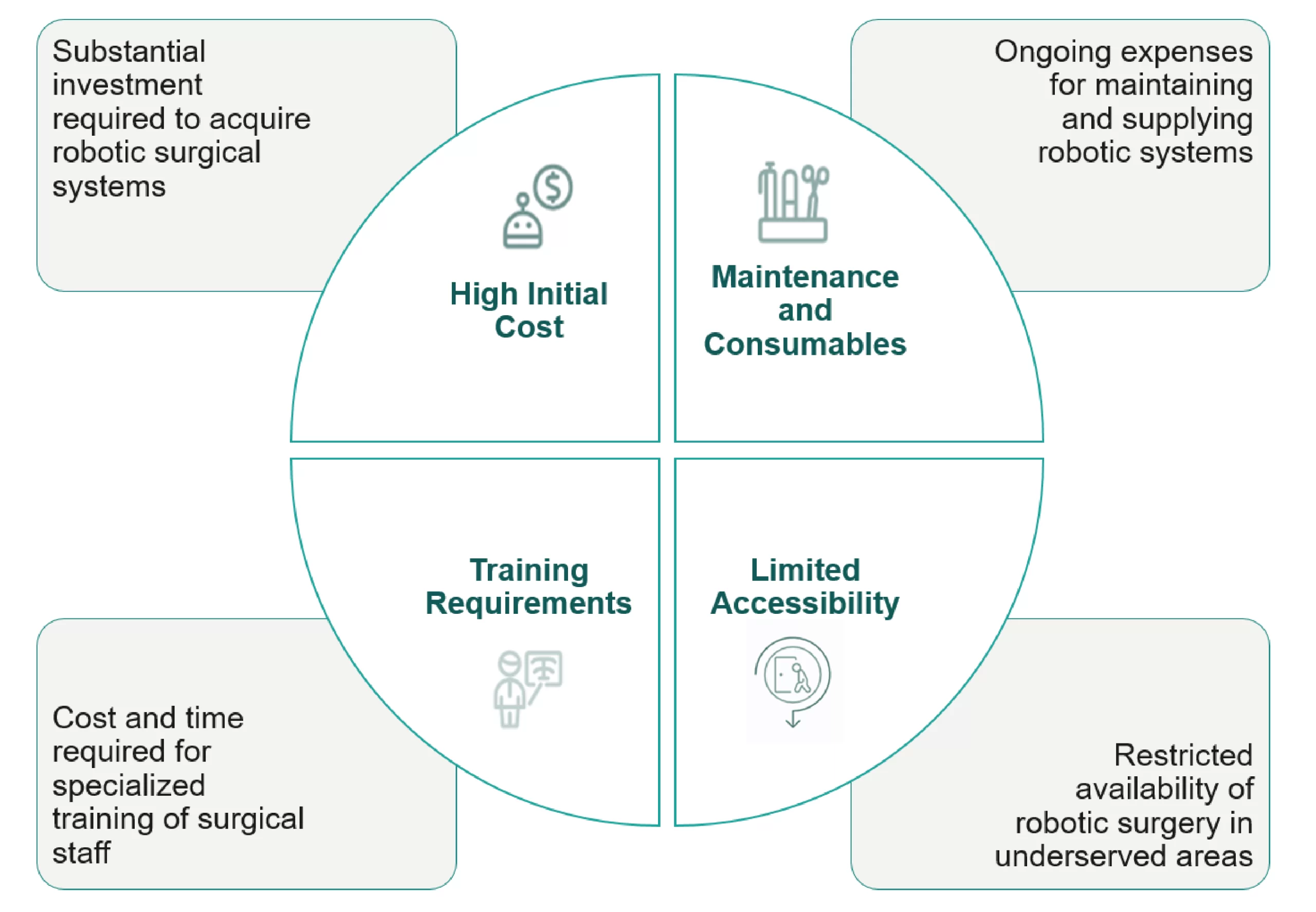
In robotic surgery, the systems developed are:
- Cost-conscious yet clinically relevant
- Scalable for different settings such as urban, rural, or remote
- Resource efficient in manufacturing, energy use, and maintenance
- Adaptive, thereby allowing modular configurations as well as open software environments.
Thus, this model of innovation can minimize or reduce the surgical care gap between high-income and resource-constrained settings.

Where Can Frugal Innovation Be Applied in Robotic Surgery?
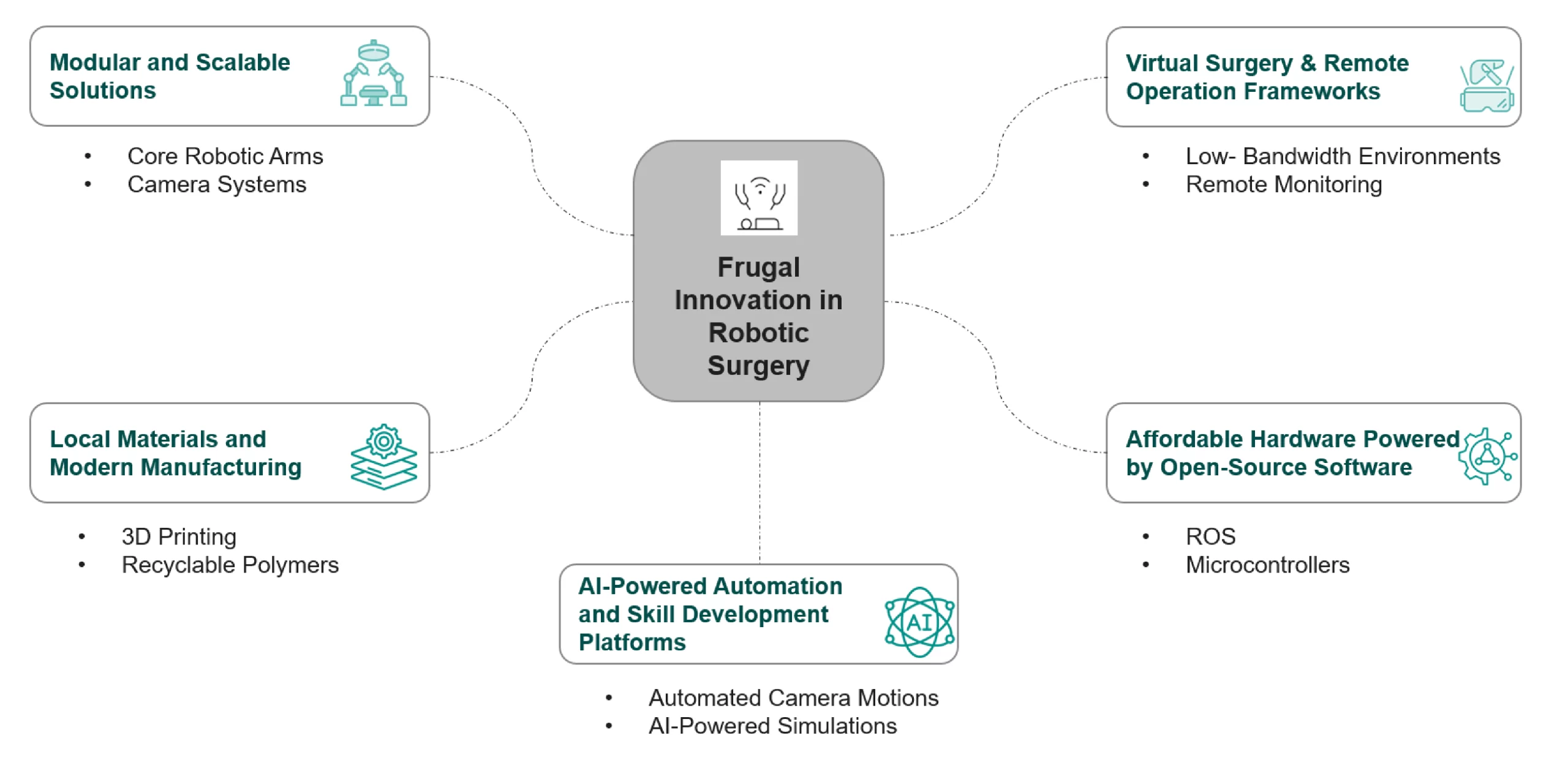
1. Modular and Scalable Robotic Platforms
Instead of investing in larger, monolithic surgical robots, modularized systems facilitate institutions to select smaller, more basic configurations, such as core robotic arms or camera systems. Limited by their clinical demand and budgets, they can enhance the system with upgrades of advanced features, including 3D visualization and haptics.
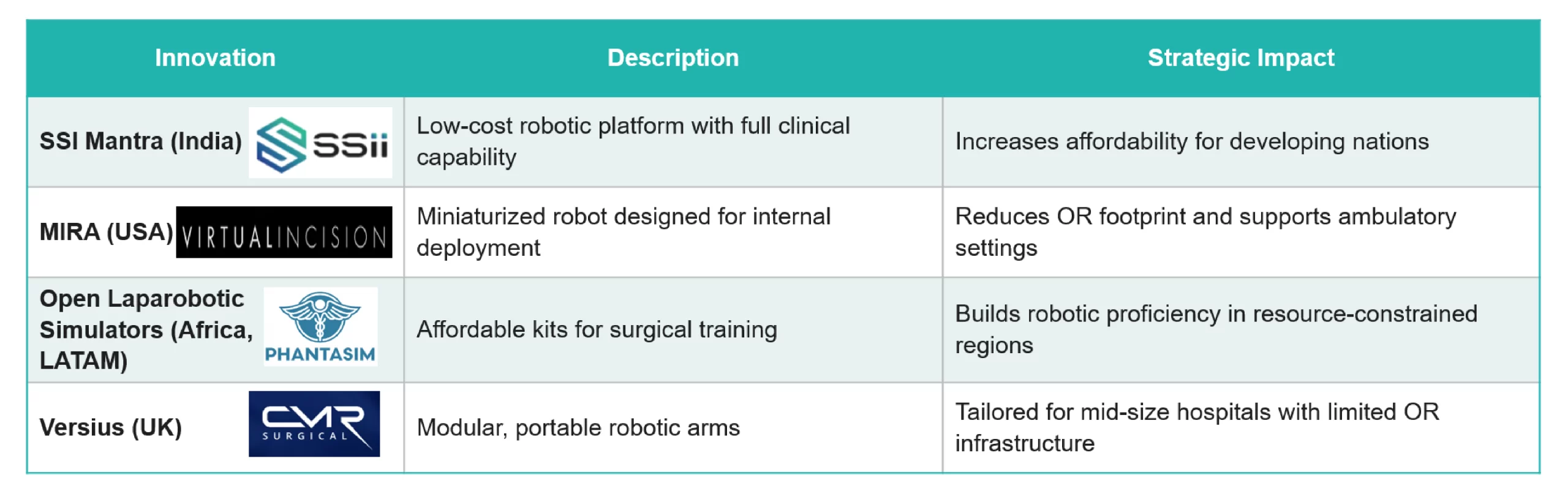
Example: Being portable, the modular design of CMR Surgical’s Versius system can consolidate space in the operating room (OR) while its flexibility allows it to be shared among procedures.
2. Use Local Materials and Advanced Manufacturing
3D printing, recyclable polymers, and support from local supply chains limit production and logistical costs. The materials add to sustainability and ensure faster cycles of part replacement in the field.
Example: The Indian company SSI Mantra has developed a fully robotic surgery system costing far less than its global incumbents, targeting both private and public hospitals.
3. Open-Source Software and Low-Cost Hardware
Open-source platforms, such as ROS (Robot Operating System), permit designers to build systems without incurring the costs associated with proprietary licenses. Having these coupled with budget-friendly microcontrollers (e.g., Raspberry Pi and Arduino) will encourage rapid prototyping and inexpensive innovation.
4. Telesurgery and Remote Operation Models
The development of frugal robotic systems aims to operate effectively in low-bandwidth environments, enabling surgeons to perform remote procedures and provide mentorship during operations. These innovations serve as vital tools for expanding medical access to rural hospitals and under-resourced communities.
5. AI-Driven Automation and Training Tools
The implementation of artificial intelligence streamlines robotic workflows by automating tasks such as camera movements and facilitating real-time tissue detection. This allows less experienced surgeons to perform advanced procedures more safely. AI-powered simulators, along with virtual and augmented reality training tools, offer effective alternatives to traditional cadaver-based education. Consider the potential of task shifting, where trained nurses or technicians perform certain aspects of robotic surgery under a surgeon’s supervision.
Global Examples and Emerging Players
Challenges to Overcome and Key Considerations
The momentum looks promising, but several structural obstacles and considerations stand in the way of deploying frugal innovation in robotic surgery:
- Regulatory Complexity: The process to obtain FDA or CE approvals requires substantial financial resources and time, which is challenging for start-ups with limited funding. Further, meeting all necessary regulatory standards for safety and efficacy presents obstacles when developing frugal robotic surgical systems.
- Adoption and Trust: Medical professionals tend to resist new technology due to quality concerns and find it hard to adapt to new processes.
- After-Sales Support: The availability of maintenance networks, together with spare parts, is essential to maintain system uptime, especially in distant locations.
- Integration Readiness: Hospitals operating on limited budgets usually do not have the proper IT infrastructure that supports robotic integration.
- Intellectual Property: Open-source innovation encounters difficulties when developers need to protect their intellectual property rights.
- Long-Term Sustainability: Achieving lasting success for frugal robotic surgery programs demands strategic investment in training programs, maintenance systems, and infrastructure development.
- Ethical Considerations: It is essential to address ethical issues with utmost care, including patient protection, information security, and access to medical services.
How Stakeholders Can Drive Impact?
For stakeholders in healthcare, med-tech, and consulting, frugal innovation in robotic surgery opens several avenues:
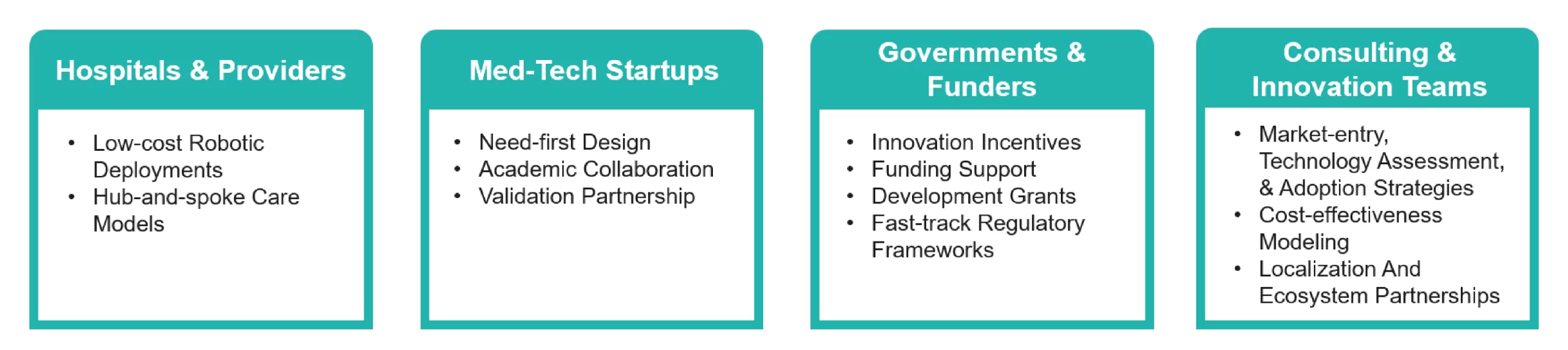
For Hospitals and Providers:
- Hospitals and providers should test affordable robotic implementations in healthcare facilities located in second and third-tier cities or public health systems
- Remote robotic support and Telesurgery should enable hub-and-spoke care models
For Med-Tech Start-ups:
- Start-ups should develop products based on essential requirements to prevent unnecessary complexities
- Start-ups should collaborate with academic institutions and global health agencies for their testing and validation processes
For Governments and Funders:
- Development should receive incentives from grants, along with subsidies and public-private partnership opportunities
- Establish fast-track regulatory frameworks that enable safe and cost-effective devices to be approved
For Consulting and Innovation Teams:
- Help clients enter markets while assessing technologies and developing adoption plans
- Emerging market value can be proven through cost-effectiveness modelling assessments
- The team should help with geographic localization and establish ecosystem partnerships in important regions like South Asia, Sub-Saharan Africa, and LATAM
As a consulting firm, we help stakeholders navigate the landscape of frugal robotic surgery with tailored strategies, technology insights, and practical support for market implementation. Connect with us to explore opportunities for innovation and inclusive healthcare delivery
Regulatory Considerations for Frugal Robotic-Assisted Surgery
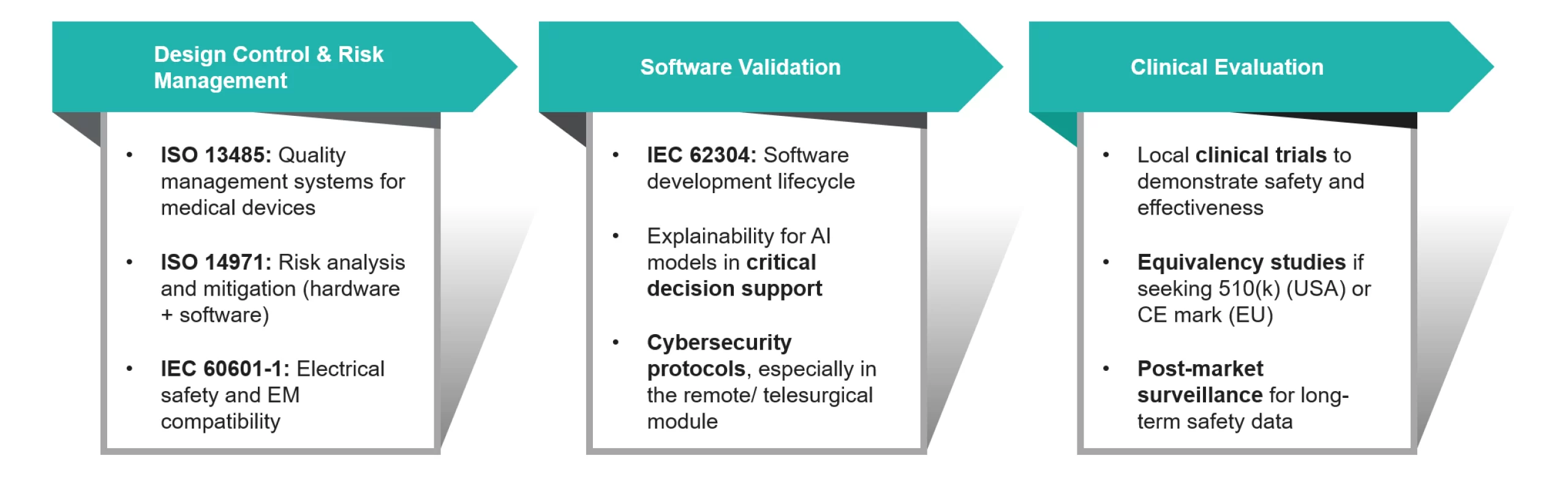
While cost savings are a goal, regulatory compliance is non-negotiable. Key requirements include:
What Does the Future Hold for Frugal Innovation in Robotic Surgery?
Frugal robotic surgery will evolve through the development of intelligent, adaptable systems that integrate AI-powered semi-autonomy with modular hardware, edge computing, and open-source design, enabling safe surgical care in resource-limited environments. The systems will allow remote surgical control along with customized user interfaces, eco-friendly production methods, and networked surgical facilities that permit extensive deployment across rural and mobile settings. Ultimately, the union of innovative technology with cost-effectiveness and scalability will revolutionize robotic surgery, making it an inclusive standard of care available worldwide.
Conclusion
Robotic surgery should not be a luxury limited to high-resource settings. Through frugal innovation, access to surgical care can be transformed, establishing equitable models of advanced technology. It offers an opportunity—not for reduced quality or efficiency but for smart, sustainable innovation—delivering results that improve accessibility and affordability. Frugal innovation in robotic surgery exists at the intersection of engineering excellence, healthcare equity, and pragmatic economics. With a proper approach to technological creativity, sensitivity to context, and thoughtful regulation, these solutions could bring safe surgical wound healing to millions who have never had access to it.
With the growing maturity in the area, these organizations will be better placed to take advantage of and lead in inclusive, tech-enabled health delivery. As the movement is carried forward by a new generation of surgeons, engineers, and health leaders, the robotic revolution shall cease to be a mere luxury for the few and emerge as a life-giving force for many.
Let's Take the Conversation Forward
Reach out to Stellarix experts for tailored solutions to streamline your operations and achieve
measurable business excellence.