15 Minute City: Can Sustainable Neighborhoods Take Human Civilization To Net Zero?
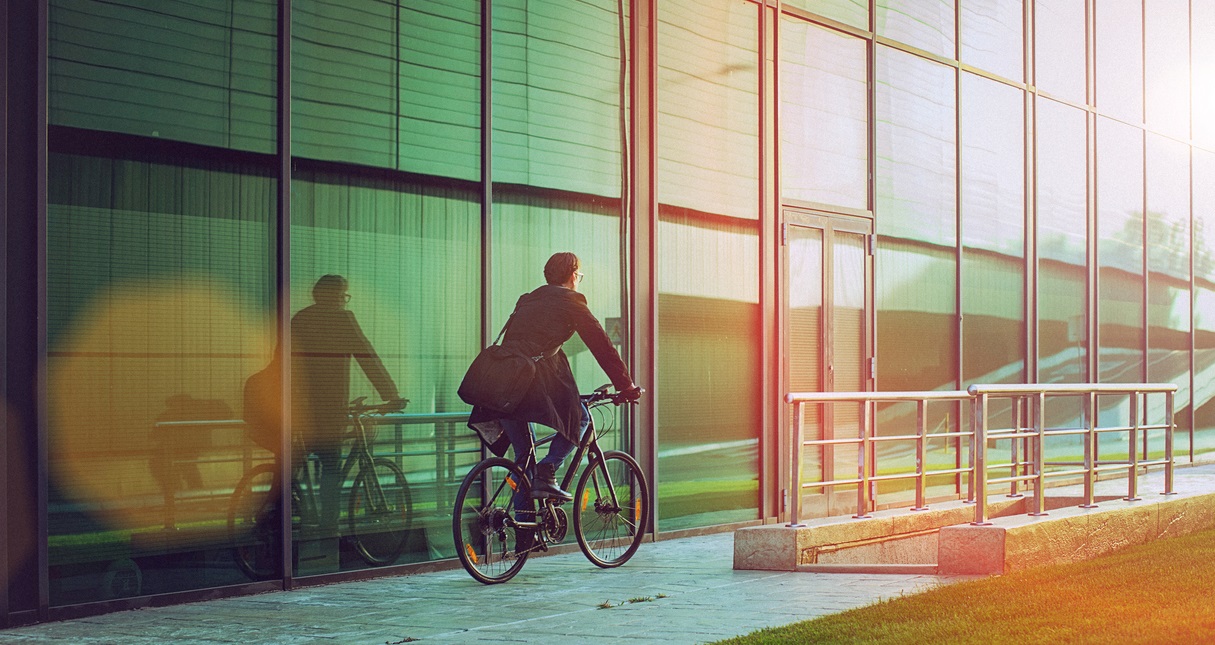
As humanity’s collective future becomes a looming question, the impending reliance on green sustainable models seems inevitable. It applies to all spheres of life, including city planning and urbanization. It is important to work on the rapidly expanding carbon footprint of urban civilizations and bring it under control. According to the BBC, transport accounts for a quarter of CO2 emissions globally. Therefore, the longer your commute to the office, shopping trips, or rides to and from your kid’s school, the greater your and your city’s carbon footprint.
15-Minute City was a concept devised by a French professor, Carlos Moreno, in 2016 to resolve mobility issues and improve convenience. According to his observation, in Paris alone, 66% of the public area is covered by cars, and their numbers account for more than 17% of the city’s population. The ideology behind the 15-minute city model was to provide cultural, economic, and social opportunities to residents within 15 minutes’ walking or biking distance.
If implemented successfully, this kind of township can play a vital role in reducing carbon emissions by decreasing commute time and gifting residents with a better quality of life. It is a buzzing topic in every part of the world as well as a topic of discussion at the COP27, which is expected to conclude this weekend.
Core Pillars of Proxomity-based Communities
- Complete Neighborhoods: City planners can map the most essential amenities required by each community and work to provide easy access on foot or by bike. It is to be noted that the purpose of this kind of neighborhood is not to confine people to their close vicinities but to ease their everyday problems. Commuting to different parts of the city should be a choice and not a forced compulsion on a daily basis. Portland, Oregon, has set a wonderful example in this context with a mapping analysis of a 20-minute neighborhood for the city.
- Green and Clean Space: The 15-minute townships will be very compact with green energy and buildings, circular resources, and an economy. Even the construction practices followed for these townships will be clean and eco-friendly. A classic example of this can be viewed in Milan, where L’Innesto is soon to become the first Zero-Carbon “Housing Sociale” district in its own country. It will feature a renewable energy-based heating system for neighborhoods and Nearly Zero-Energy Buildings.
- People-Centered Mobility: An ideal compact city needs to benefit people of all ages and physical abilities. It will involve several measures, like enabling non-profit groups, businesses, and residents to turn around their on-and-off street parking spaces, improving pedestrianization of streets, etc. Streets bordered by buildings with active frontages will create a positive and pleasant atmosphere for bikers and walkers while supporting the local economy.
- A More Inclusive Environment: Apart from ecological and sustainability issues, the 15-minute city model resolves several basic problems related to urban life. It brings equal benefits and opportunities for people of all races and economic groups. The pressure of owning a car or expensive vehicles can easily be removed from families with modest income backgrounds, as everything will be within walking or biking distance for them. Some reports show that with this new model, an average New York family will be able to save USD $14,501 annually.
How is Experience Being Roped in 15-minute’s Infrastructure?
In 2026, efficiency alone cannot drive innovation. Success is now being measured through Subjective Well-Being (SWB) indices; it isn’t limited to transit times. The focus is now on deliberate designs where proximity isn’t limited to time efficiency but also promises psychological safety, joy, and a sense of belonging for residents.
There are four experiential layers that are being considered alongside physical infrastructure.
- Sensory Richness: Sound-absorbing greenery, tree canopies covering the grounds, and art installations that make simple walks rewarding
- Social Infrastructure: Residential areas with spaces for social interactions like community kitchens, intergenerational playgrounds, and creative spaces that allow people to connect with each other
- Restorative Nature: Urban farms, biodiverse corridors, and pocket parks that serve both cognitive restoration and climate resilience
- Economic Agency: Local small-scale enterprises that enable residents to earn within their vicinity
Is the 15-minute City Concept Being Implemented Somewhere at the Moment?
Governments and city planners across the world are currently experimenting with this concept and trying to inculcate the idea of a green and safe lifestyle in people’s minds.
- Paris: Anne Hidalgo, Paris’s mayor, included the 15-minute city model as one of her re-election agendas in 2014. Considering the compactness of this dense, historic city, she suggested “hyperproximity” to connect all car-centric areas with cycleways. It was a smart move to facilitate trade and good health among citizens, as is evident from the fact that even after 8 years, Hidalgo is still leading this project to create a safer, greener, and healthier environment for Parisians.
- Melbourne: The City of Melbourne is using a 20-minute neighborhood model that includes the development of walkable communities for playing, working, and living, and reduce approx 370, 000 metric-tonne daily greenhouse emissions. The city planners aim to invest in better public transport infrastructure and mixed-use public spaces. If successful, it will reduce the greenhouse emissions of Melbourne by 370, 000 metric tons on a daily basis. They also plan to create cooler streetscapes and help the city reach its net-zero emission plans by 2050.
- Sweden: Sweden took things a step ahead with the 15-minute model by upgrading the development of intersections and streets. Vinnova, the innovation agency, is focusing on providing all amenities on each street and connecting all residents with their built environment. They call it the “1-minute city model”, which, if successful, will help nine Swedish cities reach their net-zero emissions target by 2030.
- Barcelona: The Barcelona urban planners introduced “superblocks” in 2016 as an experiment with the 15-minute city model idea. They created clusters of nine city blocks, forming one “superblock” that confined traffic within its perimeter. Motorists expressed strong opposition, but with the implementation of this plan, nitrogen oxide and noise pollution were effectively reduced within a short period of time. It also gave local small businesses a better chance to thrive close to pedestrian areas. With time, they proved how the redevelopment and pedestrian schemes were a win-win for all sides.
Digital Twins & 6G – The Technological Core of Proximity
As European cities move beyond pilot phases, they are now using technology to optimize and refine how proximity can actually perform across diverse demographics as well as economic cycles.
- Micro-zoning Impact Monitoring: It allows planners to simulate how co-working spaces and the removal of car lanes will impact pedestrian flow, air quality, local retail structures, and ROI projections for city councils.
- 6G-driven Responsiveness: With the rollout of 6G in the next two years, near-zero-latency sensor networks will empower neighbourhood management systems to respond to safety events, demand spikes, and congestion in real-time
- Maintenance Optimization: Predictive models will schedule infrastructure maintenance, aligning the operations with usage intensity and reducing city operating costs.
What Kind of Strategic Frameworks are Working Towards It in 2026?
There are different complications associated with proximity-first frameworks worldwide. While in the US, market leaders are adopting different terminologies to pitch the idea. The most common ones include ‘complete communities’, ‘walkable districts’, etc. Below is a short summary of the terminologies that may help stakeholders choose the right kind of framework for their pitch:
| Parameter | 15-minute City | Walkable Districts | Equity-First Zoning |
| Origin | Paris | North America | Portland/Cleveland |
| Primary Objective | Decarbonization and proximity | Mixed-use vibrancy and livability | Affordability |
| Anti-gentrification | Partially addressed | Very little focus | Fundamental driver |
| Key Metric | 15-min biking or walking radius | 20-min walkable catchment | Diversity score and affordability index |
| 2026 Status | Optimization Stage (EU) | Scaling phase (Canada and US) | Policy adoption phase |
Conclusion
The 15-minute city model is one of the first of its kind that lets the idea of a green, peaceful, and economically viable life settle down in everyone’s imagination. Its benefits will be reaped by everyone, especially those who need them most. The idea focuses on those quintessential elements that really define a quality life, rather than things that just complicate and burden families with endless expenses. It refocuses attention to the living entities rather than the non-living entities, completing the circle of life as nature intended initially.
How Can We Help?
Here at Stellarix, we have over a decade of experience helping companies address complex challenges and opportunities arising from changing industry dynamics, the need for carbon-neutral and sustainable practices, and rapid digitalization. With better sustainable business models, technologies, and cross-domain partnerships in their respective domains, we help them thrive through all changes.
Let's Take the Conversation Forward
Reach out to Stellarix experts for tailored solutions to streamline your operations and achieve
measurable business excellence.